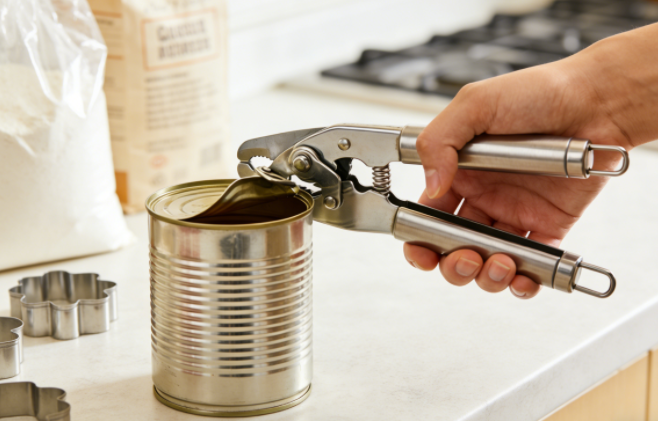
If you’ve ever struggled with a manual can opener slipping off a can lid, leaving jagged edges, or failing to cut through properly, the problem likely boils down to one critical step: incorrect positioning. For millions of Americans who rely on manual can openers for daily meal prep—from canned tuna sandwiches to chili with beans—mastering the correct way to position a can opener on a can lid is the key to safe, frustration-free use. Many people assume positioning is intuitive, but even a small misalignment can lead to accidents, wasted time, or damaged tools. Below is a detailed guide to the correct can opener positioning, including step-by-step instructions, common mistakes to avoid, and pro tips for perfect results every time.
Why Correct Can Opener Positioning Matters
Before diving into the “how,” let’s explore the “why.” Proper can opener positioning isn’t just about convenience—it’s about safety and efficiency. A misaligned can opener:
- Slips off the can lid, increasing the risk of cuts from sharp metal edges or the opener’s blade.
- Leaves incomplete cuts, forcing you to apply excessive force (which can bend the blade or damage the can).
- Creates jagged, dangerous lid edges that can tear skin when removing or disposing of the lid.
- Wastes time, as you’ll have to reposition the opener repeatedly.
- Shortens the lifespan of your can opener, as misalignment causes unnecessary wear on the blade and gears.
For standard manual can openers—the most common type in American kitchens—positioning is especially critical. Unlike electric or smooth-edge models, manual openers rely on precise contact between the blade and the can’s rim to work effectively.
Step-by-Step: The Correct Way to Position a Can Opener on a Can Lid
Follow these exact steps to position your manual can opener perfectly every time, whether you’re using a classic two-handle model or a handheld design:
Step 1: Prep the Can and Opener
Start with a clean, dry workspace to prevent slipping. Wash your manual can opener with warm, soapy water and dry it thoroughly—food residue or moisture on the blade can affect grip. Next, wipe the can lid with a clean cloth to remove dust, crumbs, or grease. Inspect the can for dents or bulges (never use a can opener on a swollen can, as it may contain harmful bacteria). Place the can on a flat, stable surface—avoid wet countertops or uneven cutting boards.
Step 2: Identify the Can Opener’s Key Parts
Before positioning, familiarize yourself with your can opener’s components:
- Cutting Blade: The sharp, curved metal piece that slices through the can lid.
- Feed Wheel: The small, grooved wheel that grips the can’s rim and guides the blade.
- Handles: The two arms you squeeze to lock the blade and feed wheel onto the can.
Understanding these parts ensures you align them correctly with the can’s structure.
Step 3: Align the Blade with the Can’s Outer Rim
Hold the can opener in your dominant hand and the can in your non-dominant hand. Tilt the can opener slightly upward so you can see the cutting blade and feed wheel clearly. Place the can’s lid facing up (or down—both work, but facing up is easier for beginners) on the flat surface. Position the can opener so the cutting blade rests on the outer edge of the can’s lid—not the center, not the inner rim, but the very top of the can’s metal lip where the lid meets the body of the can.
This outer rim is the strongest part of the can’s lid and provides the most stable surface for the blade to grip. Placing the blade too close to the center of the lid will cause it to slip, while positioning it on the inner rim may not cut through the metal effectively.
Step 4: Lock the Feed Wheel Against the Inner Rim
Once the blade is on the outer rim, adjust the can opener so the feed wheel presses firmly against the inner side of the can’s rim. You’ll feel a slight “click” when the feed wheel fits into the groove of the rim—this is the sweet spot. Squeeze the can opener’s handles tightly to lock the blade and feed wheel in place. The blade should now be touching the outer rim, and the feed wheel should be gripping the inner rim, creating tension between the two parts.
To test if it’s positioned correctly, gently tug the can opener—if it stays in place without slipping, you’re good to go. If it moves, release the handles and reposition, making sure the feed wheel is fully seated in the rim’s groove.
Step 5: Confirm Tension Before Turning
Before turning the handle, give the can opener a gentle shake. It should feel secure, with no wobbling or slipping. If the blade feels loose, squeeze the handles tighter (but don’t overdo it—excessive pressure can bend the blade). Once tension is confirmed, begin turning the handle clockwise (the standard direction for most manual can openers) slowly and steadily. You’ll hear a smooth, consistent “crunch” as the blade cuts through the metal—this is a sign of perfect positioning.
Common Can Opener Positioning Mistakes to Avoid
Even with clear steps, many people make these common mistakes—here’s how to steer clear:
- Positioning the Blade Too Close to the Lid Center: This is the #1 mistake. The center of the lid is thin and unstable, causing the blade to slip. Always stick to the outer rim.
- Ignoring the Feed Wheel: Forgetting to align the feed wheel with the inner rim means the opener has no grip—even if the blade is in the right spot, it will slide.
- Squeezing the Handles Too Loosely: Tension is key. Loose handles mean the blade and feed wheel aren’t locked in place, leading to misalignment mid-cut.
- Using a Dented Can: A dented rim throws off positioning, as the blade can’t make consistent contact with the metal.
- Working on a Wet Surface: Moisture causes the can to slide, making it impossible to keep the opener aligned.
Pro Tips for Perfect Can Opener Positioning
- For weak grip strength: Place the can between your knees to stabilize it, then squeeze the opener’s handles with both hands for a secure lock.
- For stubborn cans: Apply a tiny bit of cooking oil to the can’s rim (before positioning) to reduce friction—this helps the blade glide smoothly without slipping.
- For beginners: Practice with an empty can first. Empty cans are lighter and safer to handle, allowing you to master positioning without worrying about spilling food.
- Check for wear: If your can opener still slips after correct positioning, the blade may be dull or the feed wheel worn. Replace the opener every 1–2 years for optimal performance.
Final Thoughts
The correct way to position a can opener on a can lid is all about precision: align the blade with the outer rim, lock the feed wheel on the inner rim, and maintain firm tension. By following these steps, you’ll eliminate slipping, avoid sharp edges, and make opening cans quick and safe. Whether you’re a college student, a busy parent, or a home cook, mastering this simple skill will transform your meal prep routine. Remember, practice makes perfect—after a few tries, correct can opener positioning will become second nature.
Investing a little time in learning proper positioning not only makes your can opener work better but also keeps your kitchen safer. So the next time you reach for a can of beans or tuna, take 10 seconds to position your can opener correctly—your hands (and your patience) will thank you.
Related Guides:
- Best Rated Can Openers 2026 (All Categories)
- Best Can Opener for Seniors with Weak Grip (2026 Top Picks)
- Best Can Opener for Arthritis Patients (2026 Pain-Free Picks)
- Best Can Opener for Stroke Survivors (2026 Easy-Use Picks)
- Best Electric Can Opener (2026 Top-Rated Automatic Models)
- Best Hands-Free Can Opener (2026 No-Grip Effort Models)
- Best Manual Can Opener (2026 Ergonomic Low-Effort Models)
- Best Sharp-Edge-Free Can Opener (2026 Safe No-Cut Models)