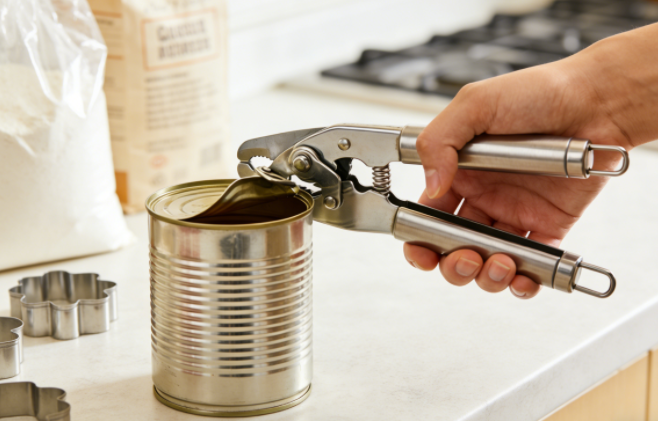
Few kitchen frustrations match the annoyance of a can opener getting stuck halfway through opening a can. You’re mid-meal prep, halfway through cutting a can of beans, tuna, or soup—and suddenly, the opener grinds to a halt, leaving you with a partially opened can and no clear way forward. This common issue plagues manual, electric, and battery-powered can openers alike, but it’s rarely a sign you need a new tool. Below is a detailed troubleshooting guide to identify why your can opener gets stuck halfway, plus safe, step-by-step fixes to resume opening and prevent future jams.
Why Do Can Openers Get Stuck Halfway?
Before fixing the problem, it’s critical to understand the root causes. A can opener that stalls mid-cut typically suffers from one (or more) of these issues—all common in American kitchens:
1. Dull or Misaligned Blade (Top Culprit)
A blade that’s worn, dull, or slightly bent can’t maintain a smooth cut through the can’s metal. Halfway through the circle, the dull blade loses momentum, catches on the metal, and stalls. For manual openers, this means you’ll struggle to turn the handle; for electric models, the motor may strain or shut off. Misalignment (from improper positioning) exacerbates the issue—even a sharp blade will get stuck if it’s not following the can’s rim consistently.
2. Food Residue or Metal Shavings Buildup
As you open a can, tiny bits of food (like tomato sauce or bean juice) and metal shavings get trapped in the can opener’s gears, blade crevices, or feed wheel. Halfway through cutting, this debris clogs the mechanism, preventing the blade from moving freely. For electric can openers, buildup strains the motor, leading to stalls; for manual models, it creates friction that makes turning the handle nearly impossible.
3. Weak Battery Power (Electric/Battery-Powered Models)
Battery-powered can openers rely on consistent motor strength to cut through metal. Halfway through a can, weak or dying batteries can’t generate enough force to keep the blade moving—resulting in a sudden stall. Even if the motor sputters, it won’t have the power to push through the metal, leaving the opener stuck.
4. Can Rim Damage (Dents or Warping)
A can with a dented, warped, or uneven rim throws off the can opener’s path. Halfway through the cut, the blade hits the damaged section, loses traction, and gets stuck. This is especially common with cans that have been dropped, stored improperly, or are near their expiration date (swollen cans should never be opened, as they pose a safety risk).
5. Loose or Worn Gears (Manual/Electric Models)
Manual can openers use gears to transfer force from the handle to the blade; electric models rely on gear systems to drive the blade. Over time, gears can loosen, wear down, or become misaligned. Halfway through opening a can, the gears slip or lock up, causing the blade to stop moving—even if you’re applying force to the handle or motor.
Step-by-Step Fixes for a Can Opener Stuck Halfway
Safety first: Before attempting any fix, unplug electric can openers or remove batteries from handheld models. For manual openers, release the handles gently to avoid pinching your fingers. Follow these steps to free the stuck opener and complete the cut:
Fix 1: Free the Blade Safely (Without Cutting Yourself)
First, dislodge the can opener from the stuck can:
- Hold the can firmly with one hand (use a rubber mat to prevent slipping).
- With the other hand, gently rock the can opener back and forth to loosen the blade from the metal. Avoid pulling hard—this can bend the blade or create sharp, jagged edges on the can.
- If the blade is still stuck, use a spoon to pry the can’s rim slightly outward (away from the blade). This relieves pressure and lets you lift the opener free.
Fix 2: Sharpen or Realign the Blade
Once the opener is free, address the blade:
- For Manual Openers: Use a small metal file to sharpen the blade. Hold the file at a 45-degree angle and stroke it along the blade’s edge 5–7 times (one direction only). Wipe away metal shavings with a dry cloth. If the blade is bent, gently straighten it with pliers (be careful not to break it).
- For Electric Models: Many have replaceable blades (check brands like OXO or Cuisinart for parts). If replacement isn’t an option, sharpen the blade gently with a file—avoid touching the motor or electrical components.
- Realign the Blade: Ensure the blade is centered on the opener’s base. For manual models, tighten any loose screws holding the blade in place; for electric models, refer to the user manual to adjust alignment.
Fix 3: Clean Debris from Gears and Blade
Buildup is a leading cause of mid-cut stalls—clean the opener thoroughly:
- Manual Can Openers: Disassemble the blade and feed wheel (if possible). Scrub them with a toothbrush dipped in warm, soapy water to remove food residue and metal shavings. For tough grime, soak the parts in white vinegar for 10 minutes to dissolve buildup. Rinse and dry completely (moisture causes rust).
- Electric/Battery-Powered Models: Wipe the blade, gears, and feed wheel with a damp, soapy cloth. Use a toothpick or cotton swab to remove debris from tight crevices. Dry immediately to prevent water damage—never submerge an electric opener.
Fix 4: Replace Batteries (Electric/Battery-Powered Models)
If your battery-powered opener stalls halfway, weak batteries are likely to blame:
- Remove the old batteries and replace them with fresh, high-quality AA or AAA batteries (match the polarity “+” and “-”).
- Avoid generic or low-cost batteries—they drain quickly and can’t sustain the motor through a full can.
- Test the opener on a small can to confirm the motor runs smoothly before tackling the stuck can.
Fix 5: Address Can Rim Damage
If the can’s rim is dented or warped:
- Use a rubber mallet to gently flatten the damaged section (be careful not to crush the can or spill contents).
- Place the can on a non-slip mat to stabilize it. Reposition the can opener on the outer edge of the rim (the strongest part) and resume cutting slowly.
- If the rim is severely damaged, discard the can—continuing to use a stuck opener on it risks bending the blade or causing injury.
Fix 6: Tighten or Replace Worn Gears
For openers with gear issues:
- Manual Can Openers: Use a small screwdriver to tighten loose gear screws. If gears are worn, stripped, or grind when turned, replace the opener (gears are rarely sold separately, and replacement is affordable—most manual models cost \(10–\)20).
- Electric Models: If gears grind or slip, refer to the user manual to realign them. For worn gears, contact the manufacturer for replacement parts (cost-effective for high-end models like Black+Decker or Hamilton Beach).
Pro Tips to Prevent Can Openers from Getting Stuck
- Position Correctly from the Start: Align the blade with the can’s outer rim (not the center) and lock it in place firmly. Proper positioning prevents misalignment mid-cut.
- Clean After Every Use: Wipe the blade and gears with a damp cloth after opening cans to prevent debris buildup. For manual openers, a quick scrub with a toothbrush every week keeps gears smooth.
- Use Fresh Batteries: Replace batteries in electric openers every 3–6 months (or when you notice slow performance) to avoid mid-cut stalls.
- Avoid Damaged Cans: Inspect cans for dents, warping, or swelling before opening. Store cans in a cool, dry place to prevent rim damage.
- Replace Openers Regularly: Even with proper care, can openers wear out. Replace manual models every 2–3 years and electric models every 3–5 years for optimal performance.
Final Thoughts
A can opener that gets stuck halfway through opening a can is frustrating, but it’s almost always fixable. In most cases, the issue stems from a dull blade, debris buildup, weak batteries, or can rim damage—all problems you can address with basic tools and 5–10 minutes of your time. For Americans who rely on canned foods for quick meals, camping trips, or emergency supplies, a functional can opener is a kitchen essential.
By following the troubleshooting steps above, you’ll free your stuck opener, complete the cut safely, and prevent future stalls. Remember to prioritize safety (never force the opener or put your fingers near the blade) and regular maintenance. If all fixes fail, upgrading to a high-quality can opener (brands like OXO Good Grips or Cuisinart) is a small investment that pays off in frustration-free use.
Don’t let a stuck can opener derail your meal prep—diagnose the problem, apply the fix, and get back to smooth, easy can opening every time.
Related Guides:
- Best Rated Can Openers 2026 (All Categories)
- Best Can Opener for Seniors with Weak Grip (2026 Top Picks)
- Best Can Opener for Arthritis Patients (2026 Pain-Free Picks)
- Best Can Opener for Stroke Survivors (2026 Easy-Use Picks)
- Best Electric Can Opener (2026 Top-Rated Automatic Models)
- Best Hands-Free Can Opener (2026 No-Grip Effort Models)
- Best Manual Can Opener (2026 Ergonomic Low-Effort Models)
- Best Sharp-Edge-Free Can Opener (2026 Safe No-Cut Models)