Let’s be real—when you picture an electric can opener, you probably imagine a clunky gadget permanently hogging a spot on your kitchen counter, cord dangling from the outlet. But here’s the thing: that’s not the whole story anymore. So, do these handy helpers really need to stay plugged in 24/7? The short answer is: it depends entirely on what kind you own.
The classic electric can opener most of us grew up with is indeed a plug-in model. You know the drill—you place it on your countertop, plug it into the nearest outlet, and it’s ready for action whenever a can of soup or beans calls your name. These workhorses are powered by your home’s electricity. To use one, you simply position the can so its rim sits between the cutting blade and the drive gear, press and hold the start button for a second, and let the machine do its thing. It rotates around the lid automatically and cleanly severs it, often using a built-in magnet to lift the lid away safely, so your fingers never touch a sharp edge. For these types, yes, they need to be plugged in to operate. Unplugging them after each use is a common safety and energy-saving practice, but they don’t function without that power cord connected.
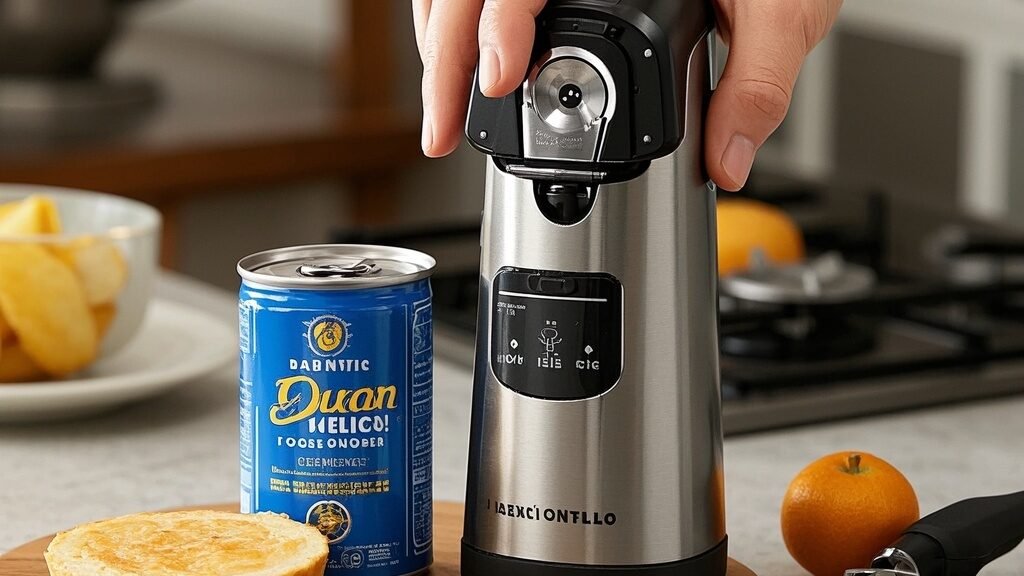
But hold on—kitchen tech has evolved. Enter the game-changer: the battery-operated electric can opener. This is where the “always plugged in” assumption gets tossed out the window. These sleek, modern devices are designed for ultimate convenience and portability. Powered typically by standard AA batteries, they offer true cord-free operation. You can store them in a drawer, carry them to a picnic, or use them on a kitchen island far from an outlet. Their operation is brilliantly simple, often featuring a one-touch automatic function. You press the button for a second, and the opener does the rest, smoothly cutting around the can’s sidewall to create a safe, smooth edge without any jagged metal shavings—a great feature for everyone, especially seniors or those with arthritis. Before first use, you might just need to check that the cutting blade is retracted, insert the batteries, and you’re good to go.
So, which one is for you? It boils down to your lifestyle. The traditional plug-in model is a reliable, “set it and forget it” appliance for a dedicated kitchen counter space. You don’t have to worry about batteries dying in the middle of opening a can of chili. On the flip side, the battery-powered version is all about flexibility and freeing up precious counter space. It’s perfect for small kitchens, RVs, dorm rooms, or anyone who values a clutter-free look.
In the end, whether an electric can opener needs to be permanently plugged in is no longer a yes-or-no question. It’s a choice. You can opt for the constant readiness of a plug-in model or embrace the liberating, cord-free convenience of a battery-powered gadget. Both will save you time and effort compared to a manual opener, but only one will let you literally cut the cord. The next time you’re in the market for this kitchen staple, think about your space and habits. Your perfect can opener might just be waiting, batteries included.
Related Guides:
- Best Rated Can Openers 2026 (All Categories)
- Best Can Opener for Seniors with Weak Grip (2026 Top Picks)
- Best Can Opener for Arthritis Patients (2026 Pain-Free Picks)
- Best Can Opener for Stroke Survivors (2026 Easy-Use Picks)
- Best Electric Can Opener (2026 Top-Rated Automatic Models)
- Best Hands-Free Can Opener (2026 No-Grip Effort Models)
- Best Manual Can Opener (2026 Ergonomic Low-Effort Models)
- Best Sharp-Edge-Free Can Opener (2026 Safe No-Cut Models)