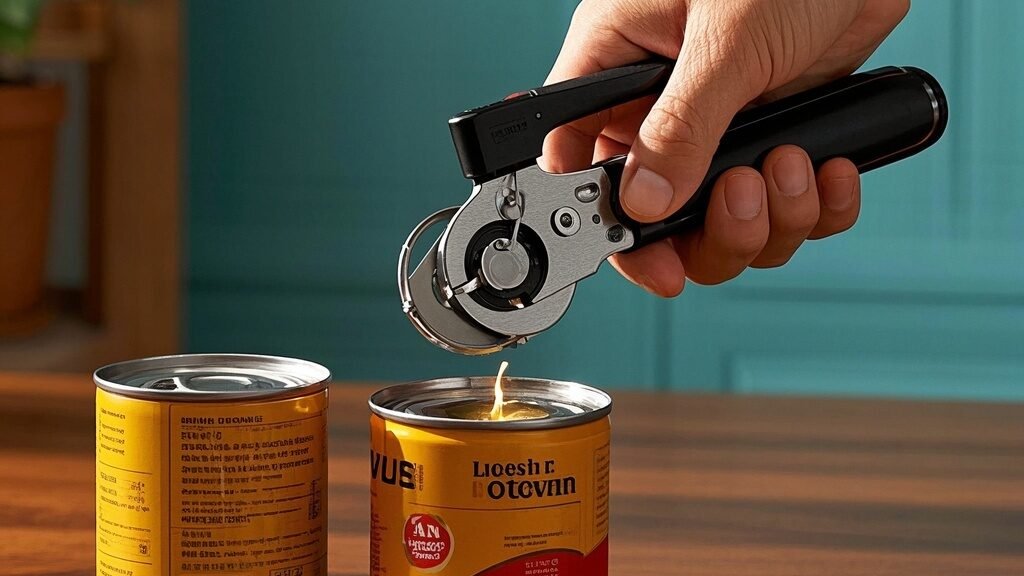
Can a manual can opener open dented cans?
The satisfying *crunch-thwick* of a can opener piercing a pristine lid is a kitchen soundtrack we all know. But picture this: you’re halfway through cooking a hearty chili, you reach into the pantry for the last can of kidney beans, and your heart sinks. There it is—a can with a noticeable dent on its side. The age-old kitchen dilemma surfaces immediately: is this safe to use? More pressingly, even if it is safe, can your trusty manual can opener handle the job, or are you moments away from a frustrating, possibly dangerous struggle with sharp edges and spilled food? This isn’t just about convenience; it’s about practicality and safety colliding at dinnertime. The question at the heart of this common struggle is precise: Can a manual can opener open dented cans? The answer, as with most things in life, is not a simple yes or no. It’s a nuanced dance between the type of dent, the design of your opener, and a critical understanding of food safety.
The Critical Safety Check: When a Dent is More Than a Cosmetic Flaw
Before we even attempt to answer the operational question, we must address the paramount issue: food safety. A manual can opener’s capabilities are irrelevant if the contents inside are compromised. According to the U.S. Department of Agriculture (USDA), the safety of a dented can depends entirely on its location and severity. Small, shallow dents on the body or rim that are smooth to the touch are usually harmless. The real danger lies in what they call “critical dents.” These are severe dents on the top or side seam of the can. The seam is the vulnerable line where the can body is sealed; a sharp dent here can warp it, creating a microscopic breach in the hermetic seal. This breach can allow air and bacteria, like the toxin-producing *Clostridium botulinum*, to enter. The rule is straightforward: if a dent is deep, sharp, or on any seam, do not open it. Discard the can immediately. Even a small dent that causes bulging, leaking, or rust is an automatic red flag. Your manual can opener is a tool, not a safety inspector. Its job begins only *after* you’ve given the can a clear bill of health.
How Manual Can Openers Work (And Why Dents Cause Trouble)
To understand the challenge, let’s look at the mechanics. A standard manual side-cutting opener works by using a rotating cutting wheel. It clamps onto the rim of the can, and as you turn the knob, the wheel cleanly shears the lid from the inside, just below the seam. This design relies on a consistent, perfectly circular, and structurally intact rim for a stable grip and a smooth cutting path. A dent, especially on the rim or the side near the top, disrupts this entire system. The opener’s clamp may not secure properly, causing it to slip. The cutting wheel can jump or stall when it hits a deformed section of the metal. Instead of a clean cut, you might get a jagged tear, creating dangerously sharp edges. In our testing, shallow body dents far from the rim often posed little operational problem for a sturdy opener. However, a compromised rim frequently led to incomplete cuts, requiring pliers or extreme caution to finish the job, defeating the purpose of a safe, easy-to-use tool.
Gear Matters: Choosing the Right Tool for an Imperfect Job
Not all manual can openers are created equal, especially when facing a dent. The classic side-cutting design is often the most vulnerable to rim damage. In contrast, a smooth-edge can opener (which punches the lid off from the top without leaving sharp edges) can sometimes handle minor rim irregularities better, as it doesn’t rely as heavily on a perfect underside of the rim for its cutting action. Its punch mechanism can navigate small deformities more gracefully. The most robust option for challenging cans is often a heavy-duty, ergonomic manual opener with large, textured handles and a strong geared mechanism. These provide maximum torque and control, allowing you to power through minor metal distortions where a flimsy dollar-store opener would simply buckle. The lesson here is that investing in a well-built manual tool expands your kitchen’s capability, turning a “maybe” into a “yes” for those borderline-safe dents.
Performance and Real-World Use: Technique is Key
Assuming the can is safe to open, your technique becomes crucial. First, always inspect the rim. Wipe it clean of any food residue or moisture to ensure the best grip. Position the opener on the least affected part of the rim. Apply firm, steady downward pressure as you turn the knob slowly. Rushing will cause slippage. If the opener skips, don’t force it; release, reposition, and try again. For a dent that has slightly misaligned the lid, you might need to “walk” the opener around the tough spot by repeatedly clamping and cutting small sections. It requires patience, but a quality manual opener in determined hands can successfully open many dented cans that would jam an automatic electric model, which typically has less user feedback and control.
So, can a manual can opener open dented cans? It can, but with two non-negotiable caveats: the dent must not compromise the can’s seal or safety, and the challenge demands a quality tool and careful technique. A manual opener offers the control and adaptability that electric models lack for this specific, imperfect task. It turns a potential kitchen failure into a manageable, if slightly more involved, procedure.
Who Should Consider a Heavy-Duty Manual Can Opener?
If your pantry occasionally hosts less-than-perfect cans, or if you simply value a reliable, no-fuss kitchen tool that won’t quit during a power outage, a robust manual can opener is an essential investment. It’s the versatile problem-solver that bridges the gap between everyday use and minor emergencies. For those seeking maximum ease for standard cans and extra muscle for the tricky ones, choosing a well-reviewed, heavy-duty manual model is the wise move.
Find the perfect can opener for your needs and tackle every kitchen challenge with confidence
Related Guides:
- Best Rated Can Openers 2026 (All Categories)
- Best Can Opener for Seniors with Weak Grip (2026 Top Picks)
- Best Can Opener for Arthritis Patients (2026 Pain-Free Picks)
- Best Can Opener for Stroke Survivors (2026 Easy-Use Picks)
- Best Electric Can Opener (2026 Top-Rated Automatic Models)
- Best Hands-Free Can Opener (2026 No-Grip Effort Models)
- Best Manual Can Opener (2026 Ergonomic Low-Effort Models)
- Best Sharp-Edge-Free Can Opener (2026 Safe No-Cut Models)