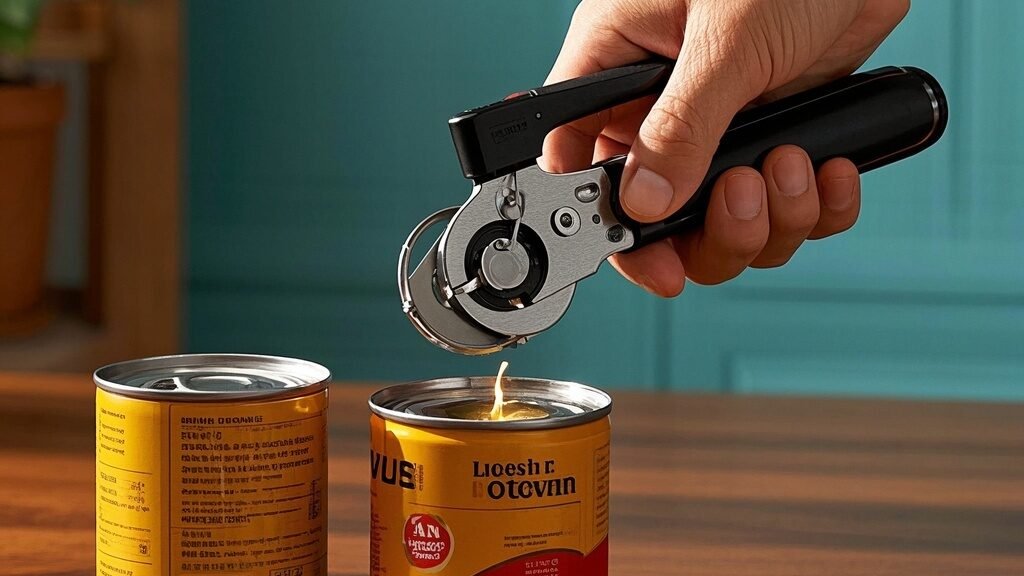
Is a battery-powered can opener easier to use than electric?
Picture this: you’re in the middle of preparing a quick weeknight dinner, a can of tomatoes in one hand, and you reach for the electric can opener plugged in by the counter. It whirs to life, then sputters and stops—the motor’s burnt out, or perhaps the cord is just frustratingly short, leaving you awkwardly maneuvering the appliance. In moments like these, the humble kitchen gadget question transforms from a minor curiosity into a real-world dilemma. The quest for genuine convenience in our daily tools often leads us past the obvious choices. When it comes to liberating the contents of a tin, the debate between a battery-powered can opener and its electric cousin is more nuanced than it appears, touching on portability, reliability, and the very definition of “easy.”
Defining “Easy”: More Than Just Push-Button
When we call a tool “easy to use,” we’re often bundling a set of expectations: it should be quick, require minimal physical effort, and work reliably without fuss. The traditional electric can opener excels at the first two. You place the can, press a lever, and the machine does the work, delivering a consistent, hands-off operation. Its primary limitation is its tether—the power cord dictates where you can use it, usually right next to an outlet. This makes it a stationary fixture. A battery-powered model, by its very design, redefines “easy” by eliminating that cord. It offers the same motorized assistance but with complete portability. You can use it on any kitchen surface, take it to the pantry, or even bring it outdoors for a barbecue or camping trip without needing an extension cord or power source. This freedom from a fixed location is a significant, often overlooked, component of convenience.
Performance and Real-World Use
In practical testing, both types deliver on their core promise: opening cans. Modern electric openers typically have more powerful motors, which can handle prolonged use or tougher lids with slightly more consistency. Battery-powered units have advanced considerably, with efficient motors and long-lasting batteries (often rechargeable via USB) that can open dozens of cans on a single charge. The cutting performance is generally comparable for standard household use. However, key differences emerge in maintenance and failure points. Electric openers can suffer from motor burnout or wear in the mechanical gears over many years. Battery-powered openers avoid motor issues related to power surges but introduce the dependency on battery life. Forgetting to charge it renders it useless, whereas a plug-in model is always “ready” as long as there’s power. The trade-off is between potential long-term mechanical wear and the need for periodic charging.
The Portability and Storage Advantage
This is where the battery-powered option truly distinguishes itself. Its cordless nature makes storage a breeze—no winding up a cord or finding a cabinet deep enough to accommodate it. It can be tucked into a drawer effortlessly. This portability extends its utility beyond the primary kitchen. It’s invaluable for smaller spaces like dorm rooms, RVs, boats, or office kitchenettes where counter space and outlets are at a premium. For individuals with mobility challenges or arthritis, the ability to bring the lightweight device to the can, rather than lifting a heavy can to a fixed appliance, can be a meaningful ergonomic benefit. The electric opener, while powerful, anchors you to a specific spot, which can be a minor inconvenience or a major limitation depending on your kitchen layout and lifestyle.
Balancing the Pros and Cons
Choosing between the two ultimately comes down to personal priorities. The electric can opener is a classic workhorse. It’s ideal for someone who does a high volume of canning or cooking, values absolute reliability from a direct power source, and has a dedicated counter space near an outlet. It requires no thought about battery levels. On the other hand, the battery-powered can opener is the champion of flexibility. It is perfect for those with limited counter space, who value uncluttered surfaces, enjoy entertaining outdoors, or live in a home where kitchen outlets are inconveniently placed. The minor responsibility of keeping it charged is, for many, a fair trade for the liberation from cords.
So, is a battery-powered can opener easier to use than an electric one? It’s not a simple yes or no. If your definition of “easy” is purely about minimizing physical effort with a stationary appliance, the electric model remains a solid choice. But if “easy” encompasses ultimate flexibility, hassle-free storage, and the ability to work anywhere without constraints, then the battery-powered version offers a more comprehensive and modern form of convenience. It adapts to your life, rather than requiring you to adapt to it.
Who Should Consider a Battery-Powered Can Opener?
This tool is a fantastic fit for you if: you have a small or awkwardly laid-out kitchen; you prefer clear, uncluttered countertops; you frequently cook or dine outdoors; you need a gadget for an RV, boat, or vacation home; or you simply value the freedom of cordless convenience above all else. For those who primarily work at a single, well-equipped kitchen station and open multiple cans daily, a traditional electric opener might still be the more seamless choice. Assess your space, habits, and what “convenience” truly means in your daily routine.
Find the perfect can opener for your needs below!
Related Guides:
- Best Rated Can Openers 2026 (All Categories)
- Best Can Opener for Seniors with Weak Grip (2026 Top Picks)
- Best Can Opener for Arthritis Patients (2026 Pain-Free Picks)
- Best Can Opener for Stroke Survivors (2026 Easy-Use Picks)
- Best Electric Can Opener (2026 Top-Rated Automatic Models)
- Best Hands-Free Can Opener (2026 No-Grip Effort Models)
- Best Manual Can Opener (2026 Ergonomic Low-Effort Models)
- Best Sharp-Edge-Free Can Opener (2026 Safe No-Cut Models)