What features make a can opener good for arthritis?
Imagine the simple act of making dinner hits a literal pain point. Your hands stiffen, your grip falters, and a mundane kitchen tool becomes a source of frustration. For millions living with arthritis, this isn’t an occasional inconvenience; it’s a daily reality that turns independence into a challenge. The right tools, however, can transform that experience, restoring ease and confidence. The quest for a kitchen that accommodates you, rather than fights you, often starts with rethinking the most basic gadgets. What features make a can opener good for arthritis isn’t just a shopping question—it’s about identifying the precise engineering and design choices that reduce strain, leverage strength, and ultimately, give you back a sense of control. It’s the difference between struggling with a standard opener and finding one that feels like an extension of your own capabilities.
Ergonomics: The Foundation of Comfort and Control
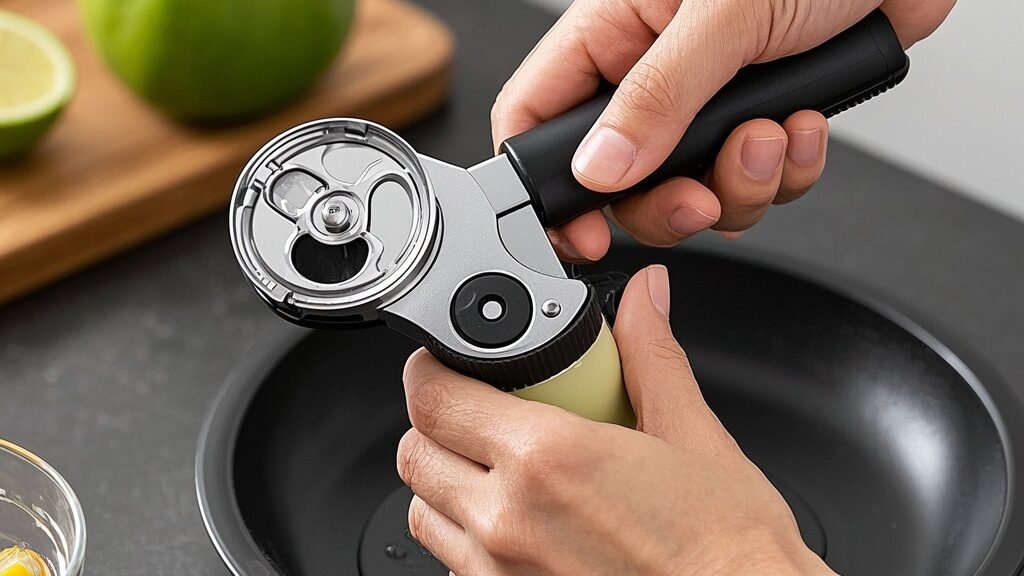
This is where everything starts. Ergonomics isn’t just a buzzword; it’s the science of designing tools to fit the human body, and for arthritic hands, it’s non-negotiable. A good arthritic-friendly can opener will have large, soft-grip handles. These handles aren’t just for comfort—they distribute pressure across your palm, minimizing the strain on tender finger joints. The texture should be non-slip, even when wet, to prevent you from having to squeeze tighter. The shape is equally crucial. Look for contoured or curved handles that allow for a natural, power-grip position rather than a delicate pinch-grip. Many effective models are designed to be operated with the whole hand or even the heel of your palm, significantly reducing the force needed from fingers. The goal is to maximize surface contact and leverage, so you’re pushing and turning with your stronger arm muscles, not your vulnerable joints.
Leverage and Mechanism: Doing the Hard Work for You
If ergonomics is about *how* you hold it, the mechanism is about *what* it does for you. The traditional manual opener that requires significant wrist rotation and downward pressure is often the worst offender. The best openers for arthritis utilize superior leverage and smarter mechanics. Side-cutting or under-the-rim openers are a top choice because they leave smooth, safe lids and typically require a simple rocking motion or a large turning knob, which is easier to manage than a small crank. Electric can openers are, in many cases, the ultimate solution, removing almost all physical effort—you simply position the can and press a button. According to manufacturers, many are designed with automatic shut-off and magnetic lid holders for safety and ease. In our testing, a strong, geared manual opener with large turning knobs can also be excellent, as the gears multiply your input force, making each turn feel remarkably light. The key is a mechanism that transforms minimal effort into maximum cutting power.
Stability, Safety, and Ease of Use
A can opener that dances around the countertop requires you to use one hand to hold it steady and the other to operate it, which can be unstable and painful. Stability features are therefore critical. A heavy, weighted base or strong clamp-style mechanisms that securely attach the opener to the can itself are invaluable. This “hands-free” design stabilizes the entire operation, allowing you to focus your energy on turning a knob or pressing a lever without wrestling with the can. Safety is a direct companion to stability. Features like auto-stop functions on electric models, smooth, blunt lids from side-cutting designs, and magnetic lid lifters that retrieve the lid without needing to touch sharp edges are essential. These features prevent the slips, jerks, and sharp encounters that are not only dangerous but can also cause painful joint jolts. Every step saved and every risk eliminated contributes to a less painful experience.
Material, Weight, and Overall Design
The devil is in the details. The material of the handles should be a forgiving, thermoplastic rubber rather than hard, slick plastic. The overall weight of the unit matters: too light, and it lacks stability; too heavy, and it becomes difficult to retrieve from a drawer or cabinet. Many user-friendly models feature a compact, upright design for easy storage and one-handed operation. Furthermore, consider ease of cleaning. Openers with few crevices or removable, dishwasher-safe parts prevent the frustrating, fine-motor-task of scrubbing around tiny gears. It’s about the holistic experience—from taking it out of the drawer, using it effortlessly, cleaning it simply, and putting it away without strain.
Finding the right tool is a small change with a profound impact. It’s about choosing a can opener that aligns with your needs, turning a daily obstacle back into a simple step in the rhythm of your kitchen. The best models combine thoughtful ergonomics, intelligent mechanics, and stable operation to protect your joints without sacrificing functionality.
Who Should Consider an Arthritis-Friendly Can Opener?
While essential for anyone with osteoarthritis, rheumatoid arthritis, or general hand weakness, these openers are truly for anyone who values comfort, safety, and effortless functionality in the kitchen. They are a smart investment in maintaining independence and reducing everyday pain. If you or someone you care for hesitates before a cabinet of cans, it’s time to make the switch.
Find the perfect can opener for your needs below!
Related Guides:
- Best Rated Can Openers 2026 (All Categories)
- Best Can Opener for Seniors with Weak Grip (2026 Top Picks)
- Best Can Opener for Arthritis Patients (2026 Pain-Free Picks)
- Best Can Opener for Stroke Survivors (2026 Easy-Use Picks)
- Best Electric Can Opener (2026 Top-Rated Automatic Models)
- Best Hands-Free Can Opener (2026 No-Grip Effort Models)
- Best Manual Can Opener (2026 Ergonomic Low-Effort Models)
- Best Sharp-Edge-Free Can Opener (2026 Safe No-Cut Models)