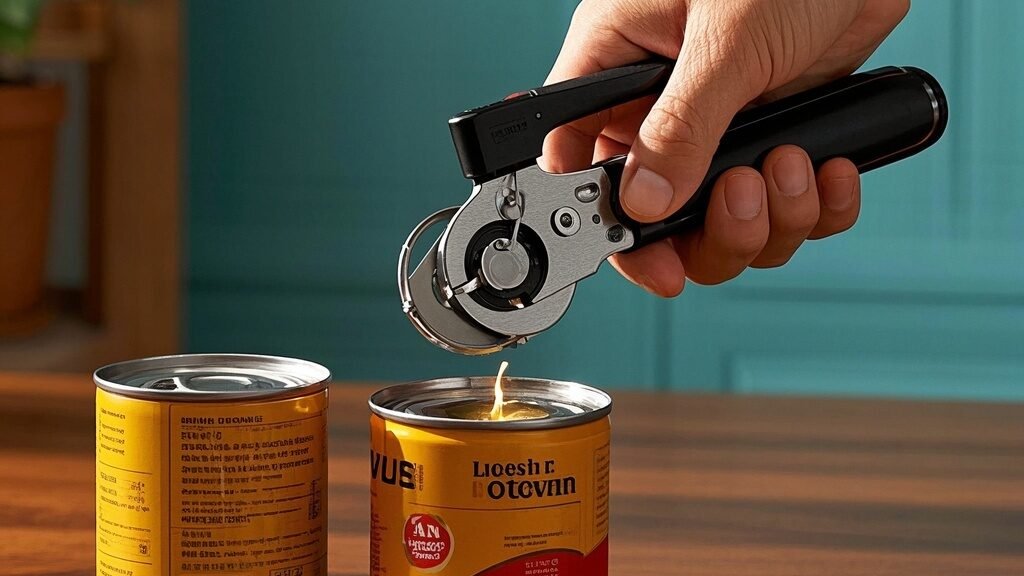
Are heavy duty can openers NSF certified?
The industrial-sized can of tomatoes mocks you from the countertop. Your regular, store-bought can opener—the one that handles soup cans with mild complaint—has just surrendered, its tiny gears stripped after a valiant but futile struggle against the thick steel rim. In commercial kitchens, meal prep centers, and even in the homes of serious food enthusiasts, this scene plays out too often. The frustration isn’t just about inconvenience; it’s about workflow, safety, and durability. When your tools fail at a critical moment, you start looking for guarantees, not just promises. This search inevitably leads to a specific benchmark of reliability and safety in foodservice equipment: NSF certification. But does this critical standard apply to the workhorses designed for the toughest jobs? Specifically, are heavy duty can openers NSF certified? The answer is more nuanced than a simple yes or no, and understanding it is crucial for anyone whose daily operations depend on unflinching performance.
Understanding the NSF Mark: More Than a Sticker
First, let’s demystify what NSF certification actually means. NSF International (now NSF) is an independent, accredited organization that develops public health standards and certifies products. In the world of foodservice equipment, an NSF certification mark signifies that the product has been rigorously tested to comply with strict standards for food safety, durability, cleanability, and material safety. It means the product is designed to withstand the harsh, sanitizing environments of commercial kitchens without corroding, harboring bacteria, or leaching harmful chemicals. For a heavy-duty can opener, certification would evaluate factors like the composition of the cutting wheel and gear materials (to ensure no metal fragments contaminate food), the ease of disassembly for thorough cleaning, and the overall construction’s ability to resist daily abuse and chemical cleaners. It’s a seal of professional-grade legitimacy.
Performance, Durability, and the Certification Overlap
Now, to the core question. The landscape is clearly divided. Many heavy duty can openers on the market, particularly those explicitly marketed for commercial use or foodservice, are indeed NSF certified. Manufacturers like Edlund, Swing-A-Way, and others often submit their flagship models for this testing. The certification becomes a key selling point, assuring buyers in schools, restaurants, cafeterias, and catering businesses that the tool meets public health compliance standards. However, not every tool labeled “heavy-duty” carries the NSF mark. Some are built for robust home use or light commercial duty and prioritize raw power and durability over the full suite of sanitation certifications. They might be made of similarly tough materials but haven’t undergone the formal (and costly) NSF testing process. Therefore, you cannot assume certification based on heft or brand alone; you must look for the official NSF mark on the product or its specification sheet.
Who Should Prioritize an NSF-Certified Heavy Duty Can Opener?
The necessity of certification hinges entirely on your use case. For any regulated foodservice environment—be it a restaurant, hospital kitchen, school cafeteria, or corporate dining hall—an NSF-certified heavy duty can opener is often not just a preference but a code requirement. Health inspectors look for these marks as evidence of compliance. The certification mitigates risk, ensuring your operation adheres to the highest food safety protocols. For the serious home cook, a passionate canner, or a small-scale meal prepper, the decision is different. While the unparalleled durability and power of a commercial-grade opener are huge benefits, the formal NSF certification might be less critical than overall build quality and performance reviews. Your “testing” happens at your own counter, not in a lab. However, choosing an NSF-certified model, even for home use, guarantees you’re getting a tool built to the most stringent hygiene and durability standards available.
So, are heavy duty can openers NSF certified? The definitive answer is: The ones built for professional, regulated environments absolutely are, and it is a non-negotiable feature for those users. For others, many exceptionally durable openers exist with and without the formal mark. The key is to align your purchase with your actual needs. Prioritize the NSF seal if your setting demands compliance and the utmost in verified food safety design. If your primary need is conquering gallons of tomatoes or beans for personal use, focus on proven brands known for commercial-grade construction, with the NSF certification being a valuable bonus rather than a strict necessity.
Who Should Consider an NSF-Certified Heavy Duty Can Opener?
You should prioritize an NSF-certified model if you operate in or supply a commercial kitchen, a community meal program, a healthcare facility, or any other environment subject to health department inspections. You are also a ideal candidate if you value the highest assured standards of material safety and hygienic design in your home kitchen, regardless of regulation. For all others, let your need for brute-force reliability and frequency of use guide you, with the understanding that an NSF-certified opener represents the pinnacle of tested performance and safety.
Find the perfect can opener for your needs below!
Related Guides:
- Best Rated Can Openers 2026 (All Categories)
- Best Can Opener for Seniors with Weak Grip (2026 Top Picks)
- Best Can Opener for Arthritis Patients (2026 Pain-Free Picks)
- Best Can Opener for Stroke Survivors (2026 Easy-Use Picks)
- Best Electric Can Opener (2026 Top-Rated Automatic Models)
- Best Hands-Free Can Opener (2026 No-Grip Effort Models)
- Best Manual Can Opener (2026 Ergonomic Low-Effort Models)
- Best Sharp-Edge-Free Can Opener (2026 Safe No-Cut Models)