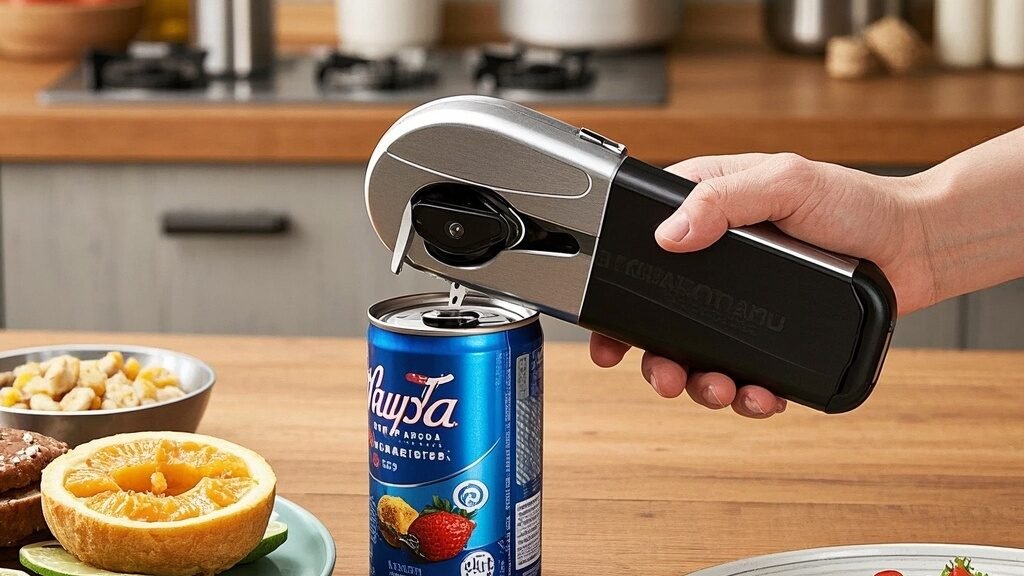
Which easy-to-operate can opener is suitable for hospital patients?
Imagine the simple act of opening a can of soup. For most, it’s a minor, thoughtless task. But for someone in a hospital bed—perhaps with limited strength in their hands, recovering from surgery, or dealing with a tremor—that small metal cylinder might as well be sealed shut. It becomes a frustrating symbol of lost independence. This isn’t just about convenience; it’s about dignity, nutrition, and the ability to perform a basic act of self-care during a vulnerable time. The quest for the right tool, therefore, becomes critical. Which easy-to-operate can opener is suitable for hospital patients? The answer goes beyond mere gadgetry, focusing on safety, minimal effort, and universal design that accommodates a wide range of physical limitations.
Core Design Principles: Safety and Effortless Operation
The primary consideration for any hospital patient is eliminating risk and strain. Traditional manual openers with sharp, exposed wheels and the need for a strong, twisting grip are immediately disqualified. The ideal candidate operates on a simple, linear motion or a single switch. Electric can openers are often the top recommendation here, as they require only the push of a button or the pull of a lever. Look for models with large, easy-to-press buttons or paddles that don’t require precise finger placement or sustained pressure. Magnetic lid holders are a non-negotiable safety feature, securely capturing the cut lid so the patient never has to touch a sharp edge. The base should be heavily weighted or have strong suction cups to prevent the appliance from sliding or “walking” during use, which could cause spills or require two-handed stabilization. In essence, the operation should be a one-touch, one-hand affair from start to finish.
Ergonomics and Accessibility in Detail
Beyond just being electric, the opener’s physical form must be accessible. This means evaluating its Ergonomics and Ease of Handling. A compact, lightweight design is beneficial if a patient needs to store it in a bedside table. However, the handle or main body must be easy to grasp, even with weak or arthritic hands. Contoured, soft-grip surfaces are a plus. The cutting mechanism should be easy to align—some models have an automatic “find and lock” feature that grabs the lip of the can as soon as it’s placed in position, removing the frustration of manual alignment. For patients with very limited dexterity or the use of only one hand, side-mounted or handheld electric openers that clamp onto the can’s side can be easier to manage than top-mounted models that require the can to be placed on a base. The goal is to minimize the number of steps and precise movements required.
Practical Considerations for the Hospital Environment
A hospital room or a recovery space at home has unique practical needs. Noise Level and Ease of Cleaning are crucial but often overlooked factors. A loud, grinding opener can be disruptive and stressful in a quiet recovery environment. Quieter models, while sometimes slightly slower, are far more considerate. Cleaning is paramount for infection control and general hygiene. The best openers for this setting have minimal nooks and crannies where food particles can hide. Look for designs where the cutting assembly is easily detachable for rinsing or is dishwasher safe. The exterior should be made of smooth, wipeable plastic. Cord length matters, too; a longer cord provides flexibility in positioning the opener on a rolling tray or table. Battery-operated options offer ultimate portability and eliminate cord management entirely, though they require battery maintenance.
Who Should Consider a One-Touch Electric Can Opener?
For hospital patients, seniors aging in place, or anyone with conditions that affect grip strength, coordination, or energy levels—such as arthritis, Parkinson’s, or post-operative recovery—the investment in a truly easy-to-operate can opener is an investment in autonomy. The most suitable models are almost invariably electric, prioritize magnetic lid capture and automatic operation, and are designed with universal access principles in mind. They transform a potentially hazardous chore into a safe, independent act. This small victory in the kitchen can contribute significantly to a person’s sense of well-being and self-sufficiency during recovery.
Find the perfect can opener for your needs below! Look for features that match the specific abilities of the user, ensuring their path to nourishment is safe, simple, and dignified.
Related Guides:
- Best Rated Can Openers 2026 (All Categories)
- Best Can Opener for Seniors with Weak Grip (2026 Top Picks)
- Best Can Opener for Arthritis Patients (2026 Pain-Free Picks)
- Best Can Opener for Stroke Survivors (2026 Easy-Use Picks)
- Best Electric Can Opener (2026 Top-Rated Automatic Models)
- Best Hands-Free Can Opener (2026 No-Grip Effort Models)
- Best Manual Can Opener (2026 Ergonomic Low-Effort Models)
- Best Sharp-Edge-Free Can Opener (2026 Safe No-Cut Models)