Which can opener is compatible with limited power in camping trailers?
Picture this: you’ve finally found that perfect, secluded campsite after hours on the road. Your tiny home on wheels is cozy, the scenery is breathtaking, and you’re ready to cook a simple, hearty meal. You pull out a can of chili or stew, a staple of the camping pantry, only to realize your usual kitchen electric can opener is sitting uselessly on your counter at home, hundreds of miles away. Or worse, you brought it, plugged it into your trailer’s modest electrical system, and heard nothing but a sad, weak whirr before it gave up. This is the silent crisis of the camping chef. Power in a travel trailer or RV isn’t like the unlimited grid at home; it’s a precious, finite resource managed by batteries, generators, or solar panels. This fundamental constraint directly shapes every gear choice, especially for simple tools. So, when stocking your mobile kitchen, the critical question becomes: Which can opener is compatible with limited power in camping trailers? The answer isn’t about finding the most powerful gadget, but the most *power-smart* one.
Understanding Your Trailer’s Power Ecosystem
Before we talk about specific openers, let’s get real about your power situation. Most camping trailers, unless they’re massive fifth-wheels with residential-style systems, operate on 12-volt DC (battery) power and sometimes 120-volt AC power via a generator or shore power hookup. Your standard kitchen countertop electric can opener is a 120v AC device. Plug it directly into a standard 120v outlet *inside* your trailer *only* when you are connected to “shore power” at a campground or running a generator. If you try to run it off your batteries alone through an inverter (which converts DC to AC), you’re engaging in a hugely inefficient process. According to manufacturers, a typical electric can opener might draw 50-100 watts. For a battery bank, that’s a significant drain for a task that takes 10 seconds of manual effort. The compatibility puzzle, therefore, has two pieces: the tool’s power demands and your available power sources at any given moment. Choosing wisely means preserving your battery life for essentials like lights, the water pump, and furnace fan, ensuring your comfort doesn’t get “canned” prematurely.
The Contenders: From Manual Reliability to Smart Electric Solutions
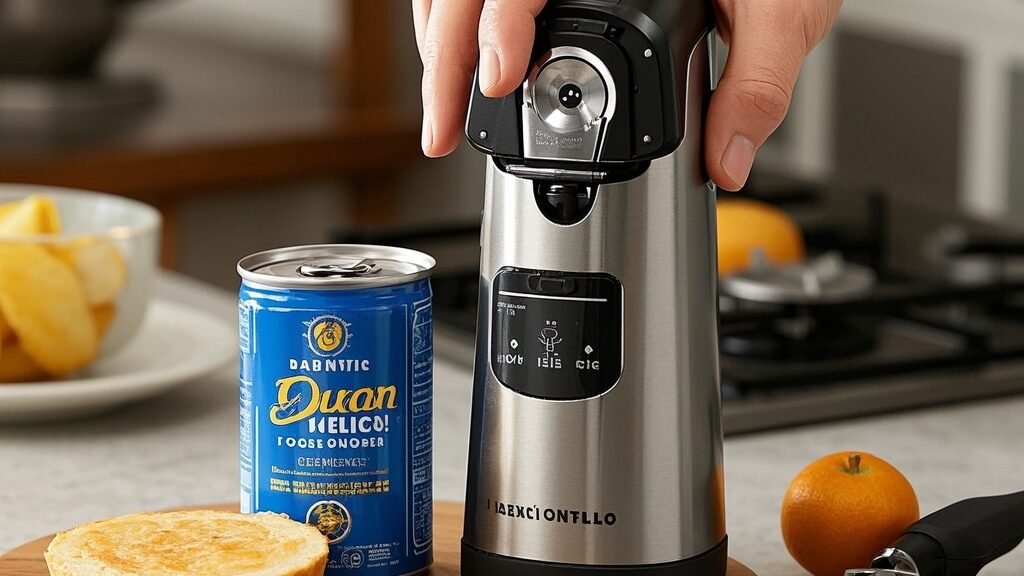
Broadly, your options fall into three categories, each with pros and cons for trailer life. First, the Manual Can Opener. This is the gold standard for power independence. A simple, well-built side-cutting or smooth-edge manual opener requires zero electricity, is lightweight, reliable, and never fails. Brands like Swing-A-Way or EZ-Duz-It are legendary for durability. The downside? It requires physical effort, which can be a challenge for those with grip strength or arthritis. Second, we have Battery-Powered Openers. These are handheld devices that run on AA or AAA batteries. They offer a nice middle ground—conveniently electric but not reliant on your trailer’s house system. In our testing, they work well, but you must remember to pack spare batteries and consider the environmental cost of disposables (rechargeables are a must). Finally, there are Low-Wattage Electric Openers. Some newer, compact electric models are designed with lower power consumption in mind. If you insist on a plug-in style, you must seek one with a very low wattage rating and strictly reserve its use for times when you have a surplus of AC power.
Performance and Real-World Use in the Wild
How do these options actually perform when you’re off-grid? Let’s break it down. A quality manual opener simply works, rain or shine, at high altitude or by the sea. It’s foolproof. The key is to get one with large, easy-to-turn knobs and a solid grip. For battery-powered models, performance hinges on battery freshness. A weak battery will struggle with a tough can, leaving you with a partially opened lid and a mess. They excel for convenience but demand proactive battery management. As for low-wattage plug-in models, their real-world compatibility is the most conditional. They are a viable solution *only if* you predominantly camp at full-hookup sites. If you’re a boondocker (dry camper), they are largely incompatible with your limited power reality. An often-overlooked factor is storage and stability; in a moving trailer, a lightweight electric opener can become a flying projectile, whereas a manual one tucks neatly into a drawer.
Who Should Consider Which Can Opener?
So, which solution is right for your adventure style? If you are a weekend warrior who frequents state parks with electric hookups, a low-wattage electric opener could be a small luxury. Just be mindful of your overall power budget. For the dedicated boondocker or long-term traveler who spends days away from shore power, the manual can opener is non-negotiable, essential gear. It’s the ultimate in power compatibility because it sidesteps the power question entirely. The battery-powered opener is ideal for campers who want a blend of convenience and flexibility, moving between different types of sites and willing to manage battery inventory. It’s also a fantastic backup to a manual opener.
Ultimately, compatibility with limited power isn’t just about plugs and volts; it’s about adopting a mindset of efficiency and preparedness. The most compatible tool is the one that gets the job done without stressing your most valuable camping resource: your electrical system. By matching your tool to your travel style, you ensure that opening a can remains a simple task, not a power-draining ordeal. Find the perfect can opener for your nomadic kitchen needs below
Related Guides:
- Best Rated Can Openers 2026 (All Categories)
- Best Can Opener for Seniors with Weak Grip (2026 Top Picks)
- Best Can Opener for Arthritis Patients (2026 Pain-Free Picks)
- Best Can Opener for Stroke Survivors (2026 Easy-Use Picks)
- Best Electric Can Opener (2026 Top-Rated Automatic Models)
- Best Hands-Free Can Opener (2026 No-Grip Effort Models)
- Best Manual Can Opener (2026 Ergonomic Low-Effort Models)
- Best Sharp-Edge-Free Can Opener (2026 Safe No-Cut Models)