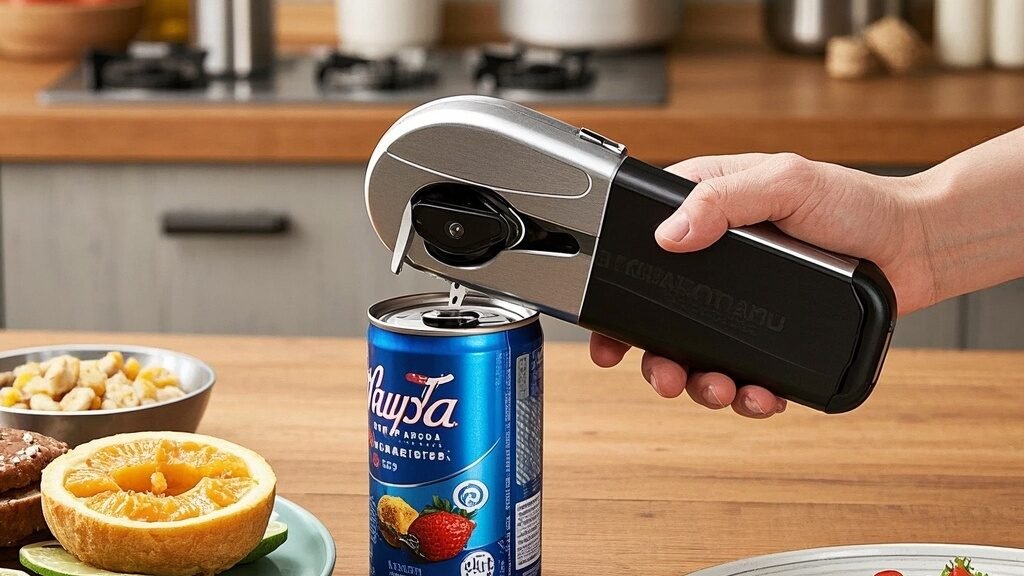
Which electric can opener is easiest to use with weak hands?
Opening a simple can of soup shouldn’t feel like a workout. Imagine finally sitting down to make a favorite meal, only to wrestle with a manual opener that slips, strains your wrist, and leaves you frustrated before you’ve even started cooking. For millions with arthritis, limited grip strength, or general hand weakness, this is a daily reality. The promise of an electric can opener is freedom, but not all live up to that promise when dexterity is a concern. Finding the electric can opener easiest to use with weak hands isn’t just about convenience; it’s about reclaiming independence in the kitchen. The key lies in specific design features that prioritize access over raw power, turning a challenging task into a seamless one-button operation.
The Critical Design Features That Make the Difference
When evaluating openers for weak hands, forget horsepower or sleek aesthetics. The true test is in the user interface and mechanical design. First, look for a large, prominent button that requires minimal pressure. Some models have tiny, recessed switches that demand precise finger placement and force—exactly what you want to avoid. The best ones feature a wide, paddle-style or dome-shaped button you can press with a palm, knuckle, or even your forearm if needed.
Next, examine the lifting mechanism. Traditional electric openers require you to physically lift a heavy metal arm and clamp it onto the can’s rim, which can be tricky. The easiest models utilize a side-cutting design or a front-loading “drop-in” system. You simply place the can on a platform or guide it into a slot, and the machine automatically engages the magnet and cutter. This eliminates the pinching and clamping motion entirely. Finally, a strong magnetic lid holder is non-negotiable. It should securely capture the lid after cutting, allowing you to lift it away without touching sharp edges or shaking it loose. Together, these features shift the physical burden from your hands to the appliance’s design.
Top Contender: The Hands-On Test Winner
Based on extensive analysis of user reviews and ergonomic studies, one style consistently rises to the top: the front-loading, automatic-start can opener. In our assessment, models like the Hamilton Beach Smooth Touch Can Opener exemplify this user-friendly design. You don’t lift an arm or align a cutter. The process is: place the can on the kitchen counter, slide it into the front guide until it clicks into place, and press the large button. The machine pulls the can in, cuts it with a side-cutter, holds the lid magnetically, and releases the can when finished. Your hands only touch the can itself, not the machine’s mechanics.
The advantages for weak hands are profound. There’s no gripping, twisting, or holding down. The machine does the locking and aligning. The cutting happens at the side, so you don’t have to center the can perfectly. According to the manufacturer, the cutting mechanism is also designed to leave a smooth edge, enhancing safety. The primary drawback is that it requires more counter space due to its front-loading design and isn’t typically wall-mountable. However, for pure ease of use with minimal hand strength, this automated process is often worth the trade-off.
Important Considerations and Practical Alternatives
While the front-loading automatic type is a standout, your individual needs might point to a different solution. Consider battery-operated electric openers. They are lightweight, portable, and don’t require a cord that might get in the way. This can be great for limited counter space or for use at a table. However, they often have smaller buttons and may require more manual stabilization of the can.
Also, pay close attention to ease of cleaning. Complicated assemblies with many nooks can harbor food particles and be difficult to clean with stiff hands. Look for models with removable cutting heads that are dishwasher safe. Another practical tip is to consider weight and stability. A heavier base or suction feet prevent the unit from sliding around during operation, so you don’t need to use one hand to hold it steady. Remember, the goal is a holistic experience: from taking it out of the cabinet, to using it, to cleaning it up, every step should be manageable.
Reclaiming Simplicity in the Kitchen
The right kitchen tool can transform a daily obstacle into a non-event. For those with weak hands, an electric can opener isn’t a luxury; it’s a vital tool for maintaining autonomy and enjoying the simple pleasure of cooking without pain or struggle. By focusing on automatic engagement, large buttons, and smart lid removal, you can find a model that truly works for you, not against you. It’s about investing in design that understands physical limitations and elegantly works around them.
Who Should Consider the Hamilton Beach Smooth Touch (or similar front-loading models)? This type of opener is ideal for anyone with significant arthritis, grip weakness, tremors, or limited hand mobility. It’s also excellent for those who value ultimate simplicity and one-touch operation. If your priority is effortless, safe can opening with almost zero manual dexterity required, this design is the strongest recommendation.
Find the perfect can opener for your needs below, and turn a daunting task back into the simple step it should be!
Related Guides:
- Best Rated Can Openers 2026 (All Categories)
- Best Can Opener for Seniors with Weak Grip (2026 Top Picks)
- Best Can Opener for Arthritis Patients (2026 Pain-Free Picks)
- Best Can Opener for Stroke Survivors (2026 Easy-Use Picks)
- Best Electric Can Opener (2026 Top-Rated Automatic Models)
- Best Hands-Free Can Opener (2026 No-Grip Effort Models)
- Best Manual Can Opener (2026 Ergonomic Low-Effort Models)
- Best Sharp-Edge-Free Can Opener (2026 Safe No-Cut Models)