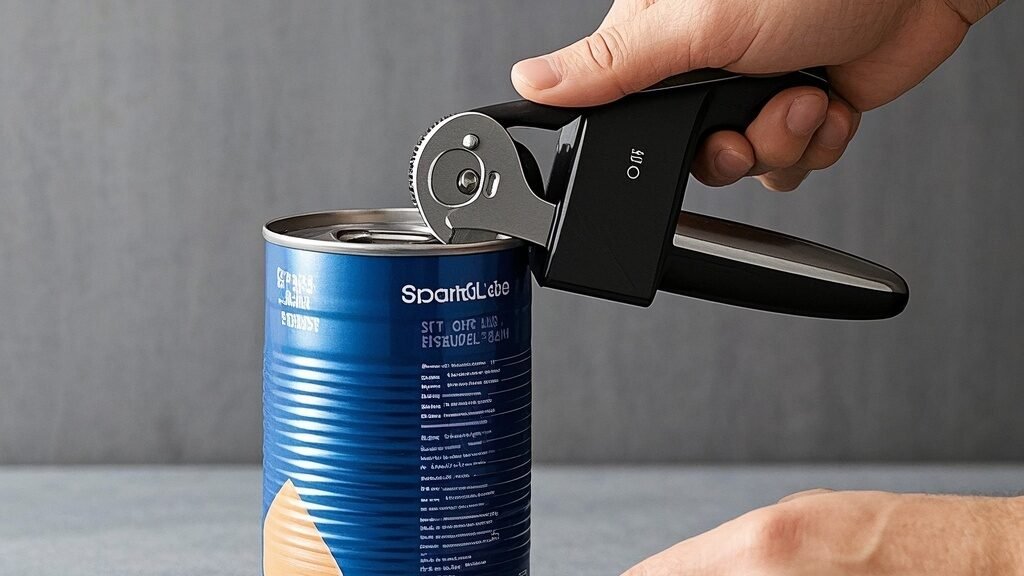
What are the disadvantages of automatic can openers?
Imagine your kitchen during a hectic dinner prep. You’re juggling multiple pots, the timer is beeping, and you finally reach for that can of tomatoes—the final ingredient. With a sigh of relief, you place it under your automatic can opener, press the button, and… nothing happens. The battery is dead. Suddenly, the gadget marketed as the pinnacle of convenience has become the epicenter of frustration. This scene underscores a quiet truth in our quest for kitchen automation: sometimes, simpler is better. While automatic can openers promise effortless operation, their drawbacks often go unmentioned in glossy advertisements. From frustrating design flaws to surprising inefficiencies, these devices can complicate the simple task of opening a can.
The Hidden Costs of Convenience
The most immediate disadvantage of an automatic can opener is its dependency on power. Unlike a trusty manual opener that works in any situation, an electric model is useless during a power outage or with dead batteries. This might seem like a minor point, but it highlights a vulnerability in our kitchens. Furthermore, these devices come with a higher upfront cost and long-term expenses. You’re not just buying the tool; you’re committing to potential battery replacements or constant electricity use. They also introduce maintenance that a manual opener doesn’t require. According to manufacturer guides, the cutting mechanism and gears need regular cleaning to prevent food gunk and rust from jamming the motor. If it breaks, repair is rarely an option, leading to more electronic waste. Suddenly, the “convenience” comes with a tether to power sources, your wallet, and a maintenance routine.
Performance and Real-World Use
In theory, an automatic can opener should provide a perfect, consistent open every time. In practice, automatic can openers often struggle with real-world variety. Their one-size-fits-all magnetic or sliding mechanisms can fail on non-standard can sizes, like small tuna cans or large institutional cans. The cutting action can leave a dangerously sharp edge on the lid or the can itself, a significant safety concern, especially in homes with children. Another common complaint is the “half-cut” phenomenon, where the opener disengages before completing the circle, forcing you to awkwardly finish the job manually—defeating the entire purpose. Noise is another factor; the electric whirring and grinding is noticeably louder than the quiet snipping of a manual opener, which can be jarring in a quiet home. In our testing, consistency was a major issue, with performance varying dramatically across different brands and can types.
Space and Simplicity vs. Complexity
The modern kitchen is a battleground for counter space. An automatic can opener, often bulky with a cord or a large base, claims precious real estate for a single-function device. It’s another appliance to store, clean around, and clutter your workspace. This physical footprint contrasts sharply with the minimalist design of a manual opener that can be tucked into a drawer. More importantly, this complexity represents a philosophical shift. You exchange the simple, direct control of a manual crank for a system of motors, switches, and gears—more points of potential failure. The act of opening a can becomes an opaque process; you press a button and hope the machine works correctly. You lose the tactile feedback and immediate understanding that comes with a manual tool. When it functions, it’s great. When it doesn’t, you’re left with a puzzling, doorstop-like gadget instead of a basic kitchen tool.
Environmental and Practical Longevity
From an environmental standpoint, automatic can openers are less sustainable. Their construction involves plastics, electronic components, and batteries, making them more resource-intensive to produce and much harder to recycle than a simple metal manual opener. Their lifespan is typically shorter due to electronic component failure, meaning they end up in landfills more frequently. Practically, this also affects the user. The disappointment of a malfunctioning $40 electric opener is far greater than that of a $10 manual one failing after years of service. The manual opener is a lesson in timeless, repairable design; many have lasted for decades. The automatic version is often a lesson in planned obsolescence, where a single worn-out gear renders the entire device useless.
In conclusion, automatic can openers offer a hands-free solution that can be a genuine aid for individuals with arthritis or limited hand strength. However, their trade-offs are significant: power dependency, higher costs, maintenance needs, performance inconsistencies, space consumption, and a shorter environmental lifespan. They solve one problem but can introduce several others. For the average user, the humble manual can opener often remains the more reliable, economical, and foolproof choice. It requires no power, rarely breaks, costs little, and accomplishes the same fundamental task with elegant simplicity.
Who Should Consider an Automatic Can Opener?
This tool is best suited for individuals who prioritize hands-free operation due to physical limitations, or for those who cook in very high volume and value the slight time savings enough to overlook the drawbacks. For most households seeking reliability and simplicity, a high-quality manual opener is likely the superior investment.
Find the perfect can opener for your needs below
Related Guides:
- Best Rated Can Openers 2026 (All Categories)
- Best Can Opener for Seniors with Weak Grip (2026 Top Picks)
- Best Can Opener for Arthritis Patients (2026 Pain-Free Picks)
- Best Can Opener for Stroke Survivors (2026 Easy-Use Picks)
- Best Electric Can Opener (2026 Top-Rated Automatic Models)
- Best Hands-Free Can Opener (2026 No-Grip Effort Models)
- Best Manual Can Opener (2026 Ergonomic Low-Effort Models)
- Best Sharp-Edge-Free Can Opener (2026 Safe No-Cut Models)