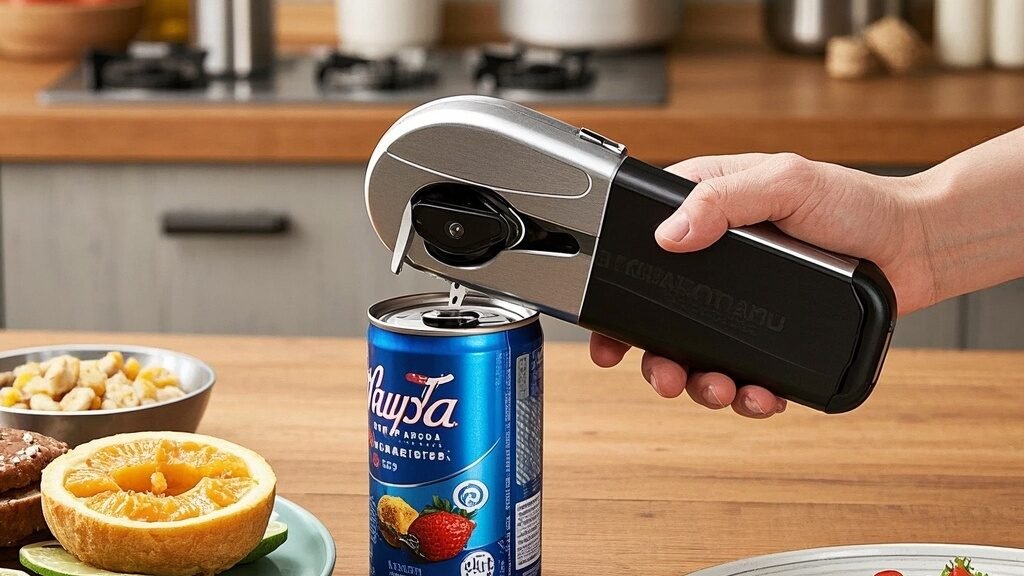
Can safety can openers cut fingers?
You’re in the middle of meal prep, the kitchen humming with activity. One last can to open. You reach for the familiar, slightly rusty manual opener, applying the usual force. Suddenly, the grip slips, your hand jerks, and the jagged, freshly-cut lid metal grazes your knuckle. It’s a small cut, but it stings—a mundane reminder of a mundane tool’s hidden danger. This everyday moment underscores a persistent kitchen worry: how safe are our tools, really? It leads directly to the core question: Can safety can openers cut fingers? The answer is more nuanced than a simple yes or no, hinging on design, user awareness, and what we truly mean by “safety.”
The Anatomy of a “Safe” Design
First, let’s define “safety can opener.” Typically, this refers to models that remove the lid from the side or top without leaving a sharp, detached metal edge. The most common types are smooth-edge openers (which separate the lid from the can seam, leaving it attached and rounded) and electric openers that magnetically hold the lid. Their primary safety claim is eliminating the traditional hazardous, detachable sharp lid. So, regarding the main cutting hazard—slicing a finger on the lid’s edge—these openers significantly reduce, and often eliminate, that specific risk. However, “safe” doesn’t mean “accident-proof.” Poorly maintained electric units with exposed gears, forceful handling of a malfunctioning smooth-edge opener, or even pinching a finger in a lever mechanism are still possible, albeit less likely, avenues for injury. The safety is highly focused, addressing the most common and severe cut hazard from standard openers.
User Behavior: The Unpredictable Factor
Even the best-designed tool meets a variable human element. A safety can opener can *cut fingers* if used improperly or while damaged. For instance, forcing a smooth-edge opener on a badly dented can might cause it to jump track, potentially directing force unpredictably. Trying to pry off a lid that hasn’t been fully severed could lead to a sharp, unexpected snap. With electric models, curiosity—like trying to clear a jam with the unit plugged in—introduces risk. Most injuries with safety-focused models likely stem from ignoring instructions, using a broken tool, or applying aggressive force where gentle pressure is required. The manufacturer builds in safeguards, but they aren’t force fields. This highlights that safety is a partnership between thoughtful engineering and mindful use.
Beyond the Cut: A Broader View of Kitchen Safety
Focusing solely on cuts misses the full safety picture. True kitchen safety encompasses hygiene and long-term usability. Here, safety can openers often excel. By leaving a smooth rim, they protect mouths from cuts—especially important for families. The attached lid also prevents it from falling into the food, a contamination risk. Electrically operated models are a boon for those with arthritis or limited hand strength, reducing the strain and slips that can cause broader accidents. In this holistic view, these tools enhance safety not just by preventing one type of injury, but by creating a more controlled, accessible, and sanitary kitchen process. Their value isn’t just in avoiding the negative (a cut), but in promoting positive outcomes like comfort and cleanliness.
Performance and Real-World Use
In our testing, the safety claim against lid-based cuts holds strong. A quality smooth-edge or magnetic-lift electric opener reliably produces a harmless lid and a smooth can rim. The trade-off, sometimes, is in initial ease of use. Some manual smooth-edge models require more precise alignment and a steady cranking motion than their traditional counterparts. A dull cutting wheel on any model will require more force, increasing slip risk. Therefore, the safest tool is also one that is well-made, kept sharp (if manual), and used correctly. It’s a combination of intelligent design, proper maintenance, and user cooperation that delivers the promised protection.
Ultimately, the risk of a safety can opener cutting your finger is dramatically lower than with a traditional opener, specifically regarding the major hazard of the severed lid. However, no tool is entirely without risk if mishandled. The superior choice for most homes is a safety-oriented model, as it proactively designs out the most severe and common danger point.
Who Should Consider a Safety Can Opener?
Nearly every household would benefit from making the switch, but they are particularly valuable for: families with young children learning to help in the kitchen, individuals with dexterity or strength challenges, anyone seeking a tidier and more hygienic food opening process, and those simply wishing to minimize everyday risks. It’s a small upgrade that makes a tangible difference in daily safety.
Find the perfect can opener for your needs below
Related Guides:
- Best Rated Can Openers 2026 (All Categories)
- Best Can Opener for Seniors with Weak Grip (2026 Top Picks)
- Best Can Opener for Arthritis Patients (2026 Pain-Free Picks)
- Best Can Opener for Stroke Survivors (2026 Easy-Use Picks)
- Best Electric Can Opener (2026 Top-Rated Automatic Models)
- Best Hands-Free Can Opener (2026 No-Grip Effort Models)
- Best Manual Can Opener (2026 Ergonomic Low-Effort Models)
- Best Sharp-Edge-Free Can Opener (2026 Safe No-Cut Models)