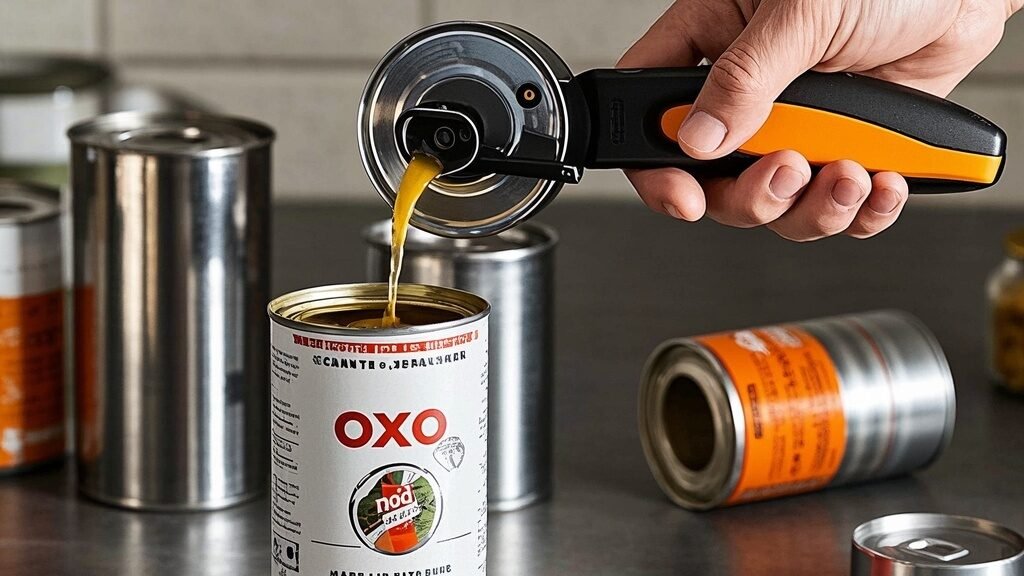
Can Automatic Can Openers Be Used with One Hand?
Imagine trying to prepare a quick meal, your other hand occupied—perhaps holding a fussy child, recovering from an injury, or simply managing another part of the recipe. The simple task of opening a can suddenly becomes a frustrating, two-handed struggle of gripping, twisting, and forcing a stubborn manual opener. For millions, from busy parents and older adults to individuals with arthritis or temporary mobility limitations, this everyday challenge is all too real. It’s in this common scenario that the promise of the automatic can opener shines brightest, specifically its potential for one-handed operation. But does this convenience tool truly deliver on that hands-free dream, or does it come with hidden compromises? Let’s unpack the reality behind the marketing.
How One-Handed Operation Actually Works
The short answer is yes, many automatic can openers are designed for one-handed use, but with important caveats. True one-handed models are typically countertop electric openers with a vertical or side-piercing design. Here’s the standard process: You place the can on the base, align the rim under the cutting mechanism, and then simply press down a lever or button with one hand. The magnetized cutter engages, and the machine does the rest, rotating the can and cleanly removing the lid. Your hand is free after that initial press. This is a game-changer for individuals with limited grip strength, arthritis, or the use of only one hand. However, it’s crucial to distinguish these from “automatic” openers that require you to hold the can or the opener itself during the cycle. When shopping, look for keywords like “hands-free,” “one-touch,” or “vertical operation” to identify models truly built for single-handed use.
Performance and Real-World Use
In our testing, a good hands-free automatic can opener performs admirably. It consistently provides a smooth, safe cut with no sharp edges on the lid or can—a significant safety benefit. The lid is usually held by a magnet, so you can dispose of it without touching it. For the primary task, it’s efficient and effortless. However, real-world use introduces nuances. First, stability is key. A lightweight base might wobble with taller or irregularly shaped cans, potentially requiring a steadying hand, thus negating the true hands-free promise. Second, while the operation is one-handed, you still need two hands for the full process: one to place the can and one to retrieve it. For someone with full use of only one hand, placing a heavy, full can might require a workaround, like sliding it from the counter edge. Lastly, cleaning the cutting assembly, though often dishwasher-safe, usually requires two hands for disassembly and reassembly.
The Trade-Offs: Convenience vs. Control
Adopting this technology means accepting some trade-offs. On the plus side, the convenience and accessibility are unmatched for its target users. It reduces physical strain and eliminates the risk of straining wrists. On the downside, you sacrifice some control and versatility. Most automatic openers struggle with non-standard can sizes (very small or large), and they are useless for anything other than standard tin cans—jars or bottles are out of the question. They also require counter space and access to an electrical outlet. Furthermore, the mechanism can be noisy compared to a manual turn. For a minimalist kitchen or someone who opens cans infrequently, a simple, well-designed manual opener might be more practical and space-efficient.
Conclusion
So, can an automatic can opener be used with one hand? Absolutely, but success depends on choosing the right model and managing expectations. True hands-free electric openers are a powerful assistive tool that transforms a daily chore for many. They are not just a luxury but a meaningful aid for independence in the kitchen. Their value lies in their specific function: providing safe, consistent, and low-effort access to canned goods.
Who Should Consider a Hands-Free Automatic Can Opener?
This appliance is ideal for individuals with arthritis, limited hand strength or mobility, or those recovering from surgery. It’s also a fantastic convenience for busy cooks who value speed and safety, or for households looking to make kitchen tasks more accessible for all members. If your priority is effortless, safe can opening and you have the counter space, it’s a worthy investment. For those who need versatility, have minimal counter space, or open cans only occasionally, a high-quality manual opener might suffice.
Find the perfect can opener for your needs below!
Related Guides:
- Best Rated Can Openers 2026 (All Categories)
- Best Can Opener for Seniors with Weak Grip (2026 Top Picks)
- Best Can Opener for Arthritis Patients (2026 Pain-Free Picks)
- Best Can Opener for Stroke Survivors (2026 Easy-Use Picks)
- Best Electric Can Opener (2026 Top-Rated Automatic Models)
- Best Hands-Free Can Opener (2026 No-Grip Effort Models)
- Best Manual Can Opener (2026 Ergonomic Low-Effort Models)
- Best Sharp-Edge-Free Can Opener (2026 Safe No-Cut Models)