What Is the Most Comfortable Can Opener for Elderly Users?
Imagine standing in your kitchen, a simple can of soup in hand. Your fingers, perhaps stiff from arthritis or weakened with age, struggle to grip a traditional, bulky opener. The metal tab is slippery, the twisting motion painful, and a flicker of frustration—or worse, a fear of losing independence—washes over you. This everyday task, something most of us perform without a second thought, becomes a genuine hurdle. For seniors, comfort in the kitchen isn’t a luxury; it’s a cornerstone of safe, autonomous living. This is why finding the most comfortable can opener for elderly users goes beyond mere convenience—it’s about preserving dignity and ease in daily rituals. The answer isn’t one-size-fits-all; it lies in a combination of ergonomic design, intuitive operation, and adaptive technology that respects the physical changes that come with aging.
Ergonomics and Grip: The Foundation of Comfort
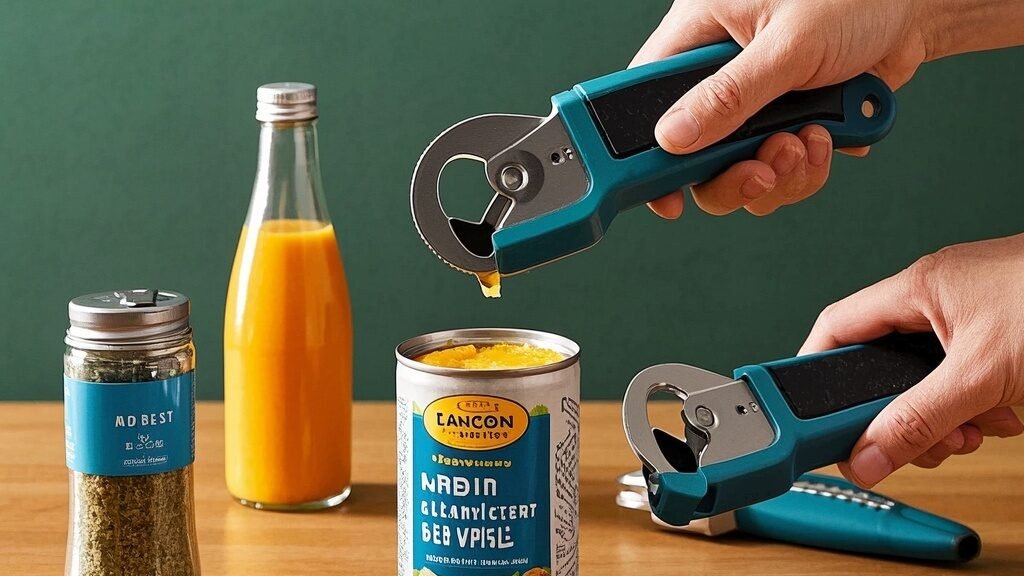
Comfort starts where the hand meets the tool. Traditional can openers require significant grip strength and precise wrist rotation, which can be challenging for those with arthritis, reduced hand strength, or tremors. The most comfortable openers for seniors prioritize ergonomics above all. Look for models with large, soft-grip handles. These padded handles are often made from non-slip materials like rubber or TPE, requiring less force to hold and operate. They cushion the hand and distribute pressure more evenly. Furthermore, the opening mechanism itself should require minimal effort. Lever-style or side-mounted openers are often superior because they allow the user to push down with their palm or body weight rather than twist with their fingers and wrist. A wider handle span can also be beneficial, as it allows for a whole-hand grip rather than a pinch grip, which is particularly taxing for arthritic joints. The goal is to transform a task that requires fine motor skills into one that can be managed with broader, stronger muscle groups.
Operation and Safety: Simplifying the Process
A comfortable opener is also a simple and safe one. Complexity breeds frustration and risk. The ideal opener for an elderly user should be intuitively obvious, often operating in one or two straightforward steps. Automatic electric openers excel here, as they typically involve just placing the opener on the can and pressing a button. They eliminate gripping, twisting, and applying pressure entirely. However, not everyone prefers electric models. For manual options, one-touch or “smooth-edge” can openers are a revelation. Instead of cutting through the metal lid, they roll it open from under the rim, leaving a perfectly smooth edge that eliminates the risk of sharp cuts—a major safety concern. The lid is also left intact, often sitting magnetically on top, so there are no sharp lids to handle or dispose of. This seamless operation reduces anxiety and physical strain, making the process not only more comfortable but also significantly safer.
Stability and Power Considerations
An opener that slips or dances around the counter is far from comfortable. Stability is a critical, often overlooked, component. Heavy-duty bases on electric models or strong suction cups on some manual versions ensure the opener stays firmly in place during use. This allows the user to focus their energy on operating the device, not wrestling it into submission. For electric openers, consider the power source. Corded models offer consistent power but limit placement due to the cord. Cordless models provide excellent flexibility and can be used anywhere, but they require recharging. For seniors, a cordless model with a simple docking station might be preferable to avoid awkward bending to reach an outlet. Additionally, look for features like automatic shut-off, which stops the motor once the cutting cycle is complete. This adds a layer of safety and prevents the frustration of an opener that keeps running if you forget to turn it off.
Who Should Consider a Specialized Elderly-Friendly Can Opener?
The quest for the most comfortable can opener for elderly users is fundamentally about adapting our tools to meet our changing needs. It’s a small investment that pays substantial dividends in independence, safety, and daily joy. The right choice balances physical ease with personal preference—whether that’s the effortless push-button of a reliable electric model or the satisfying, low-effort crank of a high-leverage manual design with soft-grip handles.
Who Should Consider an Elderly-Friendly Can Opener? This isn’t just for seniors themselves. It’s a thoughtful solution for adult children looking to support their parents’ independence, caregivers seeking to make daily tasks safer, or anyone experiencing hand weakness, arthritis, or reduced dexterity. It’s a tool that acknowledges that comfort in the kitchen is a universal need that evolves over time.
Find the perfect can opener for your needs below
Related Guides:
- Best Rated Can Openers 2026 (All Categories)
- Best Can Opener for Seniors with Weak Grip (2026 Top Picks)
- Best Can Opener for Arthritis Patients (2026 Pain-Free Picks)
- Best Can Opener for Stroke Survivors (2026 Easy-Use Picks)
- Best Electric Can Opener (2026 Top-Rated Automatic Models)
- Best Hands-Free Can Opener (2026 No-Grip Effort Models)
- Best Manual Can Opener (2026 Ergonomic Low-Effort Models)
- Best Sharp-Edge-Free Can Opener (2026 Safe No-Cut Models)