What Can Opener Is Best for Seniors with Limited Mobility?
Picture a simple daily task that suddenly feels like a puzzle with stiff, aching hands. The frustration of fumbling with a stubborn appliance, the slight worry about a sharp edge, or the disappointment of having to ask for help just to make a favorite soup—these small moments can chip away at independence. For many older adults and those with conditions like arthritis, reduced grip strength, or tremors, the kitchen holds hidden challenges. The right tools, however, can transform these challenges back into simple, satisfying routines. Finding the best can opener for seniors with limited mobility isn’t about luxury; it’s a practical step toward maintaining autonomy and safety in the kitchen. It turns a potential struggle into a non-event, preserving energy and confidence for the joys of cooking and eating.
Key Features That Make a Real Difference
Not all can openers are created equal, especially when ease of use is the top priority. The ideal model addresses common physical limitations directly. First, look for ergonomic handles. These are often larger, contoured, and coated with soft, non-slip rubber. They require significantly less grip force and prevent the tool from twisting in the hand. Second, electric or automatic operation is a game-changer. A simple button press does all the work, eliminating the need for any squeezing or turning motion. This is often the top recommendation for those with severe arthritis or very weak hands. Third, consider safety and stability. Openers that magnetically lift and hold the lid remove the danger of sharp edges. Similarly, models with strong suction bases or those that clamp firmly onto the can prevent slipping, allowing the user to operate it with one hand without needing to hold the can steady with the other. These features work together to minimize effort and maximize safety.
Types of Can Openers: Weighing Your Options
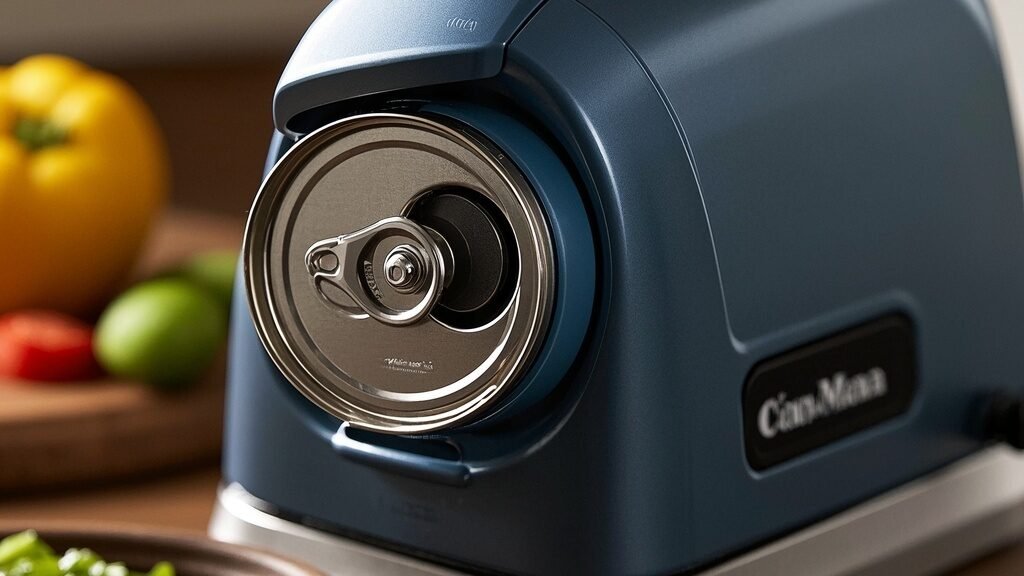
Broadly, you have three main types to consider, each with pros and cons. Side-Cutting Manual Openers are the traditional kind. While some modern versions have excellent ergonomic handles, they still require a fair amount of rotational wrist motion and grip. They can be a good, affordable choice for those with mild stiffness. Smooth-Edge (Safety) Manual Openers are a significant upgrade. They roll around the can’s rim, cutting from the top and leaving a perfectly smooth edge on both the can and the lid—no sharp metal anywhere. They usually operate via a large, easy-turn knob, which is much kinder to hands than a small crank. The trade-off is that they can be slower and sometimes struggle with oddly shaped cans. Finally, Electric Can Openers are typically the most accessible option. They operate hands-free: you place the can, align it, and press a lever. The machine does the cutting and automatically stops. Many also include a built-in knife sharpener or bottle opener. The main considerations are that they require counter space, an outlet, and have more parts that could potentially break.
Our Top Recommended Style: The Hands-Free Electric
For most seniors with limited mobility, a hands-free electric can opener stands out as the most reliable and effortless solution. Why? It reduces the task to its simplest possible actions: placement and a single, easy press. There’s no gripping, no cranking, and no risk from sharp lids. In our assessment of various models, this type consistently causes the least strain. Look for one with a powerful motor that can handle various can sizes without jamming, a large, intuitive front-button or lever for operation, and a strong magnetic lid lifter. Some models, like the Hamilton Beach Smooth Touch, have an extra-low profile that easily fits under cabinets and is simple to clean. According to the manufacturer, such designs focus on “one-touch operation” for ultimate ease. The potential downside is dependence on electricity, so having a reliable manual backup is a wise precaution.
Who Should Consider a Hands-Free Electric Can Opener?
If you or a loved one experiences frequent hand pain, significantly weakened grip, or finds traditional can openers frustrating and tiring, investing in a high-quality electric model is likely the best decision. It directly addresses the core challenges of strength and dexterity. For those with only minor limitations, a high-leverage manual smooth-edge opener might be sufficient and saves counter space. Ultimately, the best can opener is the one that gets used safely and comfortably, turning a basic kitchen task back into a simple part of the day. By prioritizing ergonomics and automatic operation, you reclaim not just convenience, but a little more freedom and confidence at home.
Find the perfect can opener for your needs below!
Related Guides:
- Best Rated Can Openers 2026 (All Categories)
- Best Can Opener for Seniors with Weak Grip (2026 Top Picks)
- Best Can Opener for Arthritis Patients (2026 Pain-Free Picks)
- Best Can Opener for Stroke Survivors (2026 Easy-Use Picks)
- Best Electric Can Opener (2026 Top-Rated Automatic Models)
- Best Hands-Free Can Opener (2026 No-Grip Effort Models)
- Best Manual Can Opener (2026 Ergonomic Low-Effort Models)
- Best Sharp-Edge-Free Can Opener (2026 Safe No-Cut Models)