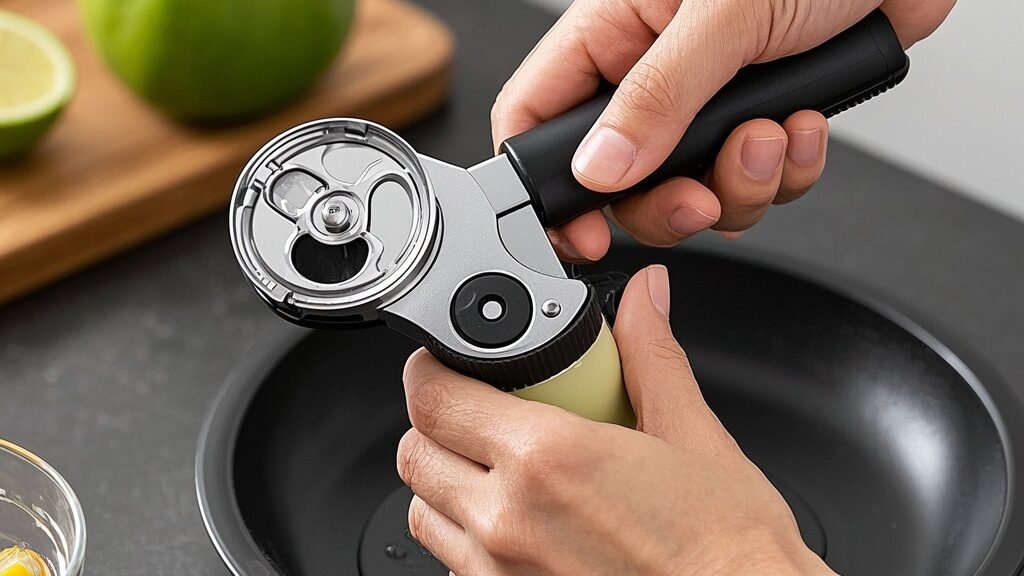
Are Hands-Free Can Openers Good for Seniors?
Imagine standing in your kitchen, a simple can of soup in hand. Your fingers, perhaps stiff from arthritis, struggle to grip a traditional can opener. The wrist-twisting motion feels awkward, the pressure painful. For many older adults, this mundane task transforms into a frustrating barrier to independence and nutrition. It’s in these everyday moments that a seemingly small tool can make a profound difference. This brings us directly to the question at hand: Are hands-free can openers good for seniors? The answer, for a significant number of older adults and caregivers, is a resounding yes. These devices aren’t just a novelty; they address real physical challenges, offering safety, ease, and a renewed sense of autonomy in the kitchen.
The Core Benefits: Safety, Ease, and Independence
The primary advantage of a hands-free, or automatic, can opener is its fundamental redesign of the task. Instead of requiring coordinated hand strength, grip, and a twisting motion, the user simply places the can onto a magnetic holder, aligns it, and presses a button or lever. The machine does the rest, cleanly cutting the lid from the side without leaving a sharp edge. For seniors with arthritis, Parkinson’s disease, reduced hand strength, or limited dexterity, this eliminates pain and struggle. It also dramatically improves safety. Slipping blades and jagged lids are common hazards with manual openers; a hands-free model contains the cutting mechanism and often leaves a smooth edge, minimizing the risk of cuts. This safety and ease directly support independent living, allowing seniors to prepare their own meals without assistance or anxiety over a simple can.
Performance and Real-World Use
How do these openers hold up in daily life? In our assessment, modern hands-free can openers are generally reliable for standard steel cans. They operate on batteries or plug into an outlet, and most feature a simple, intuitive design. The cutting process is typically consistent, and the automatic shut-off once the cycle is complete provides a hands-off experience. However, they are not without limitations. Some models can struggle with unusually tall, short, or thin aluminum cans (like those for tuna or sardines). The noise during operation can be a surprising whir or grind, which might startle some users. Cleaning is also a consideration; while many parts are dishwasher-safe, the cutting mechanism itself can trap food particles and requires careful rinsing. According to manufacturer instructions, regular cleaning is essential to maintain performance and hygiene.
Important Considerations Before Buying
While the benefits are clear, a hands-free can opener isn’t a universal solution. It’s crucial to consider the individual’s specific needs and abilities. These devices require a different skill set: the user needs sufficient hand stability to place and align the can correctly on the platform. For those with severe tremors or very limited coordination, this alignment step could still pose a challenge. Counter space is another factor, as these units have a larger footprint than a manual opener. Furthermore, they represent a shift from a purely mechanical tool to an electro-mechanical one, meaning dependence on batteries or power. A dead battery or electrical issue renders it useless, whereas a manual opener never loses its basic function. Therefore, it’s wise to view it as a fantastic primary tool, but perhaps not the only can opener in the house.
Who Should Consider a Hands-Free Can Opener?
So, who is the ideal user for this appliance? It is an excellent investment for seniors experiencing pain, weakness, or stiffness in their hands, wrists, or shoulders when using traditional openers. It’s equally valuable for individuals who feel nervous about sharp edges or who have conditions that affect grip and control. Caregivers will also appreciate the reduced risk of injury and the increased independence it fosters in those they care for. For an active senior with no dexterity issues, a simple manual opener might suffice. But for anyone for whom the phrase “I just can’t get this open anymore” is a familiar kitchen lament, a hands-free can opener is more than just good—it can be a small but transformative tool for safer, easier, and more independent living.
Find the perfect can opener for your needs below!
Related Guides:
- Best Rated Can Openers 2026 (All Categories)
- Best Can Opener for Seniors with Weak Grip (2026 Top Picks)
- Best Can Opener for Arthritis Patients (2026 Pain-Free Picks)
- Best Can Opener for Stroke Survivors (2026 Easy-Use Picks)
- Best Electric Can Opener (2026 Top-Rated Automatic Models)
- Best Hands-Free Can Opener (2026 No-Grip Effort Models)
- Best Manual Can Opener (2026 Ergonomic Low-Effort Models)
- Best Sharp-Edge-Free Can Opener (2026 Safe No-Cut Models)