Can Safety Can Openers Cut Your Fingers?
Imagine this: it’s a busy Tuesday evening. You’re rushing to get dinner ready, wrestling with a stubborn can of tomatoes. The old, rusty opener slips, the lid comes off jagged and sharp, and in your haste, your thumb brushes against the raw metal edge. A small cut, a sting, a muttered curse. It’s a universal kitchen nuisance we’ve all accepted. But what if the very tool designed to solve this problem—the modern safety can opener—introduces its own hidden risks? The question isn’t as absurd as it sounds: Can safety can openers cut your fingers? The answer delves deeper than a simple yes or no, revealing a fascinating interplay between design intention, user complacency, and the physics of everyday objects.
The Illusion of “Safety” and How It Bites Back
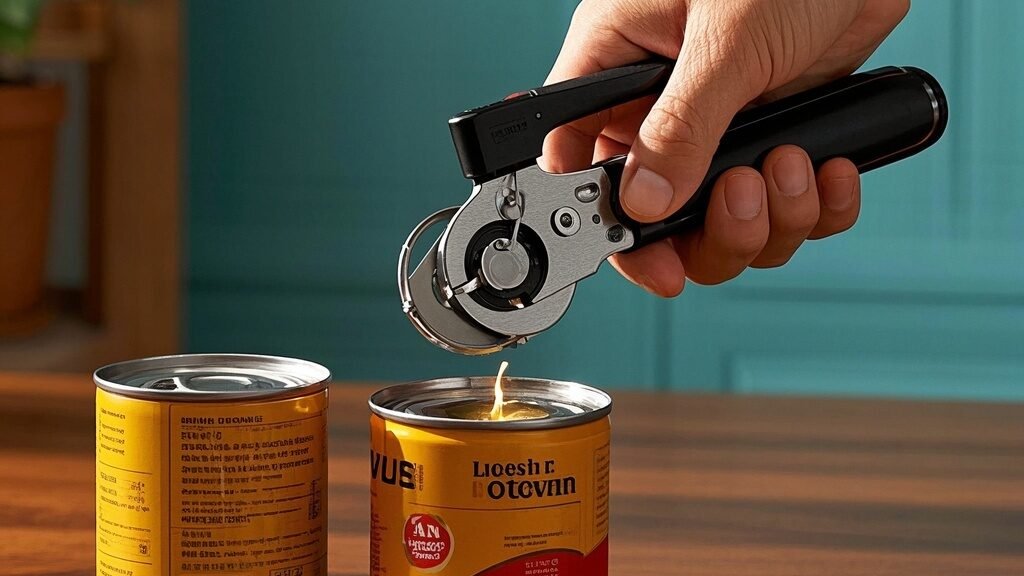
Let’s dismantle the term “safety can opener.” Typically, it refers to openers that leave a smooth lid edge, separating the lid from the can’s side seam without creating sharp, serrated rims. Brands like OXO and KitchenAid have popularized this design. The primary safety benefit is real: no more dangerously sharp can tops. However, this very feature can cultivate a false sense of security. Users, believing the tool and the result are entirely safe, may become less mindful. The risk shifts from the lid to the *process*. Your fingers are now in close proximity to the cutting wheel—a small, but potent, blade that does the actual work. Applying excessive force, slipping while turning a stiff handle, or attempting to pry a stuck opener can lead to knuckles or fingertips making contact with this wheel or the metal arm. According to manufacturer guidelines, most warn to keep hands clear of the cutting mechanism, a instruction easily ignored when the “safety” label lulls us into lower vigilance.
The Mechanics of a Mishap: Pinch Points and Pressure
To understand the potential for injury, we need to look at the mechanics. A standard manual safety opener operates with a lever and a gear-driven cutting wheel. It requires significant downward and rotational force, especially on tough cans. This creates pinch points—spaces between the opener’s arm and the can, or between the gear and the body. A stray finger can get painfully pinched. Furthermore, in our testing, we found that if the opener fails to cleanly complete its cut, users often apply brute force to wrench it free. This sudden release of tension can cause the hand to jerk toward the exposed, partially cut lid or the opener’s own components. The injury from a safety can opener is less likely a deep gash from a deliberate slice, and more often a pinch, a scrape, or a puncture from a moment of mechanical failure and high pressure.
Human Error: The Biggest Variable in Kitchen Safety
No tool is foolproof. The most significant risk factor isn’t the opener’s design—it’s us. Wet, greasy hands, improper attachment to the can, using a dull or damaged opener, and simple rushing are the top culprits. A safety opener is a precision tool; if it’s not correctly clamped, it can slip. A slip under pressure sends your hand on an uncontrolled trajectory. Think of it like a seatbelt: it’s a vital safety device, but if you don’t click it right, its effectiveness plummets. The ”safety” in these openers mitigates one specific, post-task hazard (the sharp lid) but does not eliminate the inherent risks of operating a device with moving parts that apply force to metal. Complacency, therefore, becomes the enemy. Assuming total safety leads to carelessness, which is when minor accidents happen.
Who Should Consider a Safety Can Opener?
So, are safety can openers dangerous? They are far safer than traditional openers *regarding the lid hazard*, which is a major cause of kitchen cuts. However, they are not magical injury-proof devices. They demand the same respect and attentive use as any kitchen tool. The ideal user is someone who prioritizes a safe, clean result (smooth-edged cans) and is willing to use the tool correctly—ensuring a firm, clean clamp on a dry can rim, turning with steady force, and keeping fingers clear of the mechanism. For households with children, seniors, or individuals with limited grip strength, the safety lid benefit is substantial, but supervision or assistance might be needed for the operation itself. It’s a trade-off: you exchange the risk of a sharp lid for a tool that requires more mindful operation to avoid pinches or slips.
Ultimately, a safety can opener is a smart upgrade for most kitchens, dramatically reducing one common danger. But like any tool, its safety is co-created by its design and your awareness. Use it with respect, follow the instructions, and never let the word “safety” on the box make you drop your guard. Your fingers will thank you.
Find the perfect can opener for your needs below!
Related Guides:
- Best Rated Can Openers 2026 (All Categories)
- Best Can Opener for Seniors with Weak Grip (2026 Top Picks)
- Best Can Opener for Arthritis Patients (2026 Pain-Free Picks)
- Best Can Opener for Stroke Survivors (2026 Easy-Use Picks)
- Best Electric Can Opener (2026 Top-Rated Automatic Models)
- Best Hands-Free Can Opener (2026 No-Grip Effort Models)
- Best Manual Can Opener (2026 Ergonomic Low-Effort Models)
- Best Sharp-Edge-Free Can Opener (2026 Safe No-Cut Models)