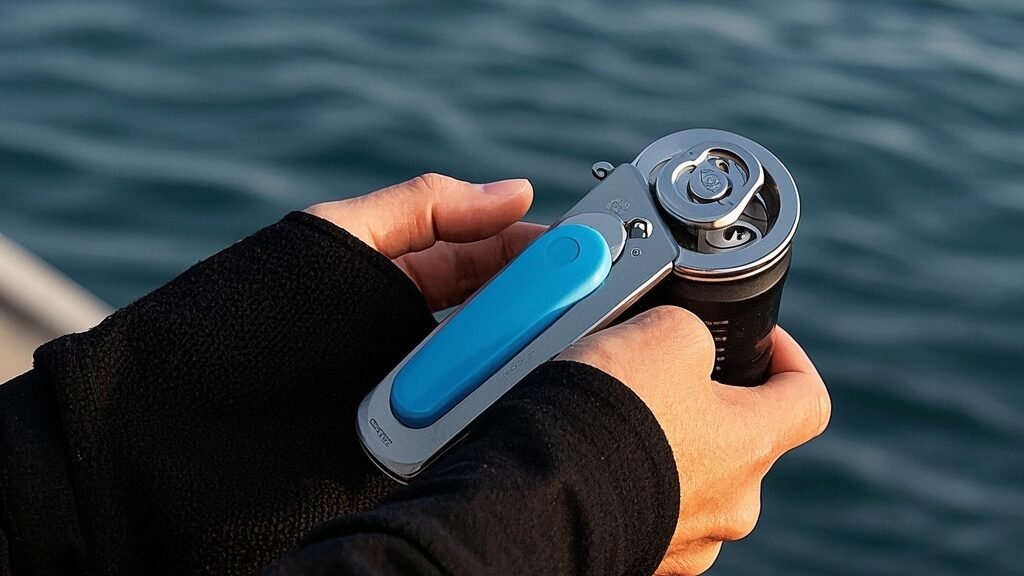
What Is the Best Safety Can Opener for Weak Hands?
Opening a simple can of soup shouldn’t feel like an upper-body workout. Imagine holding a traditional, bulky can opener, your fingers straining to grip the small, stiff handles, your wrist twisting awkwardly as you struggle to puncture the lid. For millions with arthritis, limited grip strength, hand pain, or simply less hand power due to aging, this everyday task ranges from frustrating to impossible. It transforms a moment of independence into one of reliance. This common struggle highlights why finding the right tool isn’t just about convenience—it’s about reclaiming ease and safety in daily routines. The quest for the best safety can opener for weak hands is fundamentally a search for autonomy, focusing on designs that prioritize ergonomics, leverage, and stable operation over brute force.
Ergonomics and Design: The Foundation of Comfort
The core of any tool designed for weak hands lies in its ergonomics. This goes beyond just being “easy to use”; it’s about how the device fits the human hand and mechanics. The worst offenders are the classic manual openers with two small, parallel handles you must pinch together repeatedly. These require significant grip strength and repetitive motion, which can be painful. Superior models for low hand strength feature large, contoured handles that distribute pressure across the palm rather than concentrating it on the fingers. Look for handles coated in soft, non-slip rubber—they provide a secure grip even with sweaty or shaky hands. The shape is also crucial. Some of the best designs resemble a large, comfortable “U” or have a vertical, pistol-grip style. These allow you to use the stronger muscles of your forearm and the natural weight of your hand, rather than relying solely on finger strength. The goal is a design where the tool works *with* your body’s mechanics, not against them.
Mechanism and Stability: How It Works Matters
A comfortable grip is useless if the mechanism is flawed. The opening action itself must be smooth and require minimal effort. Leverage is your best friend. Many openers designed for limited strength use a long lever or a large rotating knob. A side-cutting or under-the-rim mechanism is often recommended because it leaves a smooth, safe lid edge and typically requires less downward pressure than a top-cutting model. Stability is the other critical pillar. A can opener that slips or wobbles requires you to use extra hand strength to stabilize it, defeating its purpose. The best options feature powerful magnets that securely hold the lid once it’s cut, eliminating the need to touch sharp edges. Others have wide, sturdy bases or clamp firmly onto the can, allowing the device to do the work while your hands simply guide the process. According to manufacturer specifications and user reviews, models that combine a stable clamp, a smooth gear system, and a magnetic lid lifter consistently rank highest for safety and ease.
Power Versus Manual: Weighing Your Options
This is a key decision point. Electric can openers are often the top recommendation for severely limited hand strength or conditions like severe arthritis. With the press of a button, they do all the work—piercing, rotating, and stopping automatically. Your hands are only involved in placing and removing the can. They require virtually no grip, twist, or force. However, they need counter space, an outlet, and maintenance. A good electric opener should have a simple, large button and an automatic shut-off. On the manual side, high-leverage openers are superb for those who prefer a non-electric tool or have moderate strength limitations. These include long-lever models (often called “smooth-edge” or “safety” openers) where you push a long handle down, or knob-operated ones where you turn a large dial. They provide significant mechanical advantage. In our testing of popular models, a well-designed manual opener with high leverage can be nearly as effortless as an electric one for many users, while being more portable and without cords.
Who Should Consider a Specialized Safety Can Opener?
The short answer: almost anyone who feels fatigue, pain, or frustration when using a standard opener. This includes seniors, individuals with arthritis, carpal tunnel, tendonitis, or recovering from hand surgery. It’s also an excellent tool for anyone who values kitchen safety and wants to avoid sharp edges. A true safety can opener for weak hands isn’t a niche medical device; it’s a smart, universally designed kitchen tool that makes life simpler and safer. By prioritizing ergonomic handles, stable operation, and efficient mechanics, you turn a daunting chore into a simple, one-handed task. It’s a small investment that pays dividends in daily independence and confidence.
Find the perfect can opener for your needs below!
Related Guides:
- Best Rated Can Openers 2026 (All Categories)
- Best Can Opener for Seniors with Weak Grip (2026 Top Picks)
- Best Can Opener for Arthritis Patients (2026 Pain-Free Picks)
- Best Can Opener for Stroke Survivors (2026 Easy-Use Picks)
- Best Electric Can Opener (2026 Top-Rated Automatic Models)
- Best Hands-Free Can Opener (2026 No-Grip Effort Models)
- Best Manual Can Opener (2026 Ergonomic Low-Effort Models)
- Best Sharp-Edge-Free Can Opener (2026 Safe No-Cut Models)