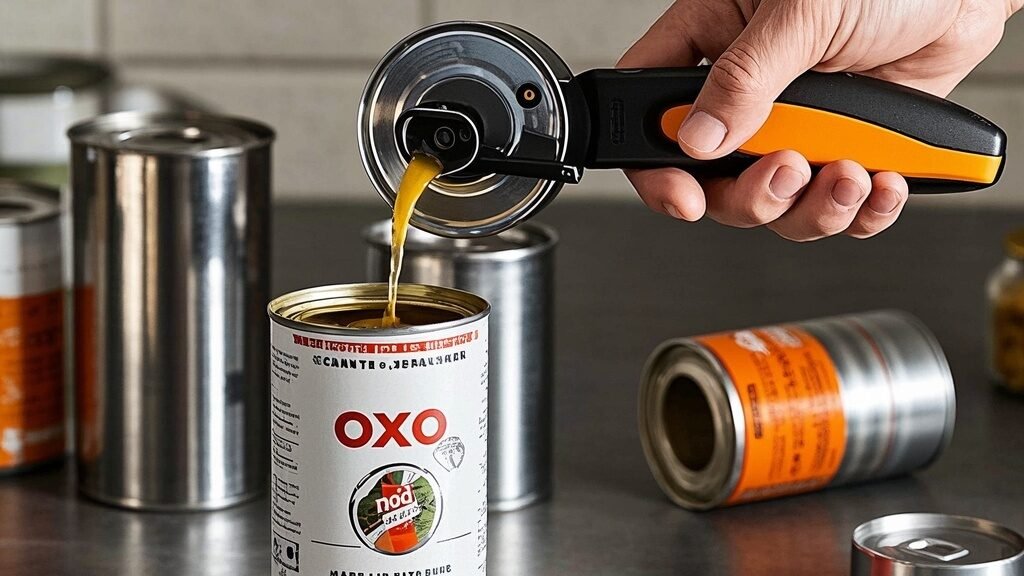
What is the best can opener for electric can openers?
You’re standing in your kitchen, a simple can of soup or beans in one hand, and a traditional manual can opener in the other. You brace yourself, grip the handles, and start twisting. Your wrists ache, your fingers feel weak and slippery, and that familiar frustration bubbles up. This daily task, something so many take for granted, becomes a small battlefield. For millions with arthritis, limited grip strength, hand injuries, or simply the natural changes that come with age, the humble can opener is anything but simple. It’s a barrier to independence and a source of daily frustration. The quest, then, isn’t just for a can opener; it’s for a tool that returns ease and autonomy to the kitchen. So, what is the best can opener for weak hands? The answer lies not in a stronger grip, but in smarter design that does the hard work for you.
The Core Principles: What Makes a Can Opener “Easy-Use”
Forget brute force. The best openers for weak hands eliminate the need for squeezing, twisting, and precise coordination. They rely on a few key principles. First is leverage. Side-mounted or “smooth-edge” openers that pierce the lid’s side and roll it off provide a stable, ratcheting action. You turn a large, easy-grip knob, which requires minimal finger strength compared to squeezing handles together. Second is stability. A strong magnetic lid lifter is crucial. It removes the need to pry up a sharp lid with fingernails or a utensil—a common pain point and safety hazard. Third is power—literally. Electric can openers are often the ultimate solution, reducing the action to a single button press. They hold the can automatically and do all the work, requiring only the strength to place the can and push a lever. Finally, ergonomic handles with soft, non-slip grips that conform to the hand reduce strain and prevent slipping.
Top Contender Types: From Simple Leverage to Full Automation
Broadly, you have three excellent paths to consider, each with its own advantages. The Smooth Edge (Side-Cutting) Opener is a fantastic manual option. It cuts the lid from the side, leaving a perfectly smooth rim—no sharp edges. The rolling mechanism is typically operated by a large, easy-turn dial. It requires minimal hand strength, though some fine motor skill is needed to align it. Then there’s the Lever-Style or “One-Touch” Opener. You clamp it onto the can, press a lever down, and the gear-driven mechanism rotates the can itself. It requires an initial push on the lever but no continuous turning. According to the manufacturer, some models can be operated with one hand. Finally, the Electric Can Opener is the hands-down winner for maximum assistance. You position the can, and a motor does everything: piercing, rotating, and stopping automatically. Many also feature automatic magnetic lid-lifting and even built-in knife sharpeners. The trade-off is that it requires counter space and an outlet.
Key Features to Prioritize in Your Search
When comparing models, keep this checklist in mind. Ease of Grip & Operation: Look for large, padded handles or dials. For electric models, large, easy-press buttons or levers are key. Magnetic Lid Lifter: This is non-negotiable for safety and ease. It should hold the lid securely. Stability: Does the opener clamp or hold the can firmly on its own? A wobbly can makes the process difficult and dangerous. Ease of Cleaning: Look for designs that are dishwasher-safe or have minimal crevices where food can get stuck. Complex gears can be hard to clean. Versatility: Some openers handle various can sizes, from small tuna cans to large coffee tins. Others might struggle with odd shapes. Check the specifications. Durability: Read reviews about longevity. A plastic gear in a manual opener might wear out faster than a metal one. For electric models, motor reliability is paramount.
Finding the right tool can transform a dreaded chore into a non-event. It’s about preserving energy for the joys of cooking and eating, not wasting it on the packaging. The best can opener for weak hands isn’t a luxury; it’s an assistive device that promotes independence in the heart of your home. By prioritizing leverage, stability, and smart features, you can choose a tool that works with you, not against you.
Who Should Consider a Hands-Free or Electric Can Opener?
Anyone for whom a traditional opener causes pain, frustration, or anxiety should make the switch. This includes individuals with arthritis, carpal tunnel, tendonitis, neuropathy, or recovering from hand surgery. It’s also an excellent choice for seniors who want to maintain kitchen independence, or for anyone who simply values convenience and safety. Your kitchen tools should serve you, not challenge you.
Find the perfect can opener for your needs below!
Related Guides:
- Best Rated Can Openers 2026 (All Categories)
- Best Can Opener for Seniors with Weak Grip (2026 Top Picks)
- Best Can Opener for Arthritis Patients (2026 Pain-Free Picks)
- Best Can Opener for Stroke Survivors (2026 Easy-Use Picks)
- Best Electric Can Opener (2026 Top-Rated Automatic Models)
- Best Hands-Free Can Opener (2026 No-Grip Effort Models)
- Best Manual Can Opener (2026 Ergonomic Low-Effort Models)
- Best Sharp-Edge-Free Can Opener (2026 Safe No-Cut Models)