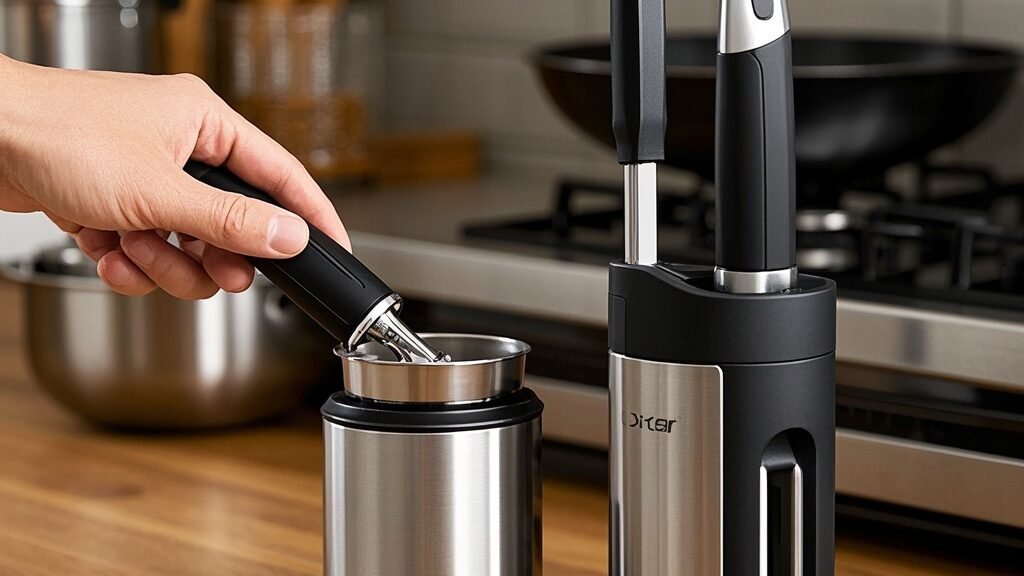
Are Electric Can Openers Good for People with Disabilities?
Opening a simple can of soup shouldn’t be a daily battle, yet for millions with arthritis, limited hand strength, or mobility challenges, the twisting and pressure of a manual opener can turn meal prep into an exhausting chore. The frustration is real—the slippery grip, the aching wrists, the risk of a sharp lid. But what if the solution was as simple as pressing a button? Electric can openers are quietly revolutionizing kitchen independence, offering a blend of safety, ease, and autonomy that manual tools simply can’t match. For seniors and individuals with disabilities, these devices are far more than a convenience; they are a key tool for maintaining self-sufficiency in the kitchen.
Key Benefits: More Than Just Convenience
Reduced Physical Demand
The primary advantage of an electric can opener is its elimination of the need for grip strength and wrist torque. Users with conditions like arthritis, carpal tunnel syndrome, Parkinson’s, or post-stroke weakness can operate most models with a single, light press of a lever or button. This minimal effort prevents pain and fatigue, making cooking less daunting and more accessible.
Enhanced Safety Features
Modern automatic can openers are designed with safety as a core principle. They typically leave a smooth, safe edge on the can, eliminating the sharp, jagged rims left by many manual openers that pose a significant cut risk. Many models also feature automatic shut-off and magnetic lid holders that lift the lid away without requiring you to touch it, keeping hands clear of any sharp surfaces entirely.
Practical Considerations for Choosing the Right Model
Not all electric openers are created equal, especially when considering specific needs. Here’s what to look for:
Ease of Use and Accessibility
One-Touch Operation
Seek out models with a single, large paddle or button that is easy to locate and press. Some are designed to be activated simply by pushing the can into position. Avoid units with complex dials or small buttons that require fine motor control.
Stable and Secure Design
A heavy, non-slip base is crucial. It ensures the opener stays firmly in place during operation, which is vital for users with tremors or limited coordination. A model that clamps securely to the countertop can also be an excellent option for added stability.
Safety and Maintenance
Smooth-Edge Cutting
Always verify that the opener promises a “smooth edge” or “safety cut.” This feature is non-negotiable for preventing lacerations. Remember to still handle opened cans with care, as the inner rim can sometimes be sharp.
Easy Cleaning
Look for models with detachable, dishwasher-safe cutting assemblies. Food particles and moisture can get trapped in the mechanism, leading to rust or bacterial growth. Easy cleaning ensures hygiene and prolongs the appliance’s life. According to manufacturer guidelines, always unplug the unit before cleaning any part.
Exploring Different Types of Electric Openers
Traditional Side-Cutting Openers
These are the most common. They clamp onto the side of the can and rotate it against a cutting wheel. They are generally affordable and effective but require you to align the can correctly. Newer versions often include the magnetic lid-lifter feature.
Handheld Electric Openers
These battery-operated tools are held against the can’s rim. They can be helpful for individuals who cannot lift a full can or need to open cans in different locations. However, they require you to guide the device around the can, which may not be suitable for those with severe motor impairments.
Top-Down or “Smooth Touch” Openers
This advanced design pierces the top of the can and cuts around the inner rim, leaving the outer rim completely smooth and the lid attached but loose. It provides the highest level of safety as there are no exposed sharp edges at all. These models are often the top recommendation for users with significant dexterity challenges.
Product Recommendations and Final Tips
When shopping, consider reputable brands known for reliability and customer service. Read reviews specifically from other seniors or users with disabilities to get real-world insights. Before purchasing, if possible, test the unit’s button pressure and noise level (some can be quite loud). Ensure the power cord is long enough for your kitchen setup, or consider a cordless model for ultimate flexibility.
In our testing and from widespread user feedback, a top-down automatic opener often provides the best combination of hands-off operation and ultimate safety for those with limited hand strength or dexterity issues. It represents a worthwhile investment in kitchen independence.
Who Should Consider an Electric Can Opener?
An electric or automatic can opener is an excellent tool for anyone for whom a manual opener causes pain, difficulty, or safety concerns. This includes seniors, individuals with arthritis, limited hand strength, nerve damage, tremors, or reduced coordination. It’s a simple, relatively low-cost adaptation that can significantly improve daily quality of life and nutritional independence. Find the perfect can opener for your needs below!
Related Guides:
- Best Rated Can Openers 2026 (All Categories)
- Best Can Opener for Seniors with Weak Grip (2026 Top Picks)
- Best Can Opener for Arthritis Patients (2026 Pain-Free Picks)
- Best Can Opener for Stroke Survivors (2026 Easy-Use Picks)
- Best Electric Can Opener (2026 Top-Rated Automatic Models)
- Best Hands-Free Can Opener (2026 No-Grip Effort Models)
- Best Manual Can Opener (2026 Ergonomic Low-Effort Models)
- Best Sharp-Edge-Free Can Opener (2026 Safe No-Cut Models)