Are Electric Can Openers Hard to Store?
For many, the kitchen is a sanctuary of convenience, but for others, it can be a landscape of small challenges. Opening a simple can of soup or beans becomes a frustrating task when arthritis, limited grip strength, or general fatigue sets in. This is where the promise of an electric can opener shines: effortless operation at the push of a button. Yet, that promise often comes with a looming, practical question that stops many from making the purchase. Is this helpful appliance destined to become a permanent countertop fixture, taking up precious real estate? Let’s unpack the reality of electric can opener storage and discover how modern designs are solving this very issue.
Beyond Convenience: Why Electric Openers Are a Game-Changer
For seniors and individuals with conditions like arthritis, carpal tunnel, or reduced hand strength, a manual can opener isn’t just inconvenient—it can be a barrier to independent living and nutrition. The twisting motion and firm grip required can range from uncomfortable to impossible.
Key Benefits for Accessibility
Electric and automatic can openers eliminate the physical strain entirely. With a simple alignment and the press of a lever or button, the magnetized lid is lifted cleanly away, leaving a smooth edge that’s safer to handle. This isn’t just about convenience; it’s about empowerment, safety, and maintaining the ability to prepare meals without assistance. The automatic shut-off feature found in many models adds another layer of safety, preventing the motor from overrunning.
Furthermore, these devices often come with additional functions, like built-in knife sharpeners or bottle openers, reducing the need for multiple tools. When evaluating one, consider it not just as a can opener, but as an accessibility aid that promotes kitchen independence.
The Storage Dilemma: Fact vs. Fiction
The primary concern about storage is valid. Traditional electric can openers, often shaped like a small appliance with a bulky motor housing, can be awkward. They don’t stack neatly like plates or nest like bowls. However, the narrative that they are universally hard to store is outdated.
Modern Design Evolution
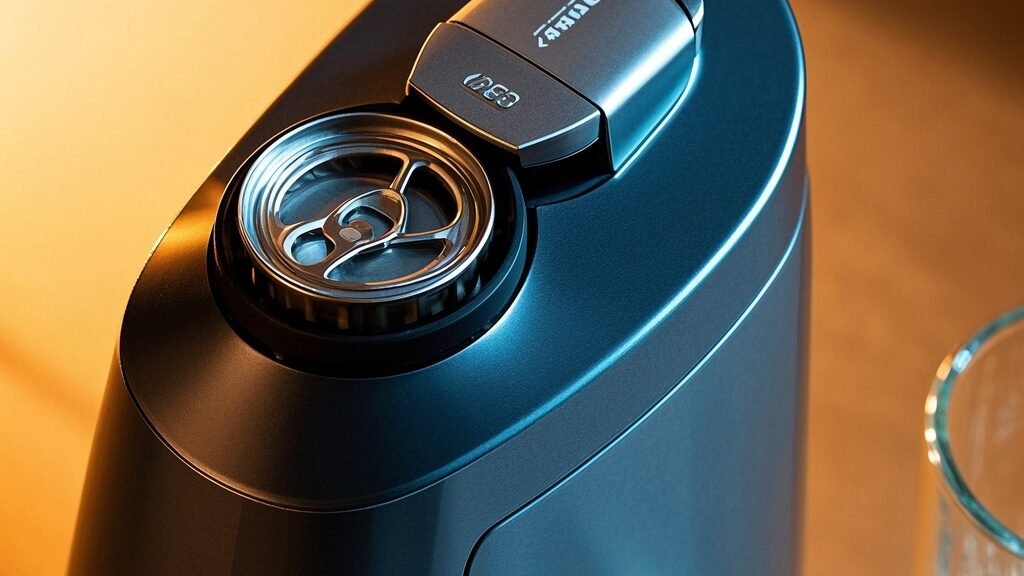
Manufacturers have keenly listened to consumer feedback. The latest generation of electric can openers prioritizes a compact and vertical footprint. Many models are now designed to be tall and narrow rather than short and wide, occupying a smaller square footage on your counter. Some feature a sleek, almost minimalist profile that blends in more like a high-end kitchen tool than a clunky gadget.
The real storage solution, however, often lies in rethinking your space. They can easily fit on a dedicated appliance shelf in a pantry, inside a standard-width kitchen cabinet, or even on a wall-mounted shelf. The key is to measure the appliance’s base dimensions and depth before purchasing and identify a potential home for it in your kitchen’s ecosystem.
Practical Tips for Easy Storage and Use
With a little planning, storing your electric can opener can be seamless. The goal is to make it accessible enough for regular use without letting it dominate your workspace.
Finding the Right Spot
First, assess your kitchen’s flow. If you use it daily, a designated corner of the counter might be worth the trade-off. For less frequent use, consider easy-access storage. A pull-out cabinet tray or a shallow shelf near the prep area is perfect. Many models have cord wraps to keep things tidy. For the ultimate space-saver, look for under-cabinet mounted openers. These install discreetly beneath your cabinet, freeing up the entire counter and making them incredibly easy to access—just swing the arm down to use.
Safety and Maintenance for Longevity
Proper storage also involves care. Always unplug the unit and ensure the cutting mechanism is clean and dry before putting it away to prevent rust and hygiene issues. Check the manufacturer’s instructions; some cutting assemblies are even dishwasher safe. Regular cleaning of the magnetic lid holder and cutting wheel is crucial for smooth operation and food safety.
Top Features to Look for in a Space-Saving Model
When shopping, prioritize these features to minimize storage headaches:
Compact & Vertical Design: Seek out models that emphasize a small base. A vertical orientation is often more storage-friendly than a horizontal one.
Lightweight Construction: A lighter model is easier to lift in and out of a cabinet, especially for those with strength limitations.
Cord Management: A wrap or clip to secure the cord prevents tangles and makes the unit neater in storage.
Easy-Clean Components: Removable, washable parts simplify maintenance, encouraging you to clean it promptly after use before storing.
Multi-Functionality: A model that also opens bottles and bags can replace several tools, ultimately saving space overall.
Who Should Consider an Electric Can Opener?
If you or a loved one struggles with the mechanics of a manual opener, the benefits of an electric model far outweigh the minor storage considerations. It’s an investment in safety, independence, and ease in the kitchen. Modern designs are more thoughtful than ever, offering compact solutions that can fit into a variety of kitchen layouts. The small amount of space it requires is a small price to pay for the significant daily convenience and accessibility it provides.
Find the perfect electric can opener to suit your storage needs and enhance your kitchen independence below!
Related Guides:
- Best Rated Can Openers 2026 (All Categories)
- Best Can Opener for Seniors with Weak Grip (2026 Top Picks)
- Best Can Opener for Arthritis Patients (2026 Pain-Free Picks)
- Best Can Opener for Stroke Survivors (2026 Easy-Use Picks)
- Best Electric Can Opener (2026 Top-Rated Automatic Models)
- Best Hands-Free Can Opener (2026 No-Grip Effort Models)
- Best Manual Can Opener (2026 Ergonomic Low-Effort Models)
- Best Sharp-Edge-Free Can Opener (2026 Safe No-Cut Models)