Do Automatic Can Openers Work Without Pressure?
You’re standing in the kitchen, a can of soup in one hand and a traditional manual opener in the other. Your grip isn’t what it used to be, or perhaps arthritis makes the twisting motion a challenge. The question isn’t just about convenience anymore; it’s about accessibility. For seniors and individuals with limited hand strength, the simple act of opening a can can become a significant barrier. This is where the promise of electric and automatic can openers shines. But do these devices truly work without the need for manual pressure, or is that just clever marketing? Let’s cut through the hype and examine how modern automatic can openers function, who they’re designed for, and what you should know before buying one.
How Automatic Can Openers Actually Work
Understanding the mechanism is key to answering our core question. Unlike their manual counterparts, which require you to apply downward pressure and rotational force, most modern automatic can openers operate on a fundamentally different principle.
The Magnetic Lid Holder and Cutting Mechanism
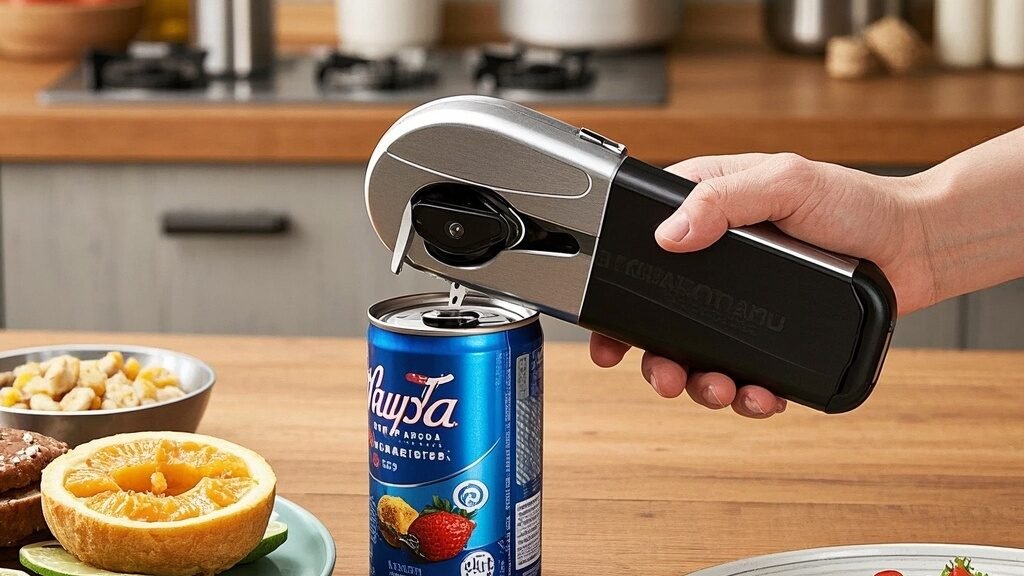
Premium models feature a two-step process. First, you align the can under the cutting head, often with the help of a guide. When you press the start button or lever, a powerful magnet descends to grip the lid firmly. Simultaneously, a small, sharp cutting wheel engages with the can’s rim. The motor then spins the entire can on a rotating base (or moves the cutter around a stationary can), cleanly severing the lid around its perimeter. The magnet holds the cut lid, lifting it away from the can’s contents without any sharp edges left behind. The critical point here is that the machine provides the gripping force and cutting motion. Your role is primarily to position the can and press a button, requiring minimal to zero sustained hand pressure.
Key Benefits for Seniors and Limited Hand Strength
The advantages of switching to an automatic model extend far beyond simple convenience. For the target audience, they can restore independence and safety in the kitchen.
Reduced Physical Demand and Pain Relief
This is the most significant benefit. Conditions like arthritis, carpal tunnel syndrome, Parkinson’s, or general weakness can make a manual opener impossible to use. An electric opener eliminates the need for pinching, squeezing, and twisting motions. A simple button press or touch-pad activation is all that’s required, which can be managed with a fist, elbow, or even adapted tools for those with severe limitations.
Enhanced Safety and Cleanliness
Safety is a major concern. Manual openers can slip, leading to cuts from sharp lids or the opener itself. Automatic models with magnetic lid lifters completely remove the cut lid, so you never have to touch it. Many also leave a smooth edge on the can, eliminating the risk of cutting your fingers. This feature is invaluable for anyone with reduced dexterity or sensation in their fingertips.
Practical Tips and Safety Considerations
To get the most out of your electric can opener, a few best practices and precautions are essential.
Choosing the Right Model
Not all automatic openers are created equal. Look for features specifically designed for ease of use: large, easy-to-press buttons or touch pads; a wide opening to accommodate different can sizes; a strong magnetic lifter; and a cordless design for maximum portability if countertop space or outlet access is limited. Read reviews focusing on ease of use and reliability.
Safe Operation and Maintenance
Always ensure the opener and your hands are dry to prevent slipping or electrical issues. Position the can squarely according to the manufacturer’s guide. After use, most units allow you to detach the cutting assembly for easy rinsing—a crucial step to prevent food residue buildup, which can jam the mechanism and harbor bacteria. Never immerse the motor unit in water.
What to Watch Out For: Potential Drawbacks
While highly effective, automatic openers have a few limitations. They require electricity (batteries or an outlet), so they won’t work during a power outage without a backup. Some cheaper models may struggle with unusually shaped, large, or small cans. They also take up more counter space than a manual opener. Finally, the cutting mechanism can wear out over several years of heavy use, necessitating replacement.
Top Features to Look For in a Reliable Opener
When shopping, prioritize these features to ensure a product that truly works without pressure and stands the test of time.
Powerful Motor and Magnetic Lifter
The motor should be strong enough to handle thick cans (like condensed milk or tomato paste) without stalling. A strong magnet is non-negotiable; it should securely hold the lid every time. Test this feature in online video reviews if possible.
Ergonomic and Accessible Design
Consider the user’s specific needs. Are the controls intuitive? Is the unit lightweight enough to move if needed? Some models offer extra-large buttons or voice activation for users with visual or severe motor impairments. A built-in light can also help with alignment.
Versatility and Ease of Cleaning
Some high-end automatic can openers also function as jar openers or bottle openers, adding tremendous value. As mentioned, a detachable, dishwasher-safe cutting head is a major plus for hygiene and long-term performance.
Who Should Consider an Automatic Can Opener? If you or a loved one experiences hand pain, weakness, tremors, or simply finds manual kitchen tasks frustrating, an automatic can opener is more than a luxury—it’s a tool for maintaining culinary independence and safety. It effectively works without the manual pressure that makes traditional openers difficult. By choosing a model with the right features, you can enjoy easier, safer meal preparation for years to come. Find the perfect can opener for your needs below!
Related Guides:
- Best Rated Can Openers 2026 (All Categories)
- Best Can Opener for Seniors with Weak Grip (2026 Top Picks)
- Best Can Opener for Arthritis Patients (2026 Pain-Free Picks)
- Best Can Opener for Stroke Survivors (2026 Easy-Use Picks)
- Best Electric Can Opener (2026 Top-Rated Automatic Models)
- Best Hands-Free Can Opener (2026 No-Grip Effort Models)
- Best Manual Can Opener (2026 Ergonomic Low-Effort Models)
- Best Sharp-Edge-Free Can Opener (2026 Safe No-Cut Models)