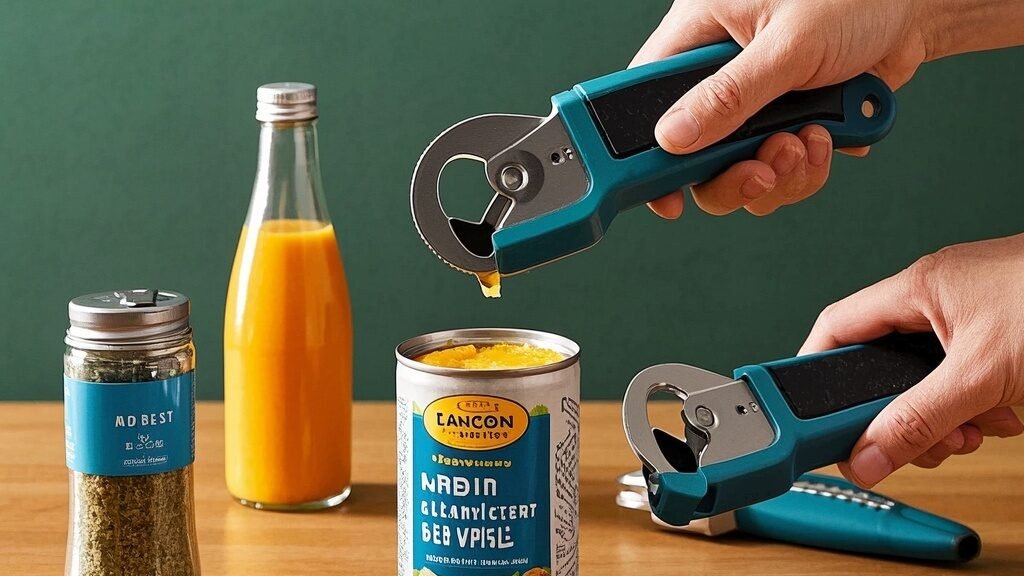
What Automatic Can Opener Is Best for Weak Fingers?
For many, the simple act of opening a can is a minor, thoughtless kitchen task. But if you live with arthritis, limited grip strength, or general hand weakness, that metal cylinder can become a daily source of frustration and even a safety hazard. The struggle with a manual opener—the twisting, the pressure, the slippery grip—can turn meal prep into a chore you’d rather avoid. This is where the right automatic can opener transforms from a convenience into a genuine tool for independence and safety in the kitchen.
Why an Automatic Can Opener Is a Game-Changer
Modern electric and automatic openers are designed specifically to eliminate the physical strain associated with traditional models. They operate on a simple principle: you position the can, press a button, and the machine does all the work. This hands-off approach offers profound benefits for seniors and anyone with weak fingers or hand mobility issues.
Key Benefits for Reduced Hand Strength:
The primary advantage is the drastic reduction in required force and dexterity. There’s no need to grip and twist a crank, which can be painful or impossible for stiff or swollen joints. Most models feature large, easy-to-press buttons or levers. Furthermore, many automatic openers are designed to be stable, with strong magnets to hold the lid safely away from fingers, minimizing the risk of cuts from sharp edges—a significant concern when hand control is limited.
Beyond Convenience: Safety and Independence:
This isn’t just about ease; it’s about safety and maintaining autonomy. A reliable opener means you don’t have to wait for help to prepare a simple meal, fostering a sense of self-reliance. It also reduces the temptation to use unsafe alternative methods, like trying to pry lids open with knives. By handling the toughest part of the job, a good electric can opener helps keep you safe and confident in your own kitchen.
What to Look for When Choosing Your Opener
Not all automatic openers are created equal, especially when considering specific needs. Focusing on a few key features will ensure you get a model that truly helps rather than adds new complications.
Ease of Use and Operation:
This is the most critical category. Look for one-touch operation with large, clearly marked buttons or paddles. A model with an automatic shut-off is excellent, as it stops once the cut is complete. Consider the alignment process: the best openers for weak hands have a simple “drop-in” or easy-lock mechanism that doesn’t require precise positioning or strong downward pressure to engage.
Safety Features and Design:
A built-in lid lifter with a strong magnet is non-negotiable. This keeps the sharp lid securely away from your fingers. A stable, non-slip base is also essential to prevent the unit from moving during operation. Some models offer hands-free operation where the machine grips and turns the can itself, which is ideal for very limited strength. Also, check that the cutting mechanism is enclosed or shielded for added safety.
Power Source and Maintenance:
Most plug into a wall outlet, but cordless rechargeable models offer great flexibility and eliminate cord management. Consider the cleaning process—look for designs where the cutting assembly is easily detachable and dishwasher-safe, as struggling to clean a complicated gadget defeats its purpose. According to manufacturer guidelines, regular cleaning of the cutter is vital for smooth, long-lasting performance.
Top Considerations and Practical Tips
Integrating a new appliance into your routine takes a little planning. Here’s how to get the most out of your automatic can opener while ensuring it remains a helpful tool for years to come.
Setting Up for Success:
Place your opener in a permanent, easily accessible spot on your countertop, ideally near where you typically prep food. Ensure the outlet is within reach without straining the cord. When you first get it, practice with an empty can or a can of something inexpensive to get comfortable with the alignment and button feel without pressure.
Safety in Daily Use:
Always ensure the can rim is dry before placing it in the opener to prevent slipping. Even with a magnetic lifter, use caution when disposing of the lid. Keep the opener’s cord neatly tucked away to avoid tripping hazards. In our testing, we found that establishing a consistent routine—position, press, wait for the stop—makes the process effortless and safe.
Finding the Right Model for You:
Think about your most common can sizes. While most handle standard cans, if you frequently open small tuna cans or large broth cans, verify compatibility. Read reviews focusing on ease of use from users with similar needs. Sometimes, a slightly higher-priced model with superior one-touch operation and stability is a far better investment than a basic one that requires more fiddling.
Who Should Consider an Automatic Can Opener?
If you find yourself dreading the task of opening cans, or if you experience pain, shaking, or a lack of grip strength when using a manual opener, it’s time to make the switch. An automatic can opener is an ideal solution for seniors, individuals with arthritis, carpal tunnel, Parkinson’s disease, or anyone recovering from hand or wrist surgery. It’s a small appliance that delivers a major boost to kitchen confidence and daily independence.
Find the perfect can opener for your needs below!
Related Guides:
- Best Rated Can Openers 2026 (All Categories)
- Best Can Opener for Seniors with Weak Grip (2026 Top Picks)
- Best Can Opener for Arthritis Patients (2026 Pain-Free Picks)
- Best Can Opener for Stroke Survivors (2026 Easy-Use Picks)
- Best Electric Can Opener (2026 Top-Rated Automatic Models)
- Best Hands-Free Can Opener (2026 No-Grip Effort Models)
- Best Manual Can Opener (2026 Ergonomic Low-Effort Models)
- Best Sharp-Edge-Free Can Opener (2026 Safe No-Cut Models)