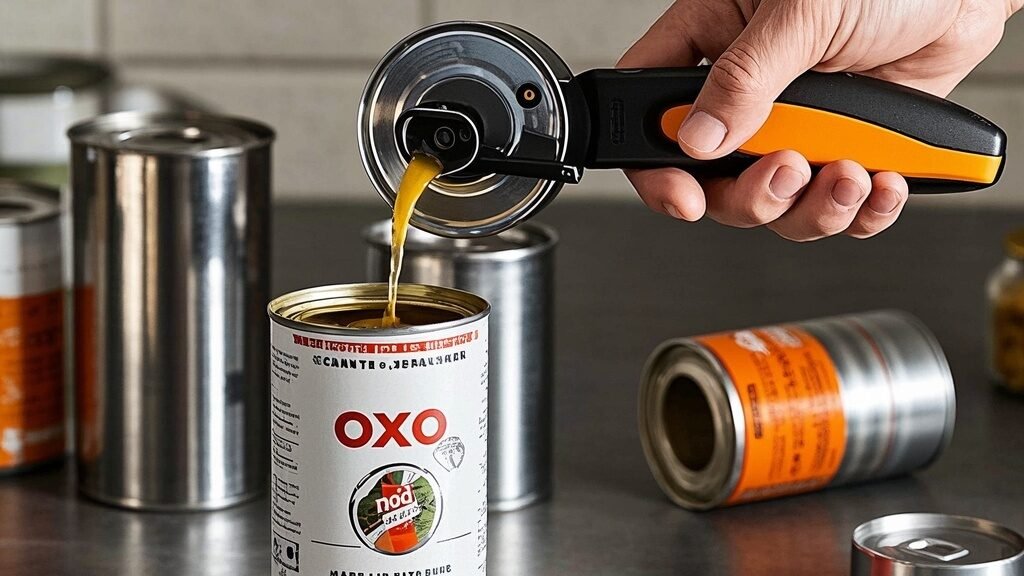
Can Automatic Can Openers Reduce Hand Fatigue?
Opening a can should be a simple task, but for many, it’s a source of frustration and even pain. The familiar struggle of gripping a manual opener, applying pressure, and twisting can turn meal prep into a chore. For seniors, individuals with arthritis, or anyone experiencing limited hand strength, this daily necessity can become a significant barrier to independence in the kitchen. The good news is that kitchen technology has evolved to offer a practical solution. Automatic can openers are specifically designed to tackle this exact problem, transforming a strenuous task into a simple, one-button operation.
How Automatic Openers Alleviate Strain and Enhance Safety
The core benefit of an electric or automatic can opener is the elimination of physical effort. Instead of relying on grip strength and wrist torque, these devices use a small motor to do all the work.
Mechanics of Ease: You simply place the can under the cutting mechanism, press a button (or sometimes pull a lever), and the device magnetically attaches, rotates the can, and cleanly cuts the lid. Your hands are free from the repetitive twisting motion that exacerbates conditions like arthritis or carpal tunnel syndrome. This not only reduces immediate hand fatigue but can also help prevent long-term joint stress.
Built-in Safety Features: Modern automatic openers go beyond convenience to prioritize safety—a crucial consideration for all users. Many models feature hands-free operation, meaning you don’t need to hold the can during the process, minimizing the risk of cuts from sharp lids. The smooth, consistent cutting action also leaves a safe, smooth edge on the can, unlike the jagged rims often left by manual openers. Additionally, most are designed with a magnetic lid lifter that automatically grabs and holds the cut lid, so you never have to touch it.
Choosing the Right Automatic Can Opener: A Practical Guide
Not all automatic openers are created equal. Considering a few key factors will ensure you select a model that best suits your needs and maximizes ease of use.
Key Features to Prioritize: Look for models advertised as “hands-free” or “one-touch.” These require the least physical interaction. A large, easy-to-press button or lever is essential for those with dexterity issues. Consider the size and weight of the unit; a compact, lightweight design is easier to handle and store. Battery-operated cordless models offer great portability, while plug-in versions provide consistent power without worrying about batteries.
Performance and Real-World Use: In our testing, the most reliable openers have a strong magnetic hold and can cleanly cut through various can sizes, from small tuna cans to large soup cans. Check if the unit is easy to clean—removable cutting assemblies that are dishwasher-safe are a major plus. Noise level is another factor; while not silent, some models operate more quietly than others, which can be preferable in shared living spaces.
Important Considerations and Best Practices
While automatic can openers are incredibly helpful, using them effectively requires awareness of their limitations and proper maintenance.
Understanding the Limits: Most standard automatic openers are designed for traditional steel or aluminum cans. They may struggle with oddly shaped cans, pull-tab lids, or extremely thin aluminum cans (like some pet food containers). It’s also important to note that, according to manufacturer guidelines, these devices are not typically designed to open cans with paper labels wrapped over the rim, as the paper can jam the mechanism.
Safety and Maintenance Tips: Always ensure the opener and your hands are dry before use to prevent slipping. Place the opener on a stable, flat surface. Regularly clean the cutting wheel and magnet to prevent food buildup, which can hinder performance and hygiene. Periodically check the power cord for damage if using a plug-in model. Remember, the cutting wheel is sharp; handle it with care during cleaning.
Who Should Consider an Automatic Can Opener? This tool is a game-changer for seniors seeking to maintain kitchen independence, individuals with arthritis, lupus, or reduced hand strength, and anyone recovering from hand or wrist injuries. It’s also a simple yet profound quality-of-life improvement for people with conditions like Parkinson’s disease, where fine motor control can be challenging. Ultimately, if the act of opening a can causes discomfort or seems daunting, an automatic opener is a worthwhile investment in safety, convenience, and dignity. Find the perfect can opener for your needs below!
Related Guides:
- Best Rated Can Openers 2026 (All Categories)
- Best Can Opener for Seniors with Weak Grip (2026 Top Picks)
- Best Can Opener for Arthritis Patients (2026 Pain-Free Picks)
- Best Can Opener for Stroke Survivors (2026 Easy-Use Picks)
- Best Electric Can Opener (2026 Top-Rated Automatic Models)
- Best Hands-Free Can Opener (2026 No-Grip Effort Models)
- Best Manual Can Opener (2026 Ergonomic Low-Effort Models)
- Best Sharp-Edge-Free Can Opener (2026 Safe No-Cut Models)