How Do Seniors Open Cans Without Assistance?
Picture a simple kitchen task you’ve performed a thousand times. For many seniors, the familiar twist of a manual can opener has become a source of frustration or even pain. Arthritic hands struggle to grip, weakened wrists lack the turning force, and safety concerns loom with sharp edges and slippery lids. The quest for independence in the kitchen often hinges on these small, daily victories. Modern safety can openers and specialized can openers for seniors are engineered specifically to address these challenges, transforming a difficult chore into a simple, secure process.
Understanding the Challenges: Why Standard Openers Fall Short
Traditional manual can openers require a specific combination of grip strength, wrist rotation, and downward pressure that can become difficult with age. Conditions like arthritis, Parkinson’s, or general weakness in the hands make the pinching and turning motion painful or impossible. Slippery lids from standard openers also pose a significant cut hazard. This isn’t just about convenience; it’s about maintaining dignity and self-sufficiency. The right tool doesn’t just open a can—it preserves independence.
Key Pain Points for Seniors: The primary issues revolve around grip, force, and safety. A weak grip can’t hold the opener steady on the can. Lack of wrist strength fails to turn the knob effectively. Poor vision or hand tremors increase the risk of injury from sharp metal. Recognizing these specific hurdles is the first step toward finding a solution that truly works.
Features of the Ideal Senior-Friendly Can Opener
When shopping for a can opener for weak hands, look for designs that eliminate the traditional weaknesses. The goal is to reduce or redistribute the physical effort required while maximizing safety at every step. The best models are intuitive, requiring minimal setup and no complex instructions.
Essential Safety and Ease-of-Use Features: Prioritize openers with smooth, magnetized lids that lift the cut lid completely off the can and hold it securely, so fingers never touch the sharp edge. Look for large, easy-to-grip handles or knobs that accommodate a whole-hand grip rather than a pinch. Electric or automatic openers are often the best choice, as they require only the push of a button. Side-cutting or under-the-rim openers are also excellent, as they leave a smooth, safe edge on the can itself.
Top Can Opener Styles for Accessibility and Independence
Not all accessible openers are the same. Different mechanisms suit different levels of mobility and dexterity. Here’s a breakdown of the most effective types for elderly users.
1. Electric Can Openers: The Ultimate in Ease
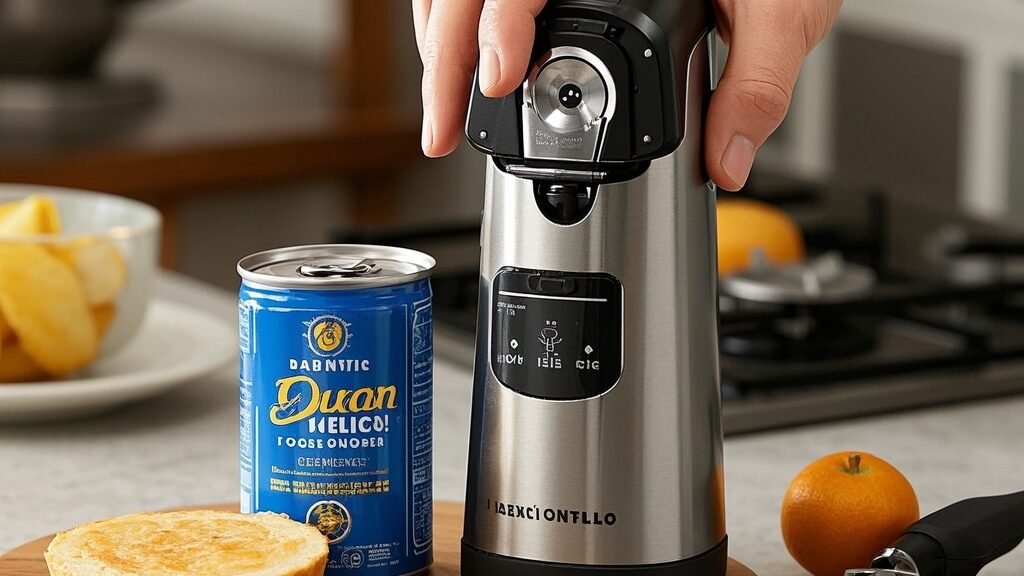
These are typically the top recommendation for seniors with significant hand weakness or arthritis. Operation is simple: place the opener on the can, press a large button, and it does the work automatically, stopping when the cut is complete. The best models have strong magnets to capture the lid. They require minimal strength and dexterity, making them a reliable choice for consistent, pain-free operation.
Considerations: They need counter space and an electrical outlet. Ensure the buttons are large, clearly marked, and easy to press. Some feature extra functions like knife sharpeners, but simplicity is often key.
2. Side-Cutting / Smooth-Edge Can Openers
This manual design is a revolutionary safety feature. Instead of cutting from the top, it rolls its wheel along the side of the can, under the rim. The result is a lid with no sharp edges at all—it’s perfectly smooth. The can body is also left with a smooth rim, drastically reducing cut risks. The turning motion can be easier on the wrists than top-cutting models.
Considerations: They still require some turning force, though many have oversized, ergonomic turning knobs. They are excellent for users with moderate hand strength who prioritize safety above all else.
3. Ergonomic and Lever-Action Manual Openers
For those who prefer a manual tool, ergonomic designs with large, soft-grip handles distribute pressure across the palm. Lever-action or “butterfly” style openers use a pumping motion, which can be easier for some than a continuous turning motion. These are good options for seniors with mild discomfort who want a simple, non-electric solution.
Considerations: Test the grip and turning action if possible. They require more user input than electric models but offer portability and no need for power.
Practical Tips for Safe and Easy Can Opening
Beyond choosing the right tool, a few simple practices can enhance safety and ease in the kitchen. Always place the can on a stable, non-slip surface before opening. If using a manual opener, secure the can against your body or in a dedicated holder if needed. After opening with a standard model, use a lid lifter tool—a simple magnetic or hook device—to safely remove the lid without touching it. Keep your opener clean and dry; food residue can make handles slippery and mechanisms harder to turn.
Creating a Senior-Safe Kitchen: Consider integrating other adaptive tools like jar openers, easy-grip utensils, and pull-down shelving. A kitchen that supports independence is one designed with physical limitations in mind, turning potential struggles into seamless routines.
Who Should Consider a Safety Can Opener?
If you or a loved one experiences hand pain, stiffness, weakness, or tremors when using a traditional can opener, it’s time for a change. These specialized tools are designed for anyone with arthritis, limited hand mobility, or a desire for a safer, more independent kitchen experience. Don’t let a simple can lid become a barrier to preparing your own meals. Find the perfect can opener for your needs and reclaim your kitchen confidence today!
Related Guides:
- Best Rated Can Openers 2026 (All Categories)
- Best Can Opener for Seniors with Weak Grip (2026 Top Picks)
- Best Can Opener for Arthritis Patients (2026 Pain-Free Picks)
- Best Can Opener for Stroke Survivors (2026 Easy-Use Picks)
- Best Electric Can Opener (2026 Top-Rated Automatic Models)
- Best Hands-Free Can Opener (2026 No-Grip Effort Models)
- Best Manual Can Opener (2026 Ergonomic Low-Effort Models)
- Best Sharp-Edge-Free Can Opener (2026 Safe No-Cut Models)