What Can Opener Works Without Grip Strength?
Opening a simple can of soup or beans shouldn’t be a daily struggle or a source of anxiety in the kitchen. For millions of adults, particularly seniors or those living with arthritis, carpal tunnel, or conditions that limit hand strength and dexterity, the traditional manual can opener is a formidable opponent. The required pinching, twisting, and sustained pressure can turn a basic task into a painful, frustrating, or even dangerous chore. The good news is that a new generation of safety can openers is designed specifically to restore independence and confidence. These innovative tools prioritize pain-free operation and ease of use, transforming a difficult task into a simple, one-handed motion.
Understanding the Challenges: Why Standard Openers Fail
To appreciate the specialized design of adaptive kitchen tools, it’s helpful to understand why conventional can openers pose such a problem. Most require a combination of grip strength to hold the device steady, pinch strength to operate the cutting mechanism, and wrist rotation to turn the knob. This trifecta of motions is precisely what becomes difficult with arthritis, tendonitis, or general weakness from aging or conditions like Parkinson’s.
Key Points of Failure:
The sharp, often serrated cutting wheel on traditional models can slip, posing a laceration risk. The force needed to pierce the lid initially can cause jarring pain in tender joints. Furthermore, the resulting lid is usually left with a razor-sharp edge, requiring careful handling to avoid cuts—another hidden hazard. For users with limited mobility, these are not minor inconveniences; they are significant barriers to preparing meals independently and safely.
Features of the Ideal Can Opener for Weak Hands
So, what should you look for when searching for a can opener that truly works without grip strength? The best models are engineered to eliminate the need for pinching, squeezing, and strenuous twisting. Their design philosophy centers on leveraging larger muscle groups and providing maximum mechanical advantage.
Essential Design Elements:
First, seek out openers with large, easy-to-grip handles or paddles. These allow you to use your palm or the heel of your hand to apply pressure, bypassing weak fingers. Second, electric or battery-powered models are often the gold standard, as they require only the push of a button. Third, consider a side-cutting or “smooth-edge” opener. Instead of cutting through the metal, it rolls the lid’s seam off, leaving a perfectly smooth, safe edge that can be lifted off without touching sharp metal. This feature is a major win for safety and independence. Finally, look for models with strong, automatic magnetic lid lifters, so you never have to pry or dig under a sharp lid with your fingers.
Top Product Categories and Recommendations
Navigating the market is easier when you know the main types of user-friendly openers available. Here’s a breakdown of the most effective categories.
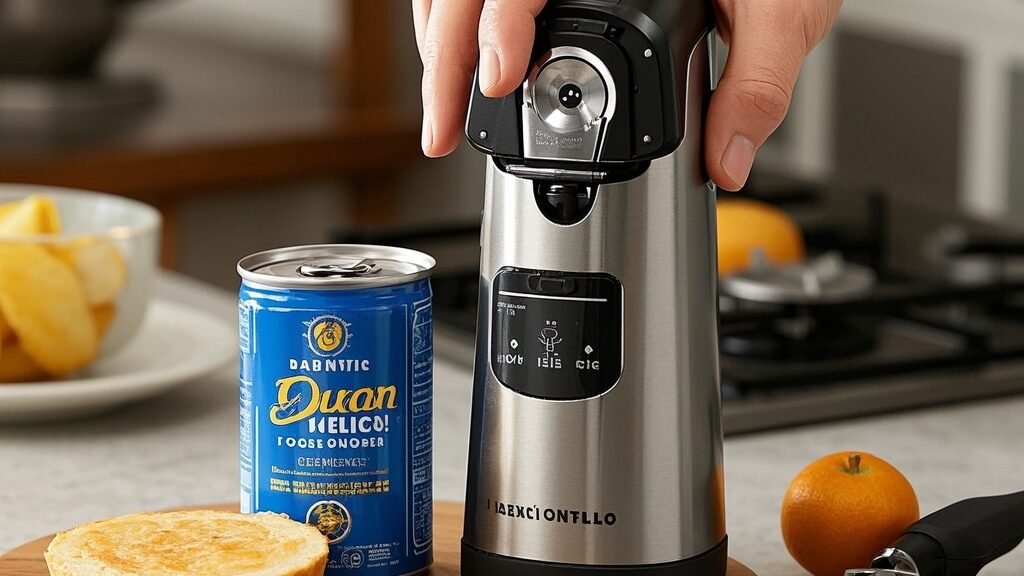
1. Electric Can Openers: The ultimate solution for pain-free operation. You simply position the opener, press a large button, and it does all the work. The best models, like the Hamilton Beach Smooth Touch or the OXO Good Grips Electric Can Opener, feature oversized buttons, automatic stopping, and magnetic lid holders. They require minimal strength and virtually no dexterity.
2. Smooth-Edge (Side-Cutting) Manual Openers: For those who prefer a non-electric tool, this is the top choice. The OXO Good Grips Smooth Edge Can Opener is a standout. It uses a large, soft-turn knob that’s easy on arthritic hands and rolls the lid off completely, leaving no sharp edges. The operation is significantly smoother and requires less force than a traditional cutter.
3. Lever-Style or One-Touch Openers: These innovative devices, like the EZ-DUZ-IT, use a simple lever action. You clamp the opener onto the can and push down on a large lever. This design transfers the effort from your fingers and wrist to your arm, using a more stable and stronger motion.
Safety Considerations and Practical Kitchen Tips
Choosing the right tool is the first step; using it safely and effectively within your kitchen routine is the next. A few simple adjustments can make the entire process of food preparation safer and more enjoyable for seniors or anyone with physical limitations.
Creating a Safer Workspace:
Ensure your countertop is clear and dry to prevent the can or opener from slipping. If standing is difficult, consider performing the task while seated, making sure the opener is securely anchored. Always point the cutting mechanism away from your body. After using a smooth-edge opener, the detached lid may be loosely sitting on the can; tilt it to let the lid slide into the trash or onto a plate to avoid touching it. For electric models, keep the cord neatly tucked away to prevent tripping.
Maintaining Your Tool:
Keep the cutting wheel or gear clean and free of food debris, which can cause slipping or jamming. For manual models, a drop of food-grade mineral oil on the gears can keep the action smooth. In our testing, a well-maintained opener requires far less force to operate. Remember, the goal is to reduce effort at every step, from storage to cleaning. Store your can opener in an easily accessible drawer or on the countertop to avoid awkward reaching or lifting.
Who Should Consider a Safety Can Opener? If you or a loved one experiences hand pain, stiffness, weakness, or tremors when using everyday kitchen tools, investing in a specialized can opener is not a luxury—it’s a practical step toward safer, more independent living. It’s a simple device that can have a profound impact on daily well-being and confidence in the kitchen. Find the perfect can opener for your needs below and reclaim the joy of cooking without pain or fear!
Related Guides:
- Best Rated Can Openers 2026 (All Categories)
- Best Can Opener for Seniors with Weak Grip (2026 Top Picks)
- Best Can Opener for Arthritis Patients (2026 Pain-Free Picks)
- Best Can Opener for Stroke Survivors (2026 Easy-Use Picks)
- Best Electric Can Opener (2026 Top-Rated Automatic Models)
- Best Hands-Free Can Opener (2026 No-Grip Effort Models)
- Best Manual Can Opener (2026 Ergonomic Low-Effort Models)
- Best Sharp-Edge-Free Can Opener (2026 Safe No-Cut Models)