How Do Smooth-Edge Can Openers Work?
Opening a can shouldn’t feel like a feat of strength or a safety hazard. For many, especially seniors or those managing arthritis, the familiar struggle with a traditional opener—the sharp, exposed lid, the slippery grip, the wrist-twisting motion—can turn a simple kitchen task into a source of frustration or even pain. This is where the smooth-edge can opener, often called a safety opener, steps in as a quiet revolution. Unlike its conventional counterpart, this clever device completely reimagines the opening process to prioritize safety and accessibility above all else.
The Mechanics of Safety: Cutting from the Side
The Core Principle
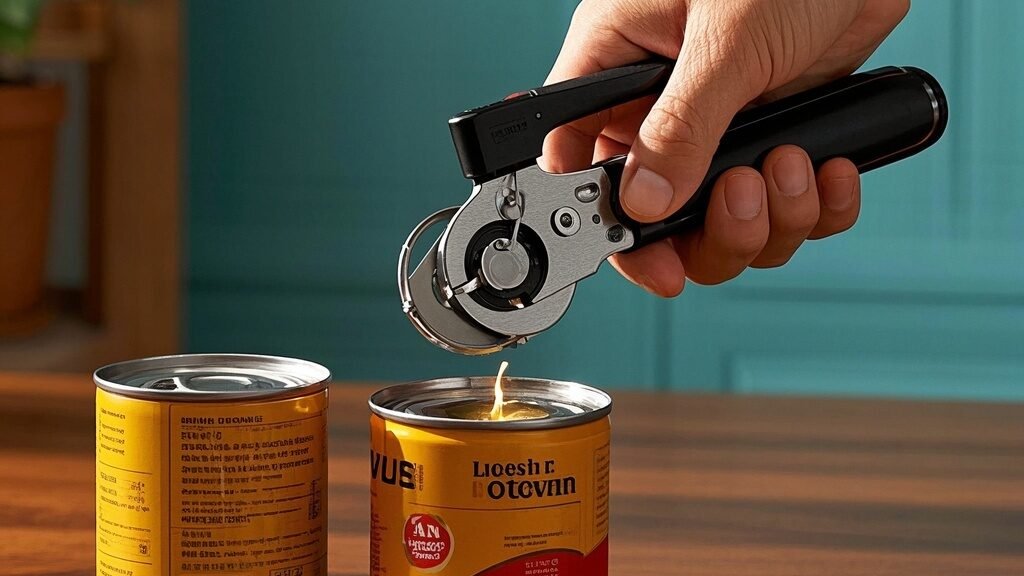
A smooth-edge can opener works on a fundamentally different principle. Instead of cutting through the top lid from above, it cuts from the side. The device grips the can’s rim and uses a rolling wheel to cleanly sever the lid just beneath the top seam. This leaves the detached lid sitting perfectly on top of the can, with no sharp, jagged edges exposed.
Operation and User Experience
You place the opener’s clamping mechanism onto the rim of the can. With a simple turn of a large, ergonomic knob (often designed for a full-hand grip), the cutting wheel engages and smoothly rolls around the perimeter. The result is a lid that can be lifted off safely with its smooth, rounded edge. There’s no risk of cutting your fingers on a sharp lid, and because the cutting happens from the side, no metal shavings fall into your food. For users with weak grip strength, arthritis, or limited hand mobility, the large, easy-turn knob and stable base require significantly less force and dexterity than a standard opener.
Key Features for Accessibility and Independence
Beyond the basic mechanism, modern smooth-edge openers incorporate several features specifically designed for senior users and those with physical limitations.
Ergonomic Design for Pain-Free Use
Comfort and Stability
These openers are built with comfort first. Look for models with oversized, soft-grip knobs that distribute pressure across the palm, not just the fingertips. This design minimizes strain on arthritic joints. Many feature a wide, stable base that holds the can firmly in place, eliminating the need to grip the can itself tightly. This “hands-free” operation is a game-changer, allowing users to focus their energy on the simple turning motion.
Leverage and Gear Systems
High-quality safety openers often use a geared mechanism. This engineering marvel multiplies the force from your turn, making the cutting process exceptionally smooth and requiring minimal effort. You’re not fighting the metal; the tool does the hard work for you. This directly supports independence in the kitchen, empowering individuals to prepare their own meals without assistance.
Safety Considerations and Practical Tips
Choosing and Using Your Opener
When selecting a smooth-edge opener, test the knob’s turn resistance if possible. It should move freely. Ensure the clamping mechanism is easy to attach and release. At home, always place the opener on a flat, stable surface before use. Keep the cutting wheel clean and dry to maintain smooth operation. While the lid is safe to handle, it’s still a good practice to use the tab often left attached to lift it off.
What to Watch For
While superior in safety, these openers may struggle with unusually thick or irregular can rims. They also leave the lid in the food, which some find inconvenient (though it’s easily removable). Always check that the opener is fully clamped before turning to avoid slippage. For users with very limited hand strength, electric smooth-edge openers are an excellent, albeit more expensive, alternative that requires only the push of a button.
Product Recommendations for Specific Needs
Not all safety can openers are created equal. Here are a few types suited for different needs commonly faced by seniors.
For Severe Arthritis or Very Weak Grip: Seek out an electric smooth-edge can opener. These models completely eliminate the turning motion. You simply position the can and press a button. They are the ultimate solution for pain-free, independent operation, though they require an outlet and more counter space.
For One-Handed Operation or Limited Mobility: A side-cutting opener with a large, lever-style handle can be ideal. Some designs allow the user to push down on a large lever to clamp and cut, which can be easier than a rotating motion for some conditions.
For General Ease of Use and Value: A well-reviewed manual smooth-edge opener with oversized, soft-turn knobs and a stable base is a fantastic all-around choice. Brands like OXO Good Grips are renowned for their ergonomic designs that cater to users with arthritis.
Who Should Consider a Smooth-Edge Can Opener? If you or a loved one experiences hand pain, stiffness, weakness, or simply values a safer, less messy kitchen experience, a smooth-edge can opener is a wise and affordable investment. It transforms a mundane chore into an effortless task, preserving dignity and independence in the kitchen. Find the perfect can opener for your needs below!
Related Guides:
- Best Rated Can Openers 2026 (All Categories)
- Best Can Opener for Seniors with Weak Grip (2026 Top Picks)
- Best Can Opener for Arthritis Patients (2026 Pain-Free Picks)
- Best Can Opener for Stroke Survivors (2026 Easy-Use Picks)
- Best Electric Can Opener (2026 Top-Rated Automatic Models)
- Best Hands-Free Can Opener (2026 No-Grip Effort Models)
- Best Manual Can Opener (2026 Ergonomic Low-Effort Models)
- Best Sharp-Edge-Free Can Opener (2026 Safe No-Cut Models)