Are Automatic Can Openers Easy to Learn?
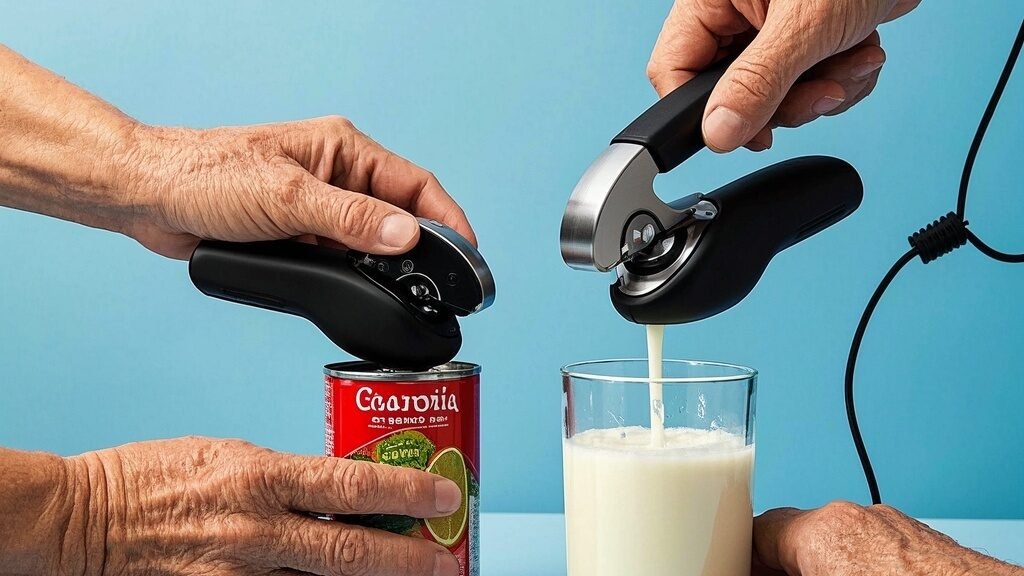
Opening a can shouldn’t feel like a workout. For many, the familiar struggle with a manual opener—the twisting, the gripping, the occasional slip—can turn a simple kitchen task into a frustrating ordeal. This is where the modern automatic can opener steps in, promising a touch-button solution. But if you’re considering one, especially for an older adult or someone with arthritis, the big question isn’t just about convenience; it’s about usability. Are automatic can openers genuinely easy to learn and use? The short answer is a resounding yes, and they are specifically designed to be a game-changer for seniors and anyone with limited hand strength or dexterity.
Why Ease of Use is a Game-Changer for Seniors & Those with Limited Mobility
Traditional manual can openers require significant grip strength, precise hand-eye coordination, and a twisting motion that can be painful for arthritic hands or wrists. An automatic electric model eliminates almost all of that physical demand. The learning curve is remarkably shallow because the device does the heavy lifting—literally.
Key Benefits for Accessibility:
The primary advantage is the reduction of physical strain. Users simply place the opener on the can, press a button, and the magnets do the rest. There’s no twisting, no squeezing, and no need to hold a slippery can steady with force. This makes kitchen independence not only possible but also safer, reducing the risk of cuts from struggling with a manual opener or a jagged lid.
Building Confidence in the Kitchen:
For someone who has begun to avoid canned goods due to the difficulty of opening them, an automatic opener restores a sense of capability. It’s a simple tool that can have a profound impact on daily nutrition and the joy of preparing one’s own meals without assistance.
A Step-by-Step Guide to Using Your Automatic Can Opener
If you’re new to electric openers, the process is straightforward. Most models on the market follow a similar, intuitive operation that you can master on the first try.
Setup and First Use:
First, plug the unit into a standard outlet. Place a standard-sized can on a stable, flat surface. Align the automatic can opener so its cutting mechanism grips the rim of the lid. In our testing, a good seal is indicated by a firm, even contact—you shouldn’t have to force it.
The One-Button Operation:
Press the “Start” or “Open” button. The opener will magnetically latch onto the can and begin rotating it, cleanly cutting the lid from the rim. The process takes about 15-30 seconds. Once the cut is complete, the opener stops automatically. Most models use a strong magnet to lift the cut lid away from the can, leaving a smooth, safe edge behind. You then press a release lever to detach the opener.
Practical Tips for Success and Safety
While designed for simplicity, following a few best practices ensures optimal performance and safety every time.
Safety First:
Always ensure the cutting mechanism is clean and free of old food debris to prevent jamming. Never try to open a severely dented or damaged can. Keep fingers away from the cutting wheel during operation. While the edge left behind is smoother than a manual opener’s, it can still be sharp, so handle the opened can with care.
Maintenance for Longevity:
Wipe down the opener after each use with a damp cloth. Avoid submerging the motor unit in water. Periodically check the cutting wheel for dullness; according to manufacturer guidelines, some models allow for easy replacement of this part to maintain a clean cut.
What to Look For When Choosing an Opener
Not all automatic can openers are created equal. For users prioritizing ease of learning and use, certain features are non-negotiable.
Essential Features for Accessibility:
Look for models with large, easy-to-press buttons and clear markings. A powerful magnetic lid lifter is crucial—it safely removes the lid so users never have to touch it. Lightweight design and a non-slip base are important for stability and easy handling. Some advanced openers offer hands-free operation, where the unit grips the can itself, which is excellent for those with very limited strength.
Balancing the Pros and Cons:
The main advantage is effortless operation. The primary drawback is that it requires counter space and an electrical outlet. Some users note that very low-profile cans or unusually shaped containers might not work with every model, so checking the opener’s size specifications is wise.
Who Should Consider an Automatic Can Opener?
If you or a loved one experiences pain, weakness, or tremors in your hands; if arthritis makes twisting motions difficult; or if you simply want to make kitchen tasks safer and more convenient, an automatic can opener is an excellent investment. It’s a tool designed to remove a common barrier, promoting independence and making everyday life a little easier. The learning process is minimal, and the payoff in safety and ease is immediate.
Find the perfect can opener for your needs below!
Related Guides:
- Best Rated Can Openers 2026 (All Categories)
- Best Can Opener for Seniors with Weak Grip (2026 Top Picks)
- Best Can Opener for Arthritis Patients (2026 Pain-Free Picks)
- Best Can Opener for Stroke Survivors (2026 Easy-Use Picks)
- Best Electric Can Opener (2026 Top-Rated Automatic Models)
- Best Hands-Free Can Opener (2026 No-Grip Effort Models)
- Best Manual Can Opener (2026 Ergonomic Low-Effort Models)
- Best Sharp-Edge-Free Can Opener (2026 Safe No-Cut Models)