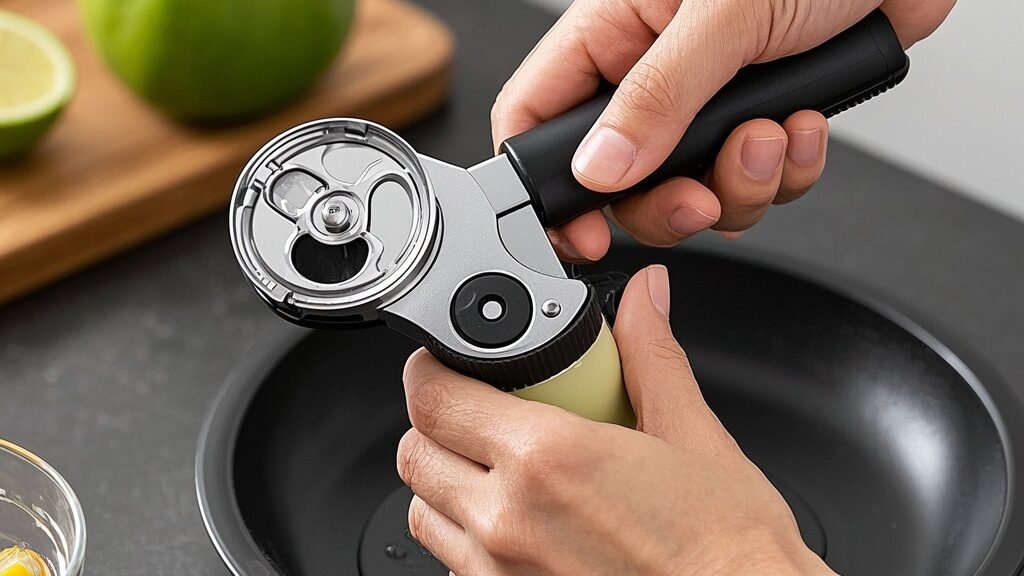
Are Automatic Can Openers Good for Arthritis?
Imagine standing in your kitchen, a simple can of soup in hand. Your wrists ache, your fingers feel stiff and uncooperative, and the thought of wrestling with a manual can opener—gripping, twisting, applying pressure—turns a basic task into a daunting challenge. This daily friction is a reality for millions living with arthritis, where joint pain and reduced grip strength can make independence in the kitchen feel out of reach. For those navigating this pain, the question isn’t just about convenience; it’s about reclaiming ease and autonomy. Are automatic can openers good for arthritis? The answer, resoundingly, is yes. These devices transform a potentially painful, joint-stressing chore into a simple push-button operation, acting not merely as a kitchen gadget but as a genuine tool for accessibility and empowerment.
How Arthritis Affects Kitchen Tasks and Where Openers Help
Arthritis, particularly osteoarthritis and rheumatoid arthritis, often targets the hands and wrists. Key challenges include reduced grip strength, pain in the thumb and finger joints, limited range of motion, and morning stiffness. A traditional manual opener requires a firm grip for clamping, sustained rotational force through the wrist and hand, and often a final prying action—each step posing a potential hurdle. An automatic can opener eliminates nearly all these demands. By using a motor to do the cutting and turning, it requires only the light pressure of a finger to activate. This minimizes strain on the small joints of the hand and significantly reduces the torque and repetitive motion required from the wrist. It effectively outsources the physical labor to the machine, preserving your energy and reducing pain triggers during a fundamental task.
Key Features to Look For in an Arthritis-Friendly Model
Not all automatic openers are created equal when prioritizing joint comfort. When shopping, several features stand out as particularly beneficial. First, seek out large, easy-to-press buttons. A broad, paddle-style switch is far easier to engage than a small, recessed button, requiring less precision and finger force. Second, consider the clamping mechanism. The best models have an automatic or magnetic clamp that securely holds the can in place once aligned, removing the need to apply and hold strong downward pressure manually. Third, look for lightweight and ergonomic design. A unit that’s easy to lift and maneuver with one hand is crucial. Additional helpful features include a built-in knife sharpener (to keep other tools easy to use) and a hands-free operation that allows the machine to complete the cut without you needing to hold the button down. According to manufacturer specifications and user reviews, models emphasizing these “easy-use” design principles consistently rank highest among arthritis sufferers.
Balancing the Benefits with Practical Considerations
The primary advantage is clear: dramatic reduction in pain and strain. This can help individuals maintain independence and continue preparing their own meals. The ease of use also promotes safety, as it prevents the slips and forceful movements that can occur with a stubborn manual opener. However, a balanced view acknowledges some drawbacks. Automatic openers require counter space and access to a power outlet. They are also more complex machines, meaning they can sometimes jam or malfunction, and they are typically louder than their manual counterparts. Cleaning can be more involved, as food particles can get into the cutting mechanism. Furthermore, they may struggle with unusually shaped or very large cans. Despite these considerations, for most with moderate to severe hand arthritis, the trade-off for pain-free operation is overwhelmingly positive.
Making an Informed Decision for Your Kitchen
Ultimately, the suitability of an automatic can opener depends on the individual’s specific needs and kitchen habits. For someone with significant hand pain, weakness, or dexterity issues, it can be a life-changing tool that removes a major source of daily frustration. It’s a smart investment in both comfort and continued culinary independence. For those with mild symptoms or who highly value counter space and simplicity, a high-quality, ergonomic manual opener with oversized, soft-grip handles might still be a viable option.
Who Should Consider an Automatic Can Opener?
If you find yourself dreading opening cans, avoiding certain foods because of the packaging, or experiencing increased hand pain after kitchen tasks, an automatic can opener is likely an excellent adaptation for your home. It’s a straightforward assistive device that addresses a very specific, frequent challenge posed by arthritis.
Ready to make meal prep easier on your joints? Find the perfect can opener for your needs below!
Related Guides:
- Best Rated Can Openers 2026 (All Categories)
- Best Can Opener for Seniors with Weak Grip (2026 Top Picks)
- Best Can Opener for Arthritis Patients (2026 Pain-Free Picks)
- Best Can Opener for Stroke Survivors (2026 Easy-Use Picks)
- Best Electric Can Opener (2026 Top-Rated Automatic Models)
- Best Hands-Free Can Opener (2026 No-Grip Effort Models)
- Best Manual Can Opener (2026 Ergonomic Low-Effort Models)
- Best Sharp-Edge-Free Can Opener (2026 Safe No-Cut Models)