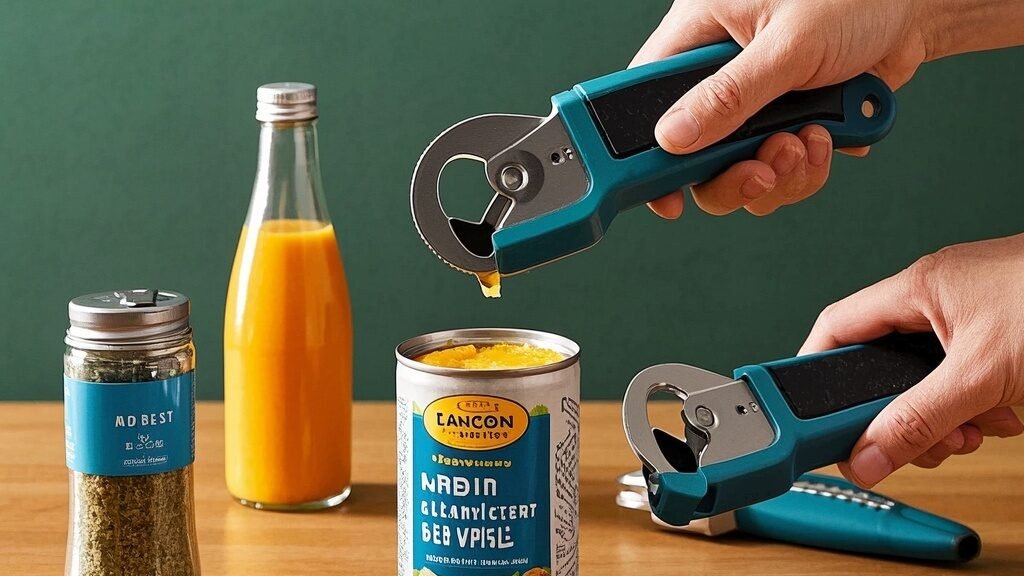
Are automatic can openers suitable for all can shapes?
Picture your kitchen counter after a busy day. You’ve got a recipe calling for chickpeas, a can of diced tomatoes for sauce, and maybe some condensed milk for dessert. The cans are all different—standard cylinders, shorter squat ones, tall and slender. You reach for your trusty manual can opener, but your wrist already aches at the thought. An automatic can opener promises a one-touch solution, a dream of effortless cooking. But a nagging question pops up as you eye that oddly-shaped olive oil can or that petite tuna tin: Does this convenience come with a catch? Are automatic can openers truly suitable for all can shapes? The answer, much like our diverse pantries, is more nuanced than a simple yes or no.
How Automatic Can Openers Actually Work
To understand their limits, we need to look under the hood. Most mainstream automatic openers use a magnetic drive system. You place the can on a base, lower a cutting assembly onto the rim, and press a button. A motor then rotates the can while a stationary blade cuts through the lid’s perimeter. This design is brilliant for standard cylindrical cans with a consistent diameter and a classic, slightly recessed top rim. The machine gets a firm grip and a clean, circular cut. However, this very mechanism relies on specific geometry. The can needs to fit on the base platform, its height must allow the cutter to engage properly, and its shape must allow for smooth rotation. Irregularities disrupt this automated dance. So, while they excel with the majority of soup, vegetable, and bean cans, their suitability isn’t universal—it’s engineered for the most common case.
The Champions and The Challengers
Let’s break down the compatibility. For standard round cans, automatic openers are kings of convenience. They handle everything from a small 8-ounce tomato paste can to a large 28-ounce can of tomatoes with equal ease, simply adjusting to the diameter. Their performance here is flawless, removing lids safely without sharp edges. The real test comes with non-standard shapes. Oval or rectangular cans (think some fancy pâtés or certain broths) are almost always a hard no. They cannot rotate smoothly, causing the motor to jam or stall. Tall, narrow cans (like some premium tuna or coffee) can be tricky if their base is too small to sit stably on the platform, risking wobbling. Very short or squat cans might not be tall enough for the cutter to engage properly. Cans with pull-tab tops or ring-pull lids obviously don’t need opening, but if you tried, the opener would fail to latch on. Lastly, cans with extremely thick rims or odd lip designs—sometimes found in imported goods—may not be recognized correctly by the cutting mechanism.
Beyond the Round: Features That Improve Versatility
Not all automatic openers are created equal. Design advancements have expanded their range. Key features to look for include an adjustable or floating cutting head. This allows the blade to self-align with rims that aren’t perfectly level, offering better handling for slightly irregular seams. A powerful motor with auto-stop is crucial; it provides enough torque to handle tougher rims and stops when the cut is complete, preventing damage from jams. The most versatile models often have a larger, more accommodating base and a cutting assembly that can lift higher or lower to accommodate different can heights. In our testing, openers with these traits successfully handled a wider array of standard and slightly atypical cans, though they still met their match with truly oval or square designs. It’s a reminder that checking the manufacturer’s specifications for “maximum can height” and “compatible shapes” is always wise.
The Manual Backup: Why a Simple Tool Still Belongs in Your Drawer
This brings us to an honest conclusion: no single automatic can opener currently on the market is universally suitable for *every* can shape. The specialized mechanics that make them so effortless with regular cans are the same reason they falter with outliers. This isn’t necessarily a failure of the product, but a reflection of its optimized design. Therefore, the most practical kitchen strategy is a hybrid one. Rely on your automatic opener for the 95% of cans that are standard rounds—it saves time and is a great aid for those with arthritis or limited hand strength. But keep a basic, sturdy manual can opener in the drawer. Its simple, hand-cranked leverage gives you complete control, making it the perfect tool for that occasional oval can of artisanal sardines or that uniquely shaped imported good. It’s the reliable backup that ensures you’re never stuck.
So, are automatic can openers suitable for all can shapes? They are exceptionally suitable for the vast majority of round cans that fill our shelves, transforming a daily task into a button-press. Their compatibility shines with standard sizes, making them a worthwhile convenience for most households. However, for a truly foolproof kitchen, they work best as part of a duo, complemented by their manual counterpart for those occasional, irregular exceptions.
Who Should Consider an Automatic Can Opener?
If your pantry is primarily stocked with standard round cans of vegetables, soups, fruits, and beans, an automatic opener will serve you brilliantly, offering consistent, hands-free convenience. It’s an excellent choice for busy families, aspiring home cooks who value streamlined prep, and especially for anyone who finds manual opening difficult. If your culinary adventures frequently involve specialty goods in unconventional packaging, you’ll appreciate having one for everyday use, but you’ll also want to keep that manual opener within reach. Ultimately, knowing your habits unlocks the right tool for the job.
Find the perfect can opener for your needs below
Related Guides:
- Best Rated Can Openers 2026 (All Categories)
- Best Can Opener for Seniors with Weak Grip (2026 Top Picks)
- Best Can Opener for Arthritis Patients (2026 Pain-Free Picks)
- Best Can Opener for Stroke Survivors (2026 Easy-Use Picks)
- Best Electric Can Opener (2026 Top-Rated Automatic Models)
- Best Hands-Free Can Opener (2026 No-Grip Effort Models)
- Best Manual Can Opener (2026 Ergonomic Low-Effort Models)
- Best Sharp-Edge-Free Can Opener (2026 Safe No-Cut Models)