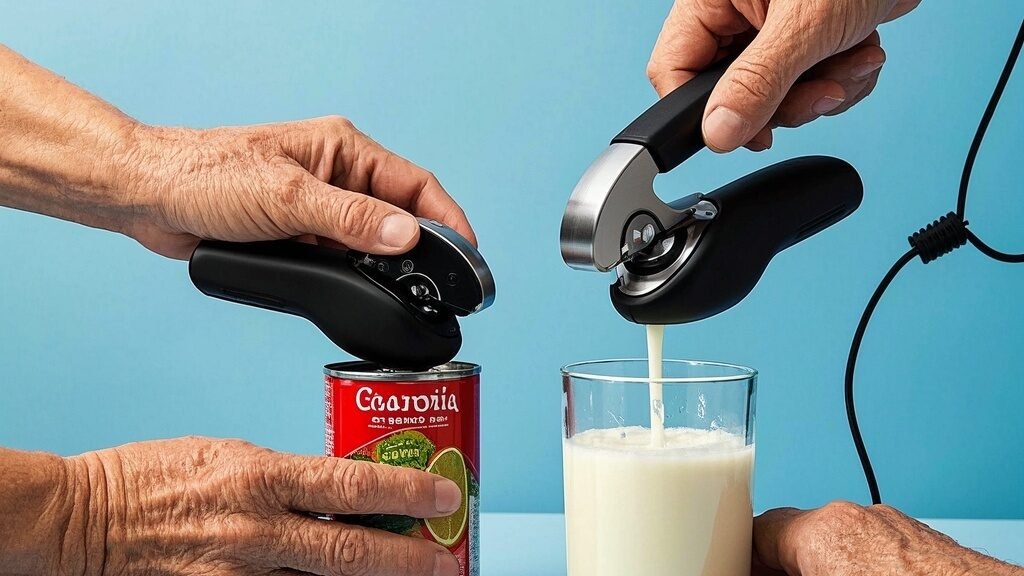
Are battery-powered can openers better for arthritis?
Imagine facing a simple can of soup for dinner, but the thought of wrestling with a manual opener sends a jolt of pain through your hands and wrists. This daily frustration is a reality for millions living with arthritis, where diminished grip strength and joint pain turn basic kitchen tasks into daunting challenges. In this search for kitchen independence, the question arises: could switching to a battery-powered tool make a tangible difference? Specifically, are battery-powered can openers genuinely better for managing arthritis? The answer extends beyond mere convenience, touching on ergonomics, safety, and reclaiming ease in daily living.
How Arthritis Affects Kitchen Tasks
Arthritis, particularly osteoarthritis and rheumatoid arthritis, often targets the hands and wrists. Key symptoms like joint stiffness, swelling, and reduced grip strength directly conflict with the mechanics of a traditional can opener. These devices require significant downward pressure, a firm twisting grip, and precise wrist rotation—all actions that can exacerbate pain and fatigue. For many, the effort leads to abandoned meals or reliance on others, subtly chipping away at independence. This makes the kitchen a primary battleground where assistive tools can have an outsized impact on quality of life.
The Ergonomic Advantages of Battery-Powered Openers
This is where battery-operated can openers shift the paradigm. Their core benefit is the drastic reduction of physical exertion. Instead of forceful twisting, operation typically involves placing the opener on a can and pressing a single, often large, button. The motor does all the work, rotating the cutter around the rim automatically and hands-free. This eliminates the need for sustained grip and wrist torque. Many models are also designed with lightweight, contoured bodies that are easier to hold and position, further reducing strain on finger joints. By transferring the mechanical effort from your joints to a battery, these devices effectively minimize the primary sources of pain during the task.
Performance and Real-World Use
Modern battery-powered openers are designed for reliability and safety, features that benefit all users, especially those with dexterity concerns. A significant advancement is the smooth-edge cutting technology. Unlike traditional openers that leave a jagged, sharp lid, these models cleanly cut under the rim, leaving both the lid and the can with a smooth, safe edge. This drastically reduces the risk of cuts, a serious concern when hand steadiness is compromised. Furthermore, most incorporate a magnetic lid lifter that securely holds the lid after cutting, preventing it from falling into the food—a common annoyance that becomes a major hassle with less nimble fingers. In testing, a consistent advantage is their ability to handle various can sizes with consistent performance, provided the battery is adequately charged.
Balancing Benefits with Practical Considerations
While the advantages for arthritic hands are clear, it’s important to weigh a few practicalities. Battery life is a key factor; most models use either disposable batteries or are rechargeable via USB. A rechargeable unit might be more economical and eco-friendly long-term, but requires remembering to charge it. Some users note that cheaper models may struggle with very large or oddly shaped cans. There’s also the initial cost, which is higher than a basic manual opener. However, when evaluated as a therapeutic aid to reduce pain and maintain autonomy, the investment often justifies itself. It’s also wise to check the noise level and ease of cleaning, as simpler designs with detachable, washable cutters are more user-friendly.
Who Should Consider a Battery-Powered Can Opener?
For individuals with arthritis, hand weakness, or chronic pain conditions like carpal tunnel syndrome, a battery-powered can opener is more than a gadget—it’s a legitimate tool for preserving independence and reducing daily discomfort. It is particularly recommended for those who find themselves avoiding canned goods or experiencing increased pain after manual kitchen tasks. Seniors, individuals recovering from hand surgery, or anyone seeking a safer, more convenient kitchen experience will also find substantial value. By removing physical barriers, this simple upgrade can help turn meal preparation back into a pleasure rather than a pain.
Find the perfect can opener for your needs below!
Related Guides:
- Best Rated Can Openers 2026 (All Categories)
- Best Can Opener for Seniors with Weak Grip (2026 Top Picks)
- Best Can Opener for Arthritis Patients (2026 Pain-Free Picks)
- Best Can Opener for Stroke Survivors (2026 Easy-Use Picks)
- Best Electric Can Opener (2026 Top-Rated Automatic Models)
- Best Hands-Free Can Opener (2026 No-Grip Effort Models)
- Best Manual Can Opener (2026 Ergonomic Low-Effort Models)
- Best Sharp-Edge-Free Can Opener (2026 Safe No-Cut Models)