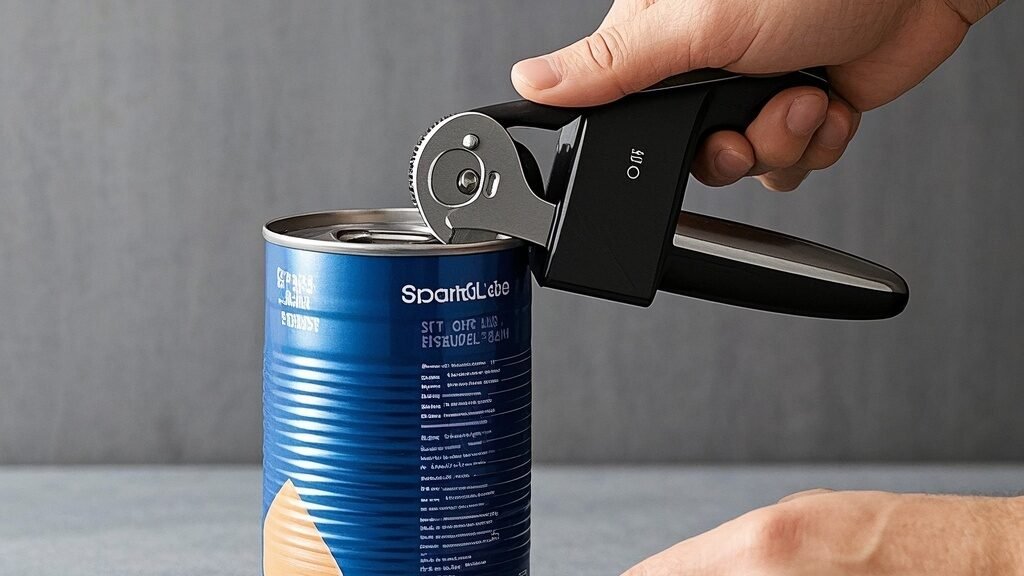
Are left handed can openers ergonomically designed?
Imagine this familiar kitchen struggle: you’re holding a can, ready to prepare a quick meal, but the opener in your hand just won’t cooperate. It slips, requires awkward wrist contortions, and turns a simple task into a minor battle. For the roughly 10% of the population that is left-handed, this isn’t an occasional nuisance—it’s a frequent reality with a tool most take for granted. The core issue often lies in a fundamental design oversight. This brings us to a critical question: are left-handed can openers truly ergonomically designed, or are they merely mirrored versions of right-handed tools? True ergonomics goes beyond simple reversal; it involves thoughtful engineering that reduces strain, improves comfort, and aligns with natural movement. Fortunately, the market is evolving, offering specialized tools that finally acknowledge the left-handed user’s needs.
The Ergonomic Challenge for Left-Handed Users
Traditional can openers are predominantly designed for right-handed operation. They are typically mounted on the right side of the can and require a clockwise turning motion that feels intuitive for right-handers but is awkward and inefficient for lefties. Using such a tool forces left-handed individuals to adopt an unnatural grip, often leading to wrist strain, reduced control, and a higher risk of slippage or incomplete cuts. Ergonomics, by definition, aims to optimize human well-being and system performance. Therefore, a genuinely ergonomic left-handed can opener must address these specific pain points. It’s not just about flipping the design; it involves rethinking the grip, the turning mechanism (often counterclockwise for left-handed models), and the force distribution to ensure the tool works *with* the user’s biology, not against it. Modern designs now frequently incorporate features like extra-large, easy-grip turning knobs and contoured, slip-resistant handles that fit comfortably in either hand, significantly reducing the effort required.
Key Features of Modern Ergonomic Left-Handed Openers
Today’s specialized left-handed can openers integrate several design elements that prioritize comfort and ease of use. A primary feature is the reversed cutting mechanism. Brands like Lefty’s have redesigned openers to be secured on the *left* side of the can and rotated *counterclockwise*, which aligns perfectly with the natural motion of a left-handed person. This simple but crucial change eliminates the awkward wrist angles. Furthermore, manufacturers are focusing heavily on handle design. Many models now boast soft, non-slip grips and ergonomically shaped handles that better distribute pressure across the palm, which is especially beneficial for users with hand pain, arthritis, or reduced grip strength, including many seniors. Additional thoughtful touches include built-in bottle openers for multi-functionality and smooth-edge cutting systems that leave no sharp ridges on the lid or can, enhancing safety—a feature appreciated by all users but often highlighted in tools designed with accessibility in mind.
Electric and Manual Options: Catering to Different Needs
The pursuit of ergonomics has branched into both manual and electric categories, catering to different preferences and physical needs. High-quality manual left-handed openers, such as those made from heavy-duty stainless steel, focus on robust construction and mechanical advantage. They feature large, easy-turn knobs and leveraged handles to minimize the physical effort needed to puncture and cut through the lid. On the other hand, battery-operated electric can openers represent the peak of low-effort ergonomics. With a simple button press, they automate the entire process, requiring minimal force or precise grip from the user. As noted in product descriptions, these are particularly suitable for left-handed individuals, seniors, or anyone with conditions like arthritis, as they remove the need for gripping and turning altogether. They automatically stop after completing the cut, offering a safe and seamless experience. While electric models excel in ease, manual versions offer durability and more control for some users, showing that ergonomic solutions are not one-size-fits-all.
The journey for a truly user-friendly kitchen for left-handed individuals is ongoing, but the advancements in can opener design mark significant progress. Genuinely ergonomic left-handed can openers do exist, moving past mere novelty to offer tangible benefits in comfort, safety, and efficiency. They address the historical design bias by re-engineering the interaction from the ground up—with reversed mechanics, intuitive handling, and inclusive features. Whether you prefer the dependable control of a well-crafted manual opener or the effortless convenience of an electric model, the key is to choose a tool designed with intentionality for your dominant hand.
Who Should Consider a Left-Handed Can Opener?
This tool is an essential upgrade for any left-handed person tired of adapting to right-centric kitchen gadgets. It’s equally valuable for individuals with arthritis, limited hand strength, or mobility concerns, as the ergonomic designs significantly reduce strain and required effort. Seniors seeking safer, easier-to-use kitchen tools will also find these specialized openers to be a practical and thoughtful solution. Ultimately, investing in a properly designed can opener is a small change that can make a daily task noticeably more comfortable and efficient.
Find the perfect can opener for your needs below
Related Guides:
- Best Rated Can Openers 2026 (All Categories)
- Best Can Opener for Seniors with Weak Grip (2026 Top Picks)
- Best Can Opener for Arthritis Patients (2026 Pain-Free Picks)
- Best Can Opener for Stroke Survivors (2026 Easy-Use Picks)
- Best Electric Can Opener (2026 Top-Rated Automatic Models)
- Best Hands-Free Can Opener (2026 No-Grip Effort Models)
- Best Manual Can Opener (2026 Ergonomic Low-Effort Models)
- Best Sharp-Edge-Free Can Opener (2026 Safe No-Cut Models)