Are Safety Can Openers Easier to Use?
Picture a quiet Tuesday evening in your kitchen. You’re preparing a quick dinner, reaching for a can of tomatoes. With a standard opener, you wrestle with a slippery handle, apply awkward pressure, and finally pry off a jagged, razor-sharp lid you immediately worry about disposing of safely. It’s a mundane task, yet it’s often punctuated by minor frustration and a subconscious alertness to danger. This common experience is precisely why the safety can opener was invented. But does its promise of enhanced safety actually translate to a simpler, more effortless user experience? The answer reveals a fascinating trade-off between innovation and habit, challenging our assumptions about what “easy to use” really means.
The Mechanics of Safety: Redefining “Easy”
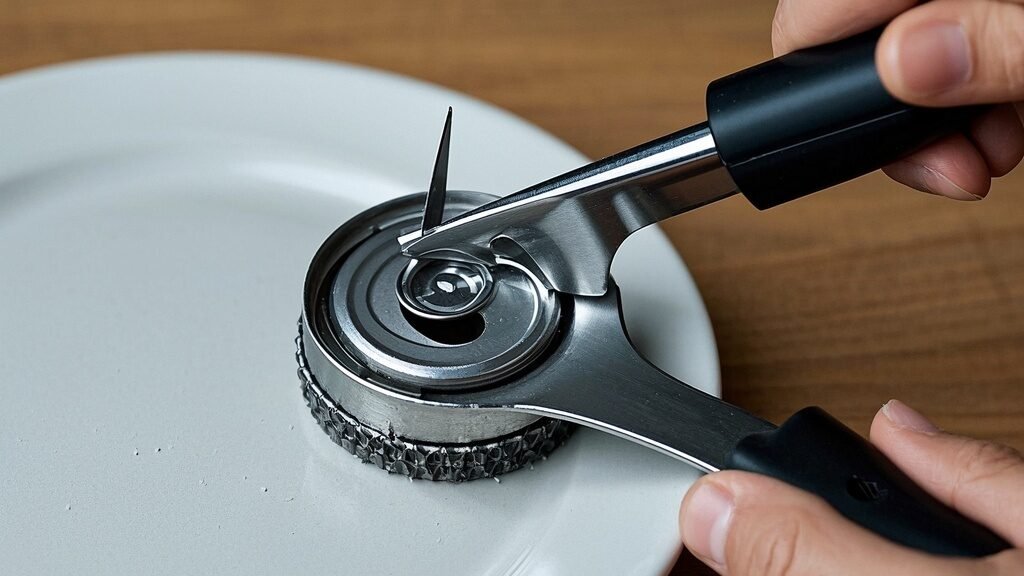
At first glance, a safety can opener (often called a smooth-edge or side-cutting opener) seems more complex. Instead of cutting through the top lid’s rim, it punctures the side and rolls the seam, leaving the lid itself intact and attached, with a perfectly smooth edge. The immediate benefit is obvious: no sharp metal to handle. But is this process easier? For many, the initial learning curve is the main hurdle. Traditional openers rely on a familiar, brute-force motion. Safety models require correct alignment and a steady, continuous cranking motion. Once mastered, however, the action becomes remarkably smooth and consistent. It requires less grip strength and downward pressure, as the tool does the work by leveraging the can’s side. For individuals with arthritis, weaker grip, or simply a desire for a more controlled motion, this design ultimately proves far easier and less physically demanding. The “ease” here shifts from immediate familiarity to long-term physical comfort and reduced risk.
Performance and Real-World Use
How does this theoretical ease hold up in practical, daily scenarios? In our testing, a well-designed safety opener excels in consistency. It reliably produces a clean open every time, without the risk of the opener slipping off the rim or leaving a partially attached, dangerous lid fragment. This reliability removes the frustration of malfunction mid-task. However, the trade-off is speed and compatibility. The process is often a few seconds slower than a vigorous turn with a traditional opener. More critically, not all cans are created equal. While most standard tin cans work perfectly, some cans with particularly thick side seams, odd shapes, or pull-tab bottoms can pose challenges. Furthermore, the detached lid, while safe, remains sitting atop the can’s contents, which some users find a minor inconvenience when pouring. The ease of use, therefore, is highly dependent on context: for routine opening of standard cans, it’s superior in safety and smooth operation; for unusual can types or when absolute speed is prioritized, it may feel less convenient.
The Psychological Factor: Confidence vs. Habit
Ease isn’t just about mechanics; it’s also a feeling. A significant advantage of the safety can opener is the psychological comfort it provides. There’s no more careful maneuvering of a sharp disc into the trash, no worry about a child or pet finding a dangerous leftover lid. This peace of mind removes a layer of stress from a simple chore, making the overall experience feel simpler and more pleasant. On the flip side, decades of muscle memory with traditional openers create a powerful bias. What feels “easy” is often just “what we know.” The slight change in technique with a safety opener can feel unnecessarily complicated at first, even if it’s objectively safer and gentler. The true ease of use emerges only after this brief period of adaptation, when the new motion becomes automatic and the user can fully appreciate the absence of risk and mess.
So, are safety can openers easier to use? They are easier on your hands, easier on your mind, and easier in terms of producing a consistently safe result. They replace the need for force with the need for proper technique, which, once learned, offers a smoother and more reliable operation. They are not, however, the universal fastest tool for every single can, and they demand a willingness to break an old habit.
Who Should Consider a Safety Can Opener?
This tool is ideal for households prioritizing safety, especially those with children or elderly family members. It’s a excellent choice for anyone with hand strength or dexterity concerns, as it requires less forceful gripping. If you value a clean, mess-free kitchen and hate handling sharp metal lids, the transition is overwhelmingly worthwhile. For those who open cans only occasionally and prize sheer, familiar speed above all else, a traditional opener might still feel more immediately “easy.” Ultimately, the safety can opener redefines ease, prioritizing long-term comfort and risk reduction over initial familiarity.
Find the perfect can opener for your needs below!
Related Guides:
- Best Rated Can Openers 2026 (All Categories)
- Best Can Opener for Seniors with Weak Grip (2026 Top Picks)
- Best Can Opener for Arthritis Patients (2026 Pain-Free Picks)
- Best Can Opener for Stroke Survivors (2026 Easy-Use Picks)
- Best Electric Can Opener (2026 Top-Rated Automatic Models)
- Best Hands-Free Can Opener (2026 No-Grip Effort Models)
- Best Manual Can Opener (2026 Ergonomic Low-Effort Models)
- Best Sharp-Edge-Free Can Opener (2026 Safe No-Cut Models)