What Can Opener Is Best for Aging Hands?
Opening a simple can of soup shouldn’t feel like a test of strength or a hazard to your fingers. Yet, for many seniors, individuals with arthritis, or anyone experiencing weakness in their hands, the familiar struggle with a manual can opener is a daily reminder of declining independence in the kitchen. The sharp edges, the awkward twisting motion, and the sheer force required can turn a basic task into a painful, frustrating chore. Finding the best can opener for seniors isn’t about luxury; it’s about safety, dignity, and reclaiming the simple joy of preparing a meal without pain or fear.
Why Standard Can Openers Fail Aging Hands
Traditional manual can openers are designed with an assumption of full grip strength and dexterity. They require a firm, sustained pinch to operate the handles and significant rotational force in the wrist to turn the key. For hands affected by arthritis, conditions like Parkinson’s, or general age-related weakness, these actions can range from uncomfortable to impossible.
The Pain Points of Conventional Designs: The small, often serrated handles dig into tender joints. The twisting motion exacerbates pain in arthritic wrists and fingers. Slippage is common, leading to jagged, dangerous lids and potential cuts. These challenges aren’t just inconveniences; they are real barriers that can lead to reliance on others or avoidance of nutritious canned foods altogether. A safety can opener specifically addresses these issues by re-engineering the entire opening process.
Key Features of a Senior-Friendly Can Opener
When shopping for an accessible can opener, look for designs that eliminate the need for pinching, twisting, and applying downward pressure. The goal is to maximize leverage and stability while minimizing direct strain on vulnerable joints.
Ergonomic and Leverage-Focused Designs: Large, soft-grip handles that accommodate a whole-hand grasp are essential. Look for openers that use a side-cutting mechanism or a smooth, rolling wheel, as these often require less force than piercing top-cut models. The best models provide significant mechanical advantage, turning a small hand motion into the power needed to cut through the lid.
Safety and Ease of Use: A paramount feature is a safety can opener that leaves smooth, blunt edges on both the can and the lid, completely removing the risk of sharp metal. Automatic openers that do all the work with the push of a button are ideal for those with very limited strength or mobility. Stability is also crucial; a wide, non-slip base or a model that clamps securely onto the can prevents dangerous wobbling during use.
Top Can Opener Styles for Limited Mobility
Not all accessible openers are the same. Different designs cater to varying levels of ability and preference.
1. Electric Can Openers: Maximum Ease
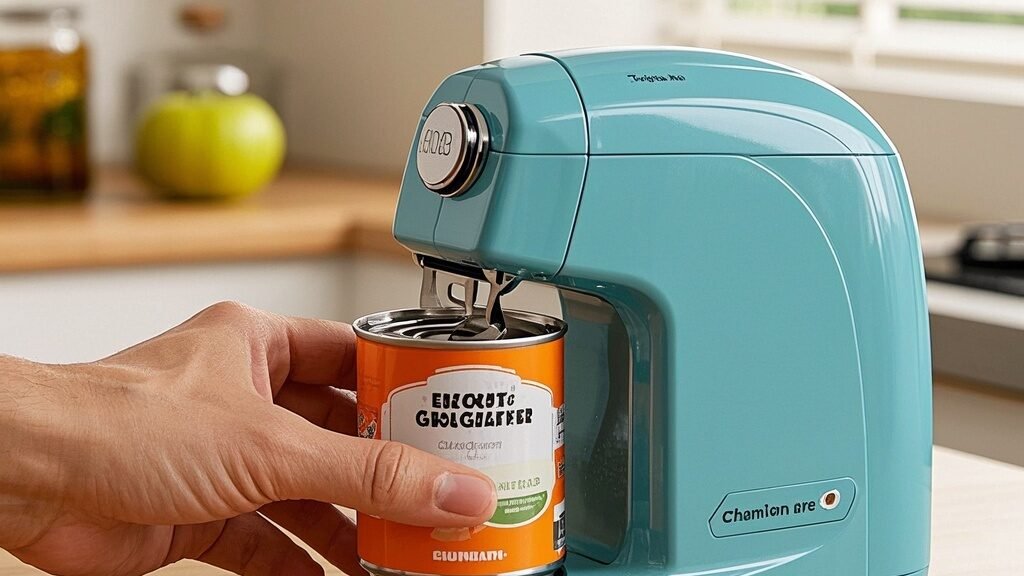
For ultimate convenience and minimal physical demand, an electric can opener is often the top recommendation. You simply position the can, press a lever or button, and the machine does the cutting for you. Most feature hands-free operation and automatic shut-off.
Pros and Cons: The primary advantage is effortless operation, making them excellent for those with severe arthritis or weakness. The downside is that they require counter space, an electrical outlet, and battery power or a cord. In our testing, models with a magnetic lid lifter add an extra layer of safety by retrieving the lid without touching it.
2. Smooth-Edge Safety Can Openers
These manual marvels are engineered for safety above all. Instead of cutting the lid from the top, they roll underneath the rim, severing the lid and leaving no sharp edges on either piece. The resulting lid can often be used as a resealing cover.
Performance and Real-World Use: While they require more manual operation than electric models, they need significantly less grip strength and force than traditional openers. The turning motion is generally smoother. They are perfect for seniors who prefer a manual tool but want to eliminate the hazard of sharp metal entirely.
3. Adaptive & Ergonomic Manual Openers
This category includes openers with oversized, contoured handles, stabilizing bases, and innovative lever systems that amplify the user’s strength. Some are designed to be used with one hand or mounted on a wall for added stability.
Choosing the Right Fit: Consider the specific hand challenge. For weak grip, a large lever-style opener is ideal. For poor dexterity, a wall-mounted model that holds the can steady can be transformative. These options are typically more affordable and portable than electric models.
Practical Tips for Safe and Independent Can Opening
Choosing the right tool is the first step. Using it effectively ensures lasting safety and independence.
Setup and Technique: Always work on a clean, stable, and well-lit surface. Ensure your can opener, whether electric or manual, is securely engaged on the can’s rim before starting. For manual models, use slow, steady turns rather than quick, forceful motions. If fatigue sets in, it’s okay to pause and reposition your grip.
Maintenance and Safety Checks: Keep the cutting wheel clean and free of food debris to ensure smooth operation. Regularly check for signs of dullness or damage. For electric models, keep cords tidy and away from heat sources. Remember, even the safest opener requires careful handling of the can’s contents, as the inner rim can sometimes have a slight burr.
Who Should Consider a Senior-Friendly Can Opener? If you or a loved one experiences hand pain, stiffness, tremors, or a noticeable loss of strength when performing kitchen tasks, investing in an adaptive can opener is a wise decision for safety and independence. It’s a small tool that makes a profound difference in daily life. Find the perfect can opener for your needs below and enjoy pain-free meals again!
Related Guides:
- Best Rated Can Openers 2026 (All Categories)
- Best Can Opener for Seniors with Weak Grip (2026 Top Picks)
- Best Can Opener for Arthritis Patients (2026 Pain-Free Picks)
- Best Can Opener for Stroke Survivors (2026 Easy-Use Picks)
- Best Electric Can Opener (2026 Top-Rated Automatic Models)
- Best Hands-Free Can Opener (2026 No-Grip Effort Models)
- Best Manual Can Opener (2026 Ergonomic Low-Effort Models)
- Best Sharp-Edge-Free Can Opener (2026 Safe No-Cut Models)