What Is Best Can Opener for Elderly Parents?
Picture your mom in her kitchen, staring at a simple can of soup. It’s a small task, but her hands, stiff from arthritis, can’t grip the old manual opener. That familiar pang of frustration—and the quiet loss of independence—is a reality for many seniors. The right kitchen tool can restore confidence and safety with every meal. Finding the best can opener for elderly parents isn’t about luxury; it’s about empowering them to cook safely and pain-free, turning a daily struggle back into a simple task.
Why Standard Can Openers Fail for Seniors
Traditional manual can openers require a specific combination of grip strength, wrist rotation, and downward pressure that becomes challenging with age. For someone with arthritis, weak hands, or limited mobility, this can make opening a can painful, unsafe, or even impossible.
Common Challenges with Standard Models: The primary issue is the pinch grip needed to operate the handle. This motion aggravates arthritic joints in fingers and thumbs. Additionally, stabilizing the can while turning requires coordination and core strength that may have diminished. Slippery handles and poor leverage can turn the task into a wrestling match, increasing the risk of cuts or spills.
The Impact on Independence: When simple tools become barriers, it can lead to reliance on others or avoidance of certain nutritious foods that come in cans, like beans, tuna, or vegetables. A safe can opener for seniors directly addresses these physical limitations, prioritizing ease and security over brute force.
Key Features of a Senior-Friendly Can Opener
When evaluating options, look for designs that minimize effort and maximize control. The goal is to reduce or eliminate the need for pinching, twisting, and strong grip.
Ergonomic & Easy-Grip Handles: Seek out large, padded, or contoured handles. These distribute pressure across the palm rather than concentrating it on finger joints. Textured, non-slip surfaces are crucial for secure handling, especially if hands are prone to tremors or moisture.
Leverage and Effortless Operation: A well-designed gear system provides significant mechanical advantage. Look for openers that require minimal squeezing force to puncture the lid and smooth, easy rotation. Some electric models or side-cutting manual openers completely eliminate the turning motion.
Safety-First Design Elements: This is non-negotiable. The best can opener for weak hands should also be the safest. Key features include automatic magnet that lifts and holds the cut lid (no sharp edges to handle), hands-free operation that locks the can in place, and smooth, blunt edges on all cutting components.
Top Can Opener Styles for Elderly Users
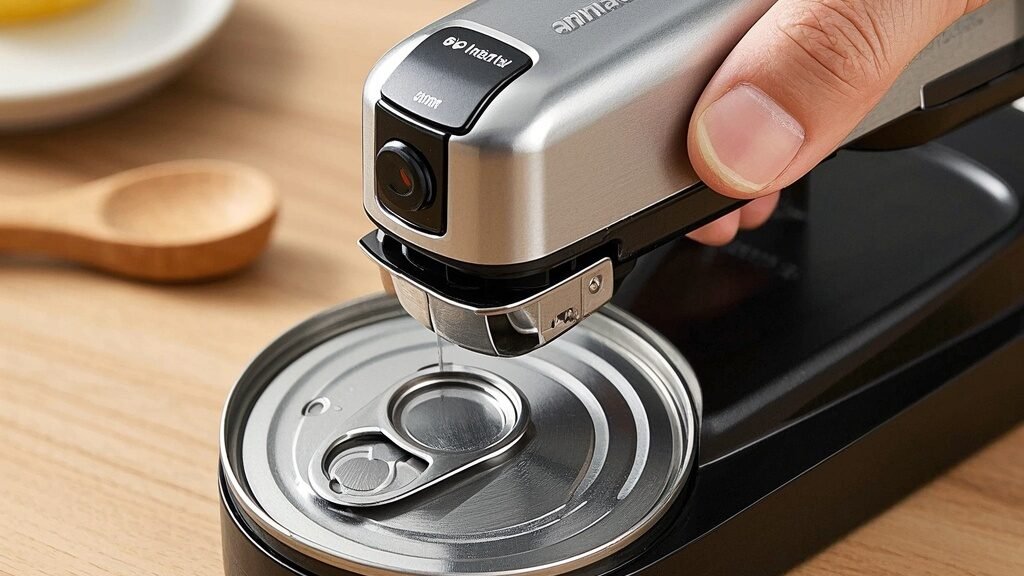
1. Electric Can Openers: Often the top recommendation for maximum ease. With a simple press of a button, they do all the work—puncturing, rotating, and stopping automatically. The senior only needs to place the can and press a large, clearly marked button. Most have built-in lid magnets.
Pros: Virtually no physical effort required; consistent, smooth cutting; excellent for severe arthritis or very weak grip. Cons: Requires counter space and an outlet; needs occasional cleaning of the cutting assembly; has more parts that could potentially fail.
2. Side-Cutting / Smooth-Edge Manual Openers: These are a fantastic manual alternative. Instead of cutting from the top, they pierce the side of the lid and roll it off, leaving a perfectly smooth rim on both the can and the lid. They typically use a large turning knob instead of a squeezing handle.
Pros: Creates no sharp edges; often easier to turn than traditional models; leaves a safe, smooth can. Cons: May require slightly more initial force to puncture; can be bulkier.
3. Lever-Style or “One-Touch” Openers: These use a simple pushing-down lever action. You clamp it onto the can and press a large lever; the gear mechanism does the rest as you press down repeatedly. They require grip strength to clamp but minimal rotational force.
Pros: Very simple motion; usually compact. Cons: Still requires some hand strength to position and clamp.
Practical Tips for Choosing and Using a Can Opener
Involve your parent in the selection process if possible. Let them feel the handle and test the mechanism (with an empty can) to see what feels most natural to them.
Prioritize Safety in the Kitchen: Always opt for models with automatic lid lifters. Teach and remind them to never try to remove a jagged lid with their fingers—use the magnet or a utensil. Ensure the counter area is well-lit and uncluttered for stable operation. For electric models, keep the cord secured and out of walkways.
Maintenance for Longevity: Keep the cutting wheel clean and free of food debris to ensure smooth operation. For manual models, a occasional drop of mineral oil on the gears can keep them turning easily. Always check for and discard any opener with a dull, rusty, or damaged cutter.
Who Should Consider a Specialized Can Opener?
If your elderly parent experiences hand pain, stiffness, weakness, or tremors when using everyday tools, a specialized can opener is a worthwhile investment. It’s a simple upgrade that directly supports their autonomy, safety, and nutritional well-being in the kitchen. The confidence gained from mastering a daily task independently is invaluable.
Find the perfect can opener for your parent’s needs and help them reclaim the joy of cooking safely and without pain!
Related Guides:
- Best Rated Can Openers 2026 (All Categories)
- Best Can Opener for Seniors with Weak Grip (2026 Top Picks)
- Best Can Opener for Arthritis Patients (2026 Pain-Free Picks)
- Best Can Opener for Stroke Survivors (2026 Easy-Use Picks)
- Best Electric Can Opener (2026 Top-Rated Automatic Models)
- Best Hands-Free Can Opener (2026 No-Grip Effort Models)
- Best Manual Can Opener (2026 Ergonomic Low-Effort Models)
- Best Sharp-Edge-Free Can Opener (2026 Safe No-Cut Models)