What Is Best Can Opener for People with Joint Pain?
Opening a simple can of soup can feel like a monumental task when your hands ache with arthritis or your grip strength has faded. That familiar twist-and-press motion, once effortless, becomes a source of frustration and even pain. For millions with joint pain, limited mobility, or conditions like arthritis, the kitchen can present daily obstacles to independence. The right safety can opener isn’t just a convenience; it’s a tool that restores confidence and autonomy in meal preparation.
Why Standard Can Openers Fail People with Joint Pain
Traditional manual can openers require a specific combination of grip strength, wrist torque, and fine motor control. The squeezing action to pierce the lid, followed by the continuous turning of a small, often slippery knob, places significant strain on finger joints, thumbs, and wrists. This can exacerbate pain for those with osteoarthritis or rheumatoid arthritis. Furthermore, the sharp, jagged lids left behind pose a serious cut hazard, especially for individuals with reduced sensation or slower reflexes.
Key Pain Points: The primary issues with standard models are the high force required for initial puncture and the sustained, awkward motion needed to rotate the cutter around the rim. This repetitive motion is precisely what doctors advise arthritis patients to avoid. A can opener for seniors or those with limited hand strength must address these fundamental design flaws to be truly effective and safe.
Essential Features of a Pain-Free Can Opener
When searching for the best tool, look for designs that prioritize leverage, stability, and safety over brute force. The goal is to minimize the effort required from your hands and fingers.
Ergonomic and Leverage-Based Designs: The most critical feature is an ergonomic handle that distributes pressure across the palm rather than concentrating it on the fingers. Look for large, soft-grip handles that are easy to hold. Openers that use a long lever or a rocking mechanism (like a side-cutting design) are superior because they convert a simple push-down motion into the cutting action, eliminating the painful twisting altogether.
Safety and Lid Management: A top-tier safety can opener for elderly users will leave a smooth, safe edge on both the can and the lid. Magnetized lids that lift away automatically prevent the need to pry with fingers or a utensil near sharp metal. Some models even cut from the side, leaving the lid attached but bent back, which is inherently safer.
Stability and Ease of Use: A stable base is non-negotiable. Look for openers with strong suction cups or weighted bases that grip the countertop, allowing you to use the tool with one hand if necessary. Electric models take this a step further, requiring only the push of a button, but their suitability depends on the user’s comfort with appliances.
Top Can Opener Styles for Accessibility
Not all accessible can openers are the same. Understanding the different mechanisms will help you find the perfect match for your specific needs and abilities.
1. Side-Cutting / Smooth-Edge Can Openers
This is often the top recommendation from occupational therapists. Instead of cutting down through the lid, it cuts from the side, rolling the lid’s edge under to create a perfectly smooth rim. The operation typically involves a large, comfortable handle that you rock back and forth. It requires minimal grip and no twisting motion, making it ideal for severe arthritis. The lid stays attached but bent back, so there’s no loose, sharp disc to handle.
Best For: Individuals with very weak grip strength, significant arthritis in hands and wrists, or those who prioritize absolute safety above all else.
2. Electric / Automatic Can Openers
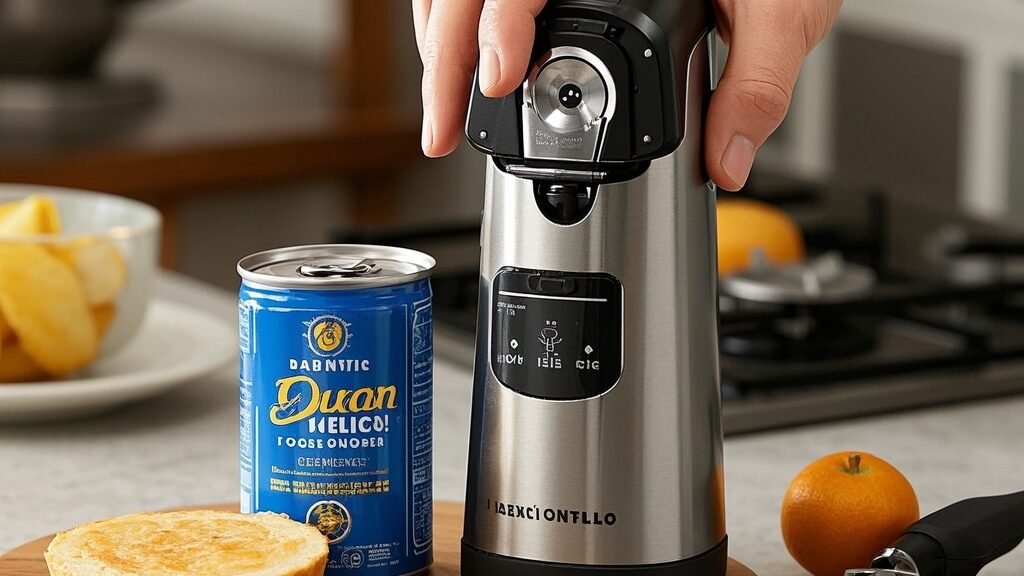
Electric models offer the ultimate in low-effort operation. You simply position the can, press a lever or button, and the machine does all the work, stopping automatically. They require almost no strength or dexterity. The main considerations are counter space, noise, and the need for a power outlet. Some higher-end models also feature smooth-edge cutting and automatic magnetized lid lifting.
Best For: Those with very limited hand mobility, strength, or stamina, and who are comfortable with a countertop appliance. They are also excellent for caregivers assisting multiple people.
3. Lever-Style (“Butterfly”) & Large-Knob Openers
These manual openers use a long lever to generate significant mechanical advantage, making the initial puncture easy. They often feature extra-large, easy-to-grip turning knobs. While they still require a turning motion, the force needed is drastically reduced. They are a good middle-ground option, often more compact and affordable than electric or specialized side-cutting models.
Best For: Those with mild to moderate joint pain or stiffness who prefer a simple, traditional form factor but need more assistance than a standard opener provides.
Practical Tips for Safe and Independent Can Opening
Choosing the right tool is the first step. Using it effectively and safely is the next.
Setup and Stability: Always place your can opener on a clean, dry, and stable surface. Engage suction cups firmly. If your model doesn’t have one, consider placing a damp cloth underneath to prevent slipping. Ensure the can is dry on the outside for a better grip.
Body Mechanics Matter: Position the can and opener so you can use your larger arm muscles or body weight when possible. For a lever-style opener, use the palm of your hand to press down rather than just your fingers. Sit on a stable stool if standing is tiring, ensuring you have a clear view and reach.
Maintenance for Longevity: Keep the cutting wheel clean and free of food debris. A quick wipe after each use prevents gunk buildup that can make the opener harder to turn. Periodically check for and tighten any loose screws. For electric models, keep the drive mechanism clean and avoid immersing the motor unit in water.
Who Should Consider a Specialized Can Opener?
If opening cans causes you pain, hesitation, or anxiety, it’s time for a change. A can opener for weak hands or joint pain is essential for seniors aging in place, individuals with arthritis (osteo or rheumatoid), carpal tunnel syndrome, Parkinson’s disease, or anyone recovering from hand or wrist surgery. It’s a small investment that pays dividends in daily independence, safety, and dignity. Don’t let a simple kitchen task rob you of the joy of preparing your own meals. Find the perfect can opener to reclaim your kitchen confidence below!
Related Guides:
- Best Rated Can Openers 2026 (All Categories)
- Best Can Opener for Seniors with Weak Grip (2026 Top Picks)
- Best Can Opener for Arthritis Patients (2026 Pain-Free Picks)
- Best Can Opener for Stroke Survivors (2026 Easy-Use Picks)
- Best Electric Can Opener (2026 Top-Rated Automatic Models)
- Best Hands-Free Can Opener (2026 No-Grip Effort Models)
- Best Manual Can Opener (2026 Ergonomic Low-Effort Models)
- Best Sharp-Edge-Free Can Opener (2026 Safe No-Cut Models)