What Can Opener Is Best for Reduced Dexterity?
Opening a simple can of soup or beans shouldn’t feel like a daunting task. For millions of adults managing arthritis, weak grip strength, or limited hand mobility, the familiar struggle with a traditional can opener can be a source of frustration and even pain. The twisting, pressing, and sharp edges turn a basic kitchen chore into a barrier to independence. But what if your kitchen tools worked with you, not against you? The right safety can opener can transform this daily challenge, prioritizing ease and security for users with reduced dexterity.
Why Traditional Openers Fail for Weak Hands
Standard manual can openers require a specific combination of fine motor skills and sustained pressure that can be difficult or painful. You must grip a small, often slippery handle tightly while simultaneously applying downward force and rotating your wrist. This action can strain joints, exacerbate arthritis pain, and be nearly impossible with significant hand weakness or tremors. Furthermore, the resulting jagged lid poses a serious cut hazard. For seniors and individuals with limited mobility, these designs are simply not fit for purpose, creating unnecessary risk in a space meant for nourishment and comfort.
Key Pain Points: The primary issues are the need for a strong, continuous grip, the complex twisting motion, and the exposed sharp metal lid. An opener designed for arthritis or weak hands addresses each of these points directly, often by changing the fundamental mechanics of the opening process.
Essential Features in an Accessible Can Opener
When searching for the best can opener for your needs, look for specific design elements that reduce physical demand and enhance safety. These features work together to create a pain-free and independent kitchen experience.
Leverage and Grip Design: Look for large, contoured, and non-slip handles. These distribute pressure across your palm rather than concentrating it on your fingers. Extra-long or side-mounted levers provide significant mechanical advantage, allowing you to open a can with a gentle push or pull instead of a strenuous twist. Some models feature oversized knobs or wings that are easier to grasp.
Safety-First Operation: The hallmark of a true safety can opener for seniors is how it handles the lid. The best models utilize a magnetic lid lifter. Once the cutting is complete, a strong magnet automatically grabs and holds the lid, lifting it completely off the can. Your hands never need to touch the sharp edge. Some openers cut from the side of the can, leaving a smooth, safe rim behind, while others securely contain the cut lid within a chamber.
Stability and Ease of Use: A stable base is crucial. Many accessible openers are designed to clamp securely onto the rim of the can, holding it firmly in place so you don’t have to. This “hands-free” operation means you only need to manage the lever or knob. Electric models take this a step further, requiring only the push of a large button to do all the work, which is ideal for very limited hand strength.
Top Can Opener Styles for Limited Mobility
Understanding the different types available will help you find the perfect match. Each style offers distinct benefits for users with reduced dexterity.
1. Side-Cutting Manual Openers with Magnetic Lift
This is often the top recommendation. It pierces and cuts the lid from the side, leaving a perfectly smooth rim on both the can and the lid. The magnetic arm lifts the lid away safely. The cutting mechanism is typically engaged by a large, easy-to-turn knob or lever, requiring less grip strength than a traditional opener. It combines safety with straightforward manual operation.
2. Heavy-Duty Lever (“Swing-Away”) Openers
These openers use a long lever to generate immense cutting power with minimal effort. You clamp the opener onto the can, then simply pull the long lever down and back up. It’s a single, strong motion that doesn’t require sustained gripping or twisting. They are incredibly durable and effective for those with arthritis who can manage one firm motion but struggle with repetitive twisting.
3. Electric Can Openers
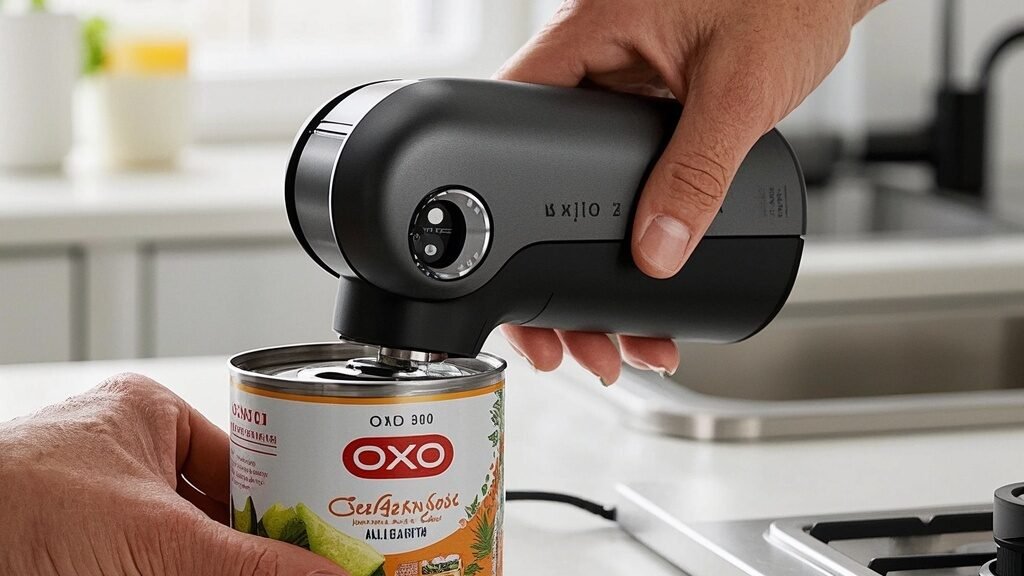
For maximum ease, an electric can opener is unbeatable. You place the can on a base, align the cutter (often automatically), and press a large button. The motor does all the work. Many feature automatic shut-off and magnetic lid lift. This is the best choice for very weak hands, significant arthritis, or conditions like Parkinson’s, as it eliminates almost all physical demand. The main consideration is that it requires counter space and an outlet.
Practical Tips for Safe and Independent Use
Choosing the right tool is the first step. Implementing a few smart practices can make the process even smoother and safer.
Setup and Stability: Always operate your can opener on a clean, dry, and stable surface. If you have a model that clamps onto the can, ensure it is fully engaged before you start turning or pulling. For electric models, make sure the power cord is out of the way to prevent pulling the unit off the counter.
Maintenance for Longevity: Keep the cutting wheel clean and free of food debris. A quick wipe after each use prevents gunk from building up, which can make the opener harder to turn. Periodically check for wear on moving parts. According to manufacturer guidance, a drop of food-safe mineral oil on the gears can keep a manual opener working smoothly for years.
Creating a Supportive Kitchen: Pair your accessible can opener with other ergonomic tools like jar openers, rocker knives, and easy-grip utensils. Store your can opener in an easy-to-reach place, not buried in a drawer. This holistic approach reduces strain across all kitchen tasks, preserving your energy and comfort.
Who Should Consider a Safety Can Opener? If you or a loved one experiences hand pain, stiffness, weakness, or tremors when using everyday tools, a can opener designed for reduced dexterity is a wise and liberating investment. It’s a simple change that reclaims independence, reduces fall and cut risks, and makes meal preparation enjoyable again. Find the perfect can opener for your needs below!
Related Guides:
- Best Rated Can Openers 2026 (All Categories)
- Best Can Opener for Seniors with Weak Grip (2026 Top Picks)
- Best Can Opener for Arthritis Patients (2026 Pain-Free Picks)
- Best Can Opener for Stroke Survivors (2026 Easy-Use Picks)
- Best Electric Can Opener (2026 Top-Rated Automatic Models)
- Best Hands-Free Can Opener (2026 No-Grip Effort Models)
- Best Manual Can Opener (2026 Ergonomic Low-Effort Models)
- Best Sharp-Edge-Free Can Opener (2026 Safe No-Cut Models)