What Can Opener Is Best for Seniors with Painful Joints?
Opening a simple can of soup shouldn’t feel like a battle. For millions of seniors living with arthritis, joint pain, or diminished hand strength, the twisting, gripping, and pressure required by a traditional can opener can turn a basic kitchen task into a source of frustration and discomfort. The good news is that a new generation of kitchen tools is designed specifically to restore independence and ease. Finding the right can opener for seniors isn’t just about convenience; it’s about safety, accessibility, and preserving the joy of preparing a meal for oneself.
Key Features to Look for in a Senior-Friendly Can Opener
Not all “easy” openers are created equal. When shopping for a safety can opener for someone with limited hand mobility or painful joints, several design elements are non-negotiable. Prioritizing these features can make the difference between a tool that sits in a drawer and one that becomes a daily helper.
Ergonomic Design and Grip
Look for openers with large, soft-grip handles that distribute pressure across the palm rather than concentrating it on the fingers. Contoured shapes that fit naturally in the hand reduce strain. For those with very weak grip strength, openers with extended levers or rocker-style designs that use arm strength instead of finger strength are ideal.
Automatic and Electric Operation
Electric can openers are often the top recommendation. With the simple press of a button, they do all the work—gripping the can, cutting the lid, and releasing it—requiring minimal force or dexterity. Look for models with large, easy-to-press buttons and automatic shut-off. A hands-free design that holds the can in place is a major safety plus.
Safety-First Cutting Mechanisms
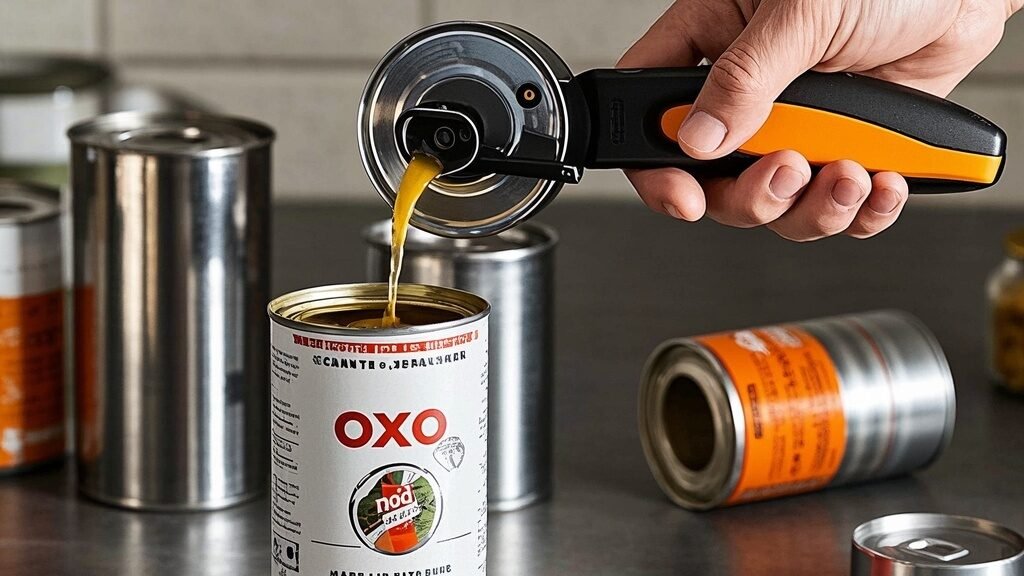
Traditional openers leave a sharp, jagged lid and can edge. The best can openers for weak hands prioritize safety by cutting the lid from the side, leaving a smooth edge on both the can and the lid. Some even magnetically hold the cut lid, eliminating the need to touch it at all. This prevents cuts and makes disposal safer.
Top Can Opener Styles for Accessibility and Comfort
Understanding the different types available helps match the tool to the individual’s specific abilities and preferences. Each style offers distinct advantages for managing arthritis or joint pain in the kitchen.
Side-Cutting / Safety-Edge Openers
These are excellent manual options. Instead of piercing the top, they cut the lid from the side, underneath the rim. The result is a perfectly smooth edge with no sharp metal. They typically require less downward force and a simpler turning motion than top-cutting models, making them gentler on wrists and hands.
Lever-Style (“Rocker”) Openers
This design is a game-changer for those with very little grip strength. You clamp it onto the can and then rock a large lever back and forth. It uses the strength of your arm and body weight, completely bypassing the need to pinch or twist with fingers. It’s incredibly powerful and requires almost no fine motor skill.
Automatic Electric Openers
The ultimate in ease-of-use. A good electric opener requires only that you align the can and press a lever. It handles the rest, providing consistent, hands-off operation. Many come with additional features like knife sharpeners or bottle openers. Ensure the controls are intuitive and the base is sturdy to prevent tipping.
Practical Tips and Safety Considerations for Elderly Users
Choosing the right tool is the first step. Using it safely and effectively is just as important. Here are some practical guidelines to ensure a pain-free operation in the kitchen.
Setup and Stability are Key
Always use the can opener on a clean, dry, and stable countertop. For electric models, ensure the cord is tucked away to prevent tripping. If standing is difficult, consider using the opener at a seated position at a sturdy table. A non-slip mat underneath can provide extra stability.
Maintenance for Longevity and Safety
Keep the cutting wheel clean and free of food debris to ensure smooth operation and prevent jamming. For manual models, a drop of food-grade mineral oil on the gears occasionally can keep the action smooth. Always unplug electric models before cleaning. Regularly check for any signs of damage or wear.
Promoting Independence Safely
Encourage practice with the new opener when there’s no time pressure. Open a few empty or donated cans to build confidence. For those with significant cognitive or vision impairment, label the opener’s buttons with high-contrast tape. Remind users that it’s okay to ask for help with unusually large, odd-shaped, or damaged cans.
Who Should Consider a Specialized Can Opener?
If arthritis, Parkinson’s, neuropathy, past injury, or general age-related weakness makes using a standard opener difficult, painful, or unsafe, it’s time for a change. A well-chosen adaptive can opener is a small investment that pays massive dividends in kitchen confidence, safety, and self-reliance. It’s not about giving up independence; it’s about using smart tools to maintain it.
Find the perfect can opener for your needs or the needs of a loved one below!
Related Guides:
- Best Rated Can Openers 2026 (All Categories)
- Best Can Opener for Seniors with Weak Grip (2026 Top Picks)
- Best Can Opener for Arthritis Patients (2026 Pain-Free Picks)
- Best Can Opener for Stroke Survivors (2026 Easy-Use Picks)
- Best Electric Can Opener (2026 Top-Rated Automatic Models)
- Best Hands-Free Can Opener (2026 No-Grip Effort Models)
- Best Manual Can Opener (2026 Ergonomic Low-Effort Models)
- Best Sharp-Edge-Free Can Opener (2026 Safe No-Cut Models)