What Is Best Can Opener for Poor Grip Strength?
Opening a simple can of soup shouldn’t be a daily battle. For millions of Americans with arthritis, hand weakness, or limited mobility, the twisting and pressing required by a traditional can opener transforms a basic kitchen task into a source of frustration and even pain. The good news is that kitchen tool innovation has finally caught up, offering solutions that prioritize safety and ease of use over brute force. Finding the best can opener for poor grip strength isn’t just about convenience; it’s about reclaiming independence and confidence in your own kitchen.
Why Standard Can Openers Fail for Weak Hands
Traditional manual can openers are deceptively demanding tools. They require a precise combination of actions: applying downward pressure to pierce the lid, maintaining a firm grip on often-slippery handles, and executing a continuous turning motion with significant wrist rotation. For someone with arthritis, this can aggravate swollen joints. For those with generalized hand weakness, the sustained grip strength needed is simply unavailable.
The Pain Points of Conventional Designs
The primary issue is force concentration. Pressure isn’t distributed; it’s focused on small points in the fingers and wrist. The repetitive motion can strain tendons, while the sharp edges of cut lids pose a laceration risk when trying to pry them off. These challenges make what should be a 30-second task into an ordeal, often leading individuals to avoid canned goods altogether or rely on help, chipping away at their self-sufficiency.
Essential Features of a Senior-Friendly Can Opener
When searching for an accessible can opener, look beyond marketing claims and focus on specific design elements that directly address physical limitations. The goal is to minimize effort while maximizing control and safety.
Ergonomic and Power-Assisted Handles
Wide, contoured handles are non-negotiable. They should be made of a soft, non-slip material like rubber or foam to prevent slipping and reduce the grip strength required. Some advanced models feature large, loop-style handles that allow you to use your whole hand or even forearm for leverage, bypassing weakened fingers entirely. Electric or battery-powered openers represent the ultimate in reduced effort, requiring only a button press to do the work.
Safety-First Cutting Mechanisms
The safest models leave no sharp edges. Side-cutting or under-the-lid openers slice the can’s side seam, leaving a perfectly smooth lid that can be lifted off effortlessly. This eliminates the danger of handling a razor-sharp disc. Look for models with automatic magnet holders that capture the lid for you, so you never have to touch it. Stability is also key—a wide base or strong clamping mechanism prevents the can from spinning or tipping during operation.
Top Can Opener Styles for Limited Mobility
Several specialized designs have emerged as champions for those with grip challenges. Each offers a different approach to solving the same problem.
1. Electric Can Openers: The Effortless Champion
For pure ease of use, an electric can opener is often the top recommendation. You simply position the can, press a lever or button, and the machine does the cutting and lifting for you. Most feature hands-free operation and magnetic lid holders. The primary consideration is counter space and access to an outlet. In our testing, models with large, easy-to-press buttons and clear visual alignment guides perform best for users with vision or dexterity concerns.
2. Side-Cutting Manual Openers: The Safe, Smooth Choice
These manual openers use a different cutting principle, rolling along the can’s side seam instead of the top. The result is a smooth-edged lid that sits back on top of the can, completely safe to touch. They typically require less downward pressure and a simpler turning motion than top-cutting models. Brands like OXO Good Grips have perfected this design with oversized, soft-turn knobs that are easier to grasp and rotate.
3. Lever-Style or “One-Touch” Openers
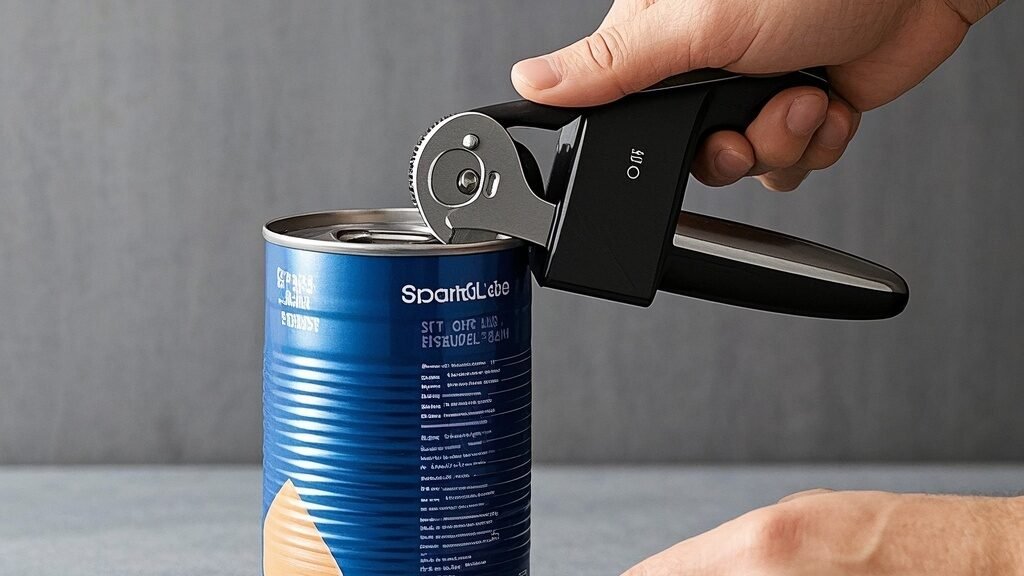
These innovative tools use a scissor-like lever action. You clamp the opener onto the can and then squeeze the long handles together. This converts hand strength into mechanical advantage, distributing force through larger arm muscles instead of finger joints. They are highly effective and portable, requiring no electricity.
Practical Tips for Safe and Pain-Free Can Opening
Choosing the right tool is the first step; using it effectively is the second. A few simple practices can make the process even safer and more comfortable.
Creating a Stable Workspace
Always operate your can opener on a clean, dry, and stable surface. Place a damp cloth or a non-slip mat underneath the can to prevent it from spinning. Ensure you have good lighting to see the alignment clearly. If you use an electric model, keep the cord secured and out of the way to prevent tripping.
Maintenance for Longevity and Ease
A clean can opener is a smooth can opener. Residue from food can gum up the cutting wheel and gears, making operation harder. Regularly wipe down your opener and, according to manufacturer instructions, occasionally apply a drop of mineral oil to moving parts to maintain easy rotation. For electric models, ensure the cutting assembly is free of debris.
Who Should Consider a Can Opener for Poor Grip Strength?
If you find yourself avoiding canned goods, using excessive force, or experiencing hand or wrist pain during kitchen tasks, it’s time for a change. The ideal can opener for weak hands is one you’ll use confidently and consistently, turning a chore back into a simple step in preparing a meal. It’s an investment in safety, comfort, and continued independence. Find the perfect can opener for your needs below and take the first step toward a more accessible kitchen today!
Related Guides:
- Best Rated Can Openers 2026 (All Categories)
- Best Can Opener for Seniors with Weak Grip (2026 Top Picks)
- Best Can Opener for Arthritis Patients (2026 Pain-Free Picks)
- Best Can Opener for Stroke Survivors (2026 Easy-Use Picks)
- Best Electric Can Opener (2026 Top-Rated Automatic Models)
- Best Hands-Free Can Opener (2026 No-Grip Effort Models)
- Best Manual Can Opener (2026 Ergonomic Low-Effort Models)
- Best Sharp-Edge-Free Can Opener (2026 Safe No-Cut Models)