What Is Best Safety Can Opener for Home Kitchens?
Opening a can shouldn’t feel like a high-risk kitchen task, yet for millions of Americans with arthritis, weak grip strength, or limited mobility, that’s exactly what it becomes. The struggle with a traditional, sharp-edged opener can turn a simple meal prep into a moment of frustration or even danger. The quest for the best safety can opener isn’t just about convenience; it’s about reclaiming independence and confidence in the heart of the home. For seniors and anyone with hand challenges, a truly safe opener prioritizes pain-free operation, eliminates sharp edges, and requires minimal force.
Key Features of a Truly Safe Can Opener
Not all can openers marketed as “easy” are created equal when it comes to safety. A superior safety can opener is engineered with specific features that address common physical limitations.
Ergonomic Design and Pain-Free Operation
The handle is the point of contact, and it makes all the difference. Look for large, soft-grip handles that distribute pressure across the palm, not just the fingers. This design reduces strain on arthritic joints and requires significantly less squeezing force. Some models feature oversized, looped handles that allow you to use your whole hand or even forearm for leverage, bypassing weak finger strength entirely.
Safety Blade Mechanism and Edge-Free Lid
This is the non-negotiable core of a safe can opener. Traditional openers leave a jagged, razor-sharp lid and rim. A true safety opener uses a side-cutting or under-the-rim mechanism that leaves the lid completely smooth and attached, often allowing you to lift it off like a cover. Some advanced models magnetically hold the lid after cutting, so your fingers never touch the metal at all. This eliminates the number one cause of cuts in the kitchen.
Top Considerations for Seniors and Users with Limited Mobility
Choosing the right tool involves matching its capabilities to the user’s specific needs. Beyond the basic features, several factors can dramatically enhance usability and independence.
Stability and One-Handed Operation
A can opener that slides around the counter is a hazard. The best models have a wide, non-slip base or powerful suction feet that lock the unit in place during use. This stability is crucial for users with tremors or limited coordination. Furthermore, an opener designed for one-handed operation is a game-changer. It allows the user to steady the can with one hand while operating the lever with the other, or frees up a hand if only one has full mobility.
Power Source: Manual vs. Electric
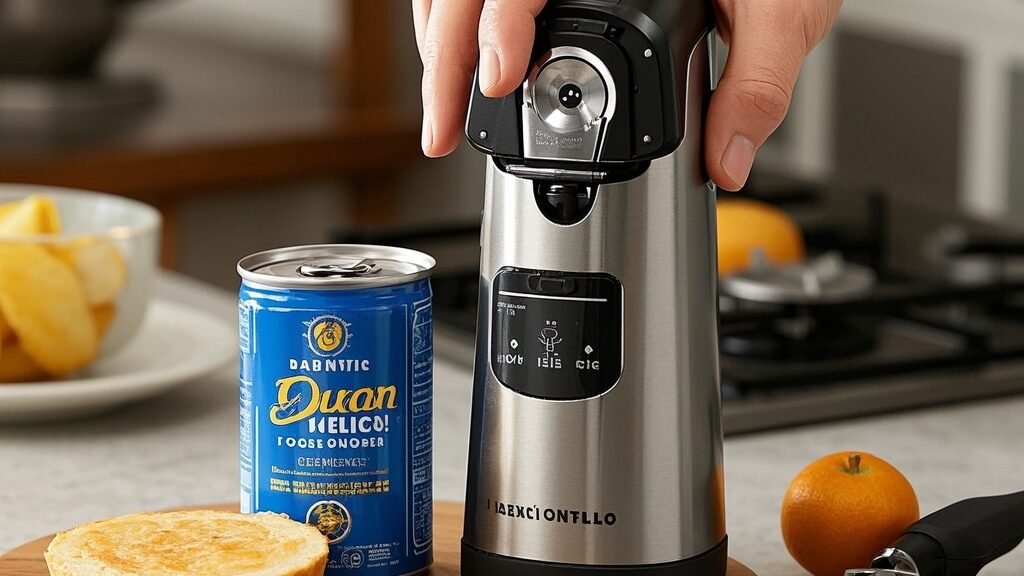
Manual safety openers are often praised for their simplicity and lack of cords, but they still require turning a knob or squeezing a lever. For those with very weak hands or severe arthritis, a well-designed electric can opener is the ultimate safety tool. With just the press of a large, accessible button, it does all the work—puncturing, cutting, and often magnetically lifting the lid. It requires zero grip strength or twisting motion, offering the most pain-free experience. According to manufacturer testing, modern electric models are very safe, with automatic shut-off features.
Practical Tips for Safe and Easy Can Opening
Even with the best tool, a few simple practices can make the process smoother and safer for elderly users.
Always place the opener on a clean, dry, and stable surface before use. Ensure the cutting mechanism is properly aligned with the rim of the can; most safety openers have guides or auto-align features. After opening, if the lid isn’t magnetically held, use a utensil like a spoon or fork to lift it off, rather than your fingers. For manual openers, clean the cutting wheel regularly with a small brush to prevent food buildup that can make turning more difficult. Store your can opener within easy reach, not in a cluttered bottom drawer, to avoid unnecessary bending or searching.
Safety Considerations and Maintenance
Long-term safety depends on proper care. Regularly inspect your can opener for signs of wear, such as a dull cutting wheel, cracked handles, or loose parts. A dull wheel can slip and require more force, increasing the risk of injury. Hand-wash the cutting assembly promptly after use to prevent corrosion and ensure smooth operation. For electric models, keep the cord neatly tucked away to prevent tripping hazards, and never immerse the motor unit in water. Remember, the safest tool is one that is in good working order and used as intended.
Who Should Consider a Safety Can Opener?
If you or a loved one experiences hand pain, stiffness, weakness, or simply values a safer, more effortless kitchen experience, investing in a dedicated safety can opener is a wise decision. It transforms a mundane chore into a simple, secure task, preserving independence and reducing the risk of accidents. The right opener acts not just as a tool, but as an enabler for confident, self-sufficient living.
Find the perfect safety can opener for your needs below!
Related Guides:
- Best Rated Can Openers 2026 (All Categories)
- Best Can Opener for Seniors with Weak Grip (2026 Top Picks)
- Best Can Opener for Arthritis Patients (2026 Pain-Free Picks)
- Best Can Opener for Stroke Survivors (2026 Easy-Use Picks)
- Best Electric Can Opener (2026 Top-Rated Automatic Models)
- Best Hands-Free Can Opener (2026 No-Grip Effort Models)
- Best Manual Can Opener (2026 Ergonomic Low-Effort Models)
- Best Sharp-Edge-Free Can Opener (2026 Safe No-Cut Models)