What Safety Can Opener Is Best for Kitchen Safety?
Opening a can should be a simple task, but for many, it’s a source of frustration and even danger. A standard can opener requires a firm grip, significant wrist rotation, and the strength to puncture a metal lid. For seniors, individuals with arthritis, or anyone with limited hand strength or mobility, this everyday chore can become a painful barrier to preparing meals independently. The quest for a truly safe and accessible can opener is more than a convenience; it’s about preserving dignity and autonomy in the kitchen. A safety can opener designed for these specific needs transforms a daunting task into a simple, secure, and pain-free process.
Key Features of a Safe and Accessible Can Opener
Not all can openers marketed as “easy” are created equal. When evaluating options for safety and accessibility, specific design features make a world of difference. The goal is to minimize physical effort and maximize control to prevent accidents like slips or cuts.
Ergonomic and Pain-Free Design: Look for large, soft-grip handles that distribute pressure across the palm, not just the fingers. This is crucial for those with arthritis or weak grip strength. Handles should be easy to squeeze with minimal force. Some models feature oversized, loop-style handles that allow you to use your whole hand or even forearm for turning, bypassing painful finger joints entirely.
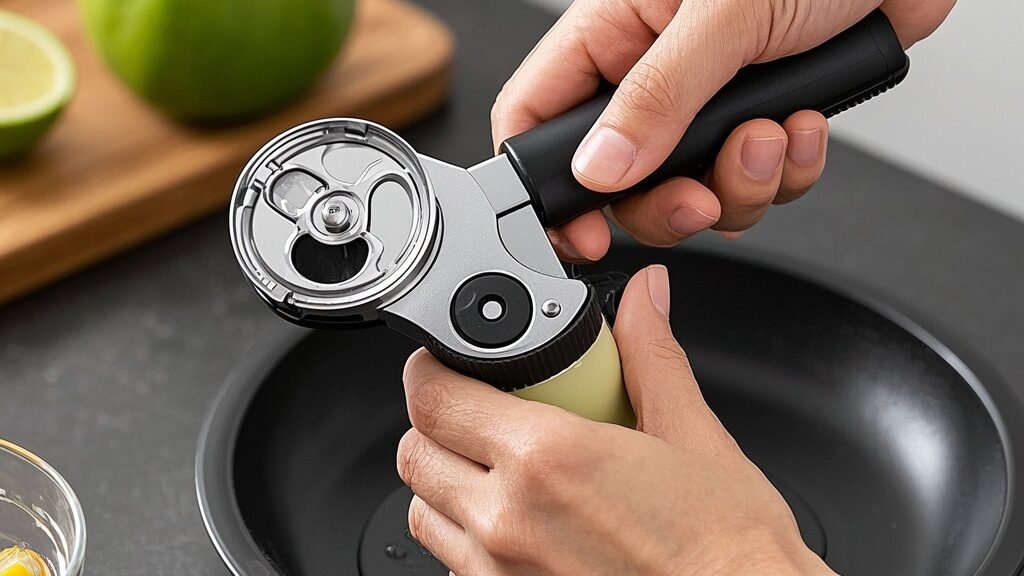
Safety-First Operation: The most significant safety innovation is the safety can opener that removes the lid without leaving a sharp, jagged edge. These openers typically cut the lid from the side, leaving a smooth rim on both the can and the lid. This eliminates the risk of cutting fingers on a sharp lid edge—a common kitchen injury. Additionally, a stable, non-slip base is essential to prevent the can from spinning or the opener from slipping during use.
Top Considerations for Seniors and Users with Limited Mobility
Choosing the right tool involves matching its capabilities with the user’s specific physical challenges. Beyond the opener itself, consider the entire workflow in the kitchen to ensure safety and ease from start to finish.
Matching the Tool to the Need: For severe arthritis or very weak hands, electric can openers are often the best choice. They require only the push of a button, eliminating gripping and turning altogether. For those who prefer manual operation but need help with grip, look for openers with extra-large, textured handles or a crank-style mechanism that provides more leverage than a traditional knob.
Practical Kitchen Safety Tips: Always place the can on a stable, flat surface before opening. If using a manual opener, secure the can against a backsplash or in a corner to prevent it from moving. After opening with a traditional cutter, use a lid lifter or a magnetized opener to safely remove the sharp lid without touching it. For individuals with limited dexterity, consider transferring canned goods to a secure, non-breakable container with a lid for easier storage.
Product Recommendations for Enhanced Safety and Independence
Based on safety features, ease of use, and user feedback, here are some highly regarded types of can openers that promote kitchen independence.
1. Side-Cutting/Safety Edge Manual Openers: Brands like OXO Good Grips are renowned for their user-friendly designs. Their manual can openers often feature large, soft handles and a mechanism that cuts the lid from the side, leaving a smooth edge. They provide excellent leverage, making them a strong manual option for those with moderate hand weakness.
2. Easy-Grip and Lever-Action Manual Openers: These are designed specifically for limited hand strength. They may feature oversized rotating handles or a unique lever-pull design that uses arm strength instead of finger pinch strength. They offer a good balance of manual control and reduced physical demand.
3. Automatic Electric Can Openers: This is often the top recommendation for maximum safety and minimal effort. A quality electric opener, such as those from Hamilton Beach or Cuisinart, holds the can magnetically, aligns the cutter automatically, and removes the lid with the touch of a lever. The lid is held magnetically, and the can’s rim is left smooth. They require virtually no grip strength or wrist motion, making them ideal for severe arthritis or limited mobility.
Maintaining Your Safety Can Opener
To ensure longevity and continued safe operation, keep the cutting wheel clean and free of food debris. For manual models, occasionally wiping a drop of mineral oil on the gears can keep the action smooth. For electric models, always unplug the unit before cleaning the cutter assembly with a damp cloth. A well-maintained opener is a safer opener.
Who Should Consider a Safety Can Opener? If you or a loved one experiences hand pain, stiffness, weakness, or tremors when using kitchen tools, investing in a dedicated safety can opener is a wise decision for maintaining kitchen independence. It’s a small tool that makes a significant impact on daily life, turning a potential hazard back into a simple task. Find the perfect can opener for your needs below and reclaim the joy of cooking safely and confidently!
Related Guides:
- Best Rated Can Openers 2026 (All Categories)
- Best Can Opener for Seniors with Weak Grip (2026 Top Picks)
- Best Can Opener for Arthritis Patients (2026 Pain-Free Picks)
- Best Can Opener for Stroke Survivors (2026 Easy-Use Picks)
- Best Electric Can Opener (2026 Top-Rated Automatic Models)
- Best Hands-Free Can Opener (2026 No-Grip Effort Models)
- Best Manual Can Opener (2026 Ergonomic Low-Effort Models)
- Best Sharp-Edge-Free Can Opener (2026 Safe No-Cut Models)