What Is Best Safety Can Opener for Limited Mobility?
Opening a simple can of soup shouldn’t feel like a workout or a safety hazard. For many seniors, individuals with arthritis, or anyone experiencing weakness in their hands, the familiar struggle with a traditional can opener is a daily frustration. That sharp, jagged lid, the slippery grip, and the wrist-twisting motion can turn a basic kitchen task into a painful or even dangerous chore. The best safety can opener transforms this experience, prioritizing secure, pain-free operation to restore confidence and independence in the kitchen. It’s not just a tool; it’s a key to maintaining self-sufficiency.
Why Standard Can Openers Fail for Limited Mobility
Understanding the shortcomings of common manual openers highlights why specialized can openers for seniors are essential. Traditional models require significant grip strength, precise finger dexterity, and a firm, twisting motion of the wrist. For someone with arthritis, this can exacerbate joint pain. For those with weak hands, maintaining enough pressure to pierce the lid and turn the knob is often impossible, leading to slippage and potential cuts.
The Pain Points of Conventional Designs: The primary issues include small, hard-to-turn knobs, poorly textured handles that slip in damp hands, and a cutting mechanism that leaves a dangerously sharp edge on both the lid and the can itself. This exposed edge is a major cut risk when trying to pry off the lid or dispose of it. A true safety can opener addresses each of these points, re-engineering the entire process for security and ease.
Essential Features of a Safety Can Opener for Easy Use
When searching for the right opener, look for specific design elements that directly combat the challenges of limited hand strength and dexterity. These features work together to minimize effort and maximize safety.
Ergonomic and Oversized Handles: This is non-negotiable. Look for large, softly-contoured handles that distribute pressure across the palm rather than concentrating it on fingers. Cushioned, non-slip grips are crucial, especially if hands are prone to moisture or tremors. These handles should require minimal squeezing force to attach and operate the opener.
Smooth, Effortless Operation: The turning mechanism should be the star. High-quality, geared systems or powerful electric motors do the hard work for you. A good easy-to-use can opener might require only a gentle push of a button or a light, easy turn of a large, paddle-style knob. The action should be smooth and consistent, without jarring stops or the need for forceful jerking.
Prioritizing Safety in Every Step
Safety goes beyond just being easy to grip. The best designs eliminate risks throughout the process.
No-Sharp-Edges Technology: The most critical safety innovation is a mechanism that cuts the lid from the side, leaving a perfectly smooth edge on both the can and the detached lid. There are no sharp, serrated rims to accidentally brush against. The lid is typically held magnetically, allowing you to lift it off cleanly without touching it at all.
Stable and Secure Attachment: A wide, stable base or a strong magnetic grip ensures the opener stays firmly anchored to the can during use. This prevents wobbling or slipping that could cause spills or injuries. For electric models, automatic shut-off features are a valuable bonus, stopping the motor once the cut is complete.
Top Can Opener Styles for Weak Hands and Arthritis
Different styles cater to varying levels of mobility and preference. Here’s a breakdown of the most effective types.
Side-Cutting / Smooth-Edge Openers: Often considered the pinnacle of safety can openers, these are highly recommended for limited mobility. They operate via a large, easy-turn knob that drives a blade around the side of the can’s rim. The result is a safe, smooth edge and a lid that pops off without sharp hazards. Brands like OXO and Hamilton Beach offer excellent manual versions with superb ergonomics.
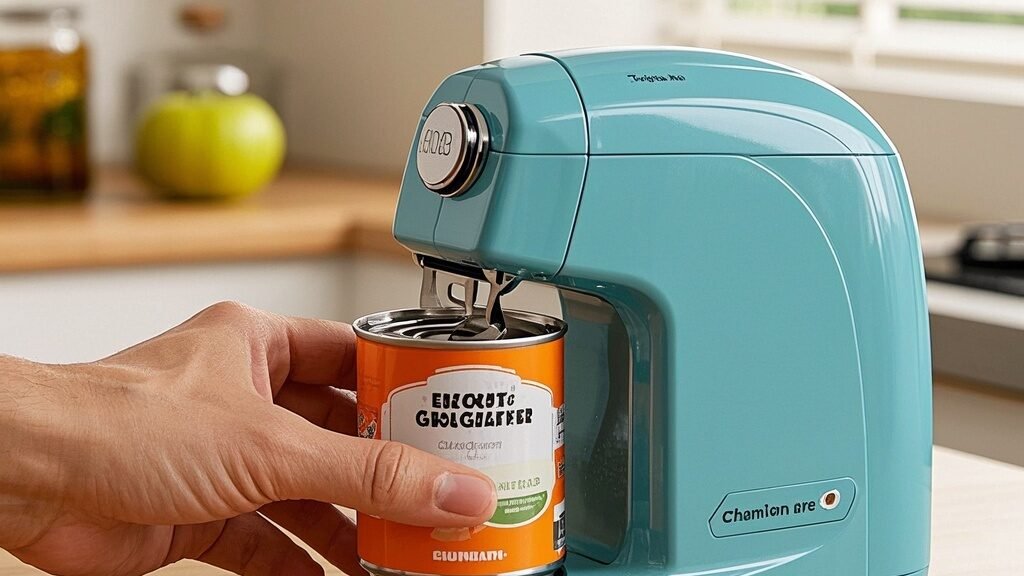
Power-Assisted and Electric Openers: For those with very limited hand strength or severe arthritis, an electric can opener is often the best solution. Operation is as simple as placing the can, pressing a lever or button, and letting the motor do the work. Many feature hands-free operation, auto-lift for the lid, and smooth-edge cutting. Look for models with large, clearly marked buttons and a stable footprint.
Lever-Style and Wall-Mounted Openers: These provide excellent mechanical advantage. A lever is pressed down, using body weight or arm strength instead of finger and wrist torque. Wall-mounted versions offer one-handed operation and free up counter space, making them a solid choice for consistent, pain-free operation.
Practical Tips for Safe and Independent Can Opening
Choosing the right tool is the first step. Using it effectively ensures lasting safety and confidence.
Creating a Stable Workspace: Always operate your can opener on a flat, stable, and dry surface. Use a non-slip mat underneath if necessary. Ensure the can itself is clean and dry on the outside for a better grip. For electric models, keep the cord neatly tucked away to prevent pulling or tripping.
Maintenance for Longevity and Safety: Keep the cutting wheel clean and free of food debris. For manual models, a occasional drop of mineral oil on the gears can keep the action smooth. Always unplug electric models before cleaning. Regularly check for any signs of wear or damage, especially on the cutting mechanism.
Alternative Strategies: For those days when even the best tool feels challenging, consider keeping a few easy-open or pop-top cans in your pantry. Alternatively, transferring bulk purchases from cans into lightweight, sealable plastic containers can reduce future struggles.
Important Safety Considerations
Even with the safest equipment, awareness is key. Never force an opener that isn’t catching properly; realign it and try again. Always dispose of smooth-edged lids safely, as they can still have a thin, potentially sharp perimeter. Be mindful of the contents—opening a can of carbonated liquid or compressed dough requires extra care to point the opening away from you.
Who Should Consider a Safety Can Opener for Limited Mobility? If you or a loved one experiences hand weakness, arthritis, Parkinson’s, reduced grip strength, or general fatigue that makes kitchen tasks daunting, investing in a specialized safety can opener is a wise decision for promoting independence. It’s a small appliance with a massive impact on daily well-being and kitchen confidence. Find the perfect can opener for your needs below and reclaim the joy of a simple, safe meal prep!
Related Guides:
- Best Rated Can Openers 2026 (All Categories)
- Best Can Opener for Seniors with Weak Grip (2026 Top Picks)
- Best Can Opener for Arthritis Patients (2026 Pain-Free Picks)
- Best Can Opener for Stroke Survivors (2026 Easy-Use Picks)
- Best Electric Can Opener (2026 Top-Rated Automatic Models)
- Best Hands-Free Can Opener (2026 No-Grip Effort Models)
- Best Manual Can Opener (2026 Ergonomic Low-Effort Models)
- Best Sharp-Edge-Free Can Opener (2026 Safe No-Cut Models)