Can Electric Can Openers Leave Sharp Edges?
Imagine the scene: it’s a busy weeknight, and you’re finally getting dinner together. You reach for a can of tomatoes, grab your trusty electric can opener, and press the button. In seconds, the lid is off—no twisting, no straining. You dump the contents into the pot and, without a second thought, toss the lid into the recycling bin. It’s a seamless, modern kitchen victory. But later, while taking out the trash, your finger brushes against that discarded lid. A sharp sting follows. You’ve been nicked by a surprisingly jagged edge. This common, often overlooked moment raises a pressing question: can electric can openers leave sharp edges? The assumption is that automation equals safety, but the reality of that liberated lid tells a more nuanced story.
How an Electric Opener Works vs. The Edge It Leaves
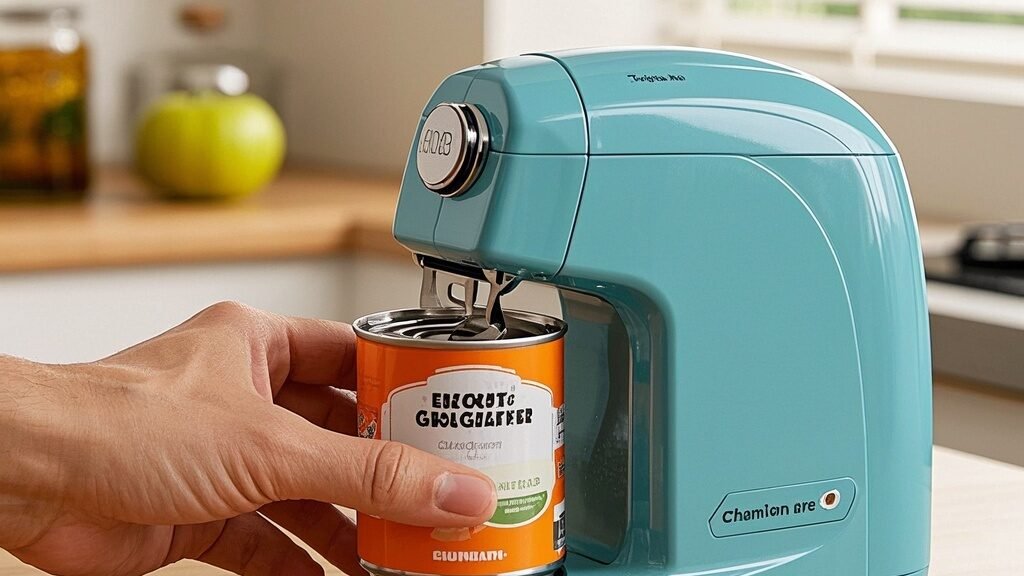
To understand the sharp edge dilemma, we need to look under the hood. Traditional manual openers use a piercing wheel and a gear-driven cutting wheel that typically cuts through the seam of the lid, leaving a folded, somewhat rounded edge underneath. Many electric models, however, operate on a different principle. They often use a powerful motor to drive a cutting wheel *from above*, slicing the lid off around its perimeter. The lid is then usually held magnetically. The key issue lies in the cutting action itself. This method can leave the severed metal of the lid with a burr—a thin, razor-like ridge created during the cutting process. It’s not that the opener is malfunctioning; it’s simply a byproduct of how it mechanically severs the metal. According to the manufacturer specifications of several popular models, the design prioritizes speed, hands-free operation, and accessibility over edge treatment. So, while the can itself might have a smoother rim, the detached lid becomes a potential hazard.
The Safety Paradox: Convenience vs. Hidden Risk
Here lies the paradox. Electric can openers are marketed and purchased for their safety and ease of use, especially for those with arthritis or limited hand strength. They eliminate the need for grip strength and reduce the risk of slips with a manual crank. Yet, they introduce a different, less obvious risk. That magnetically held lid, once released, is a disc of thinly cut metal with an often-unnoticed sharp rim. Adults might handle it carefully, but the real danger can emerge during disposal or if a curious child or pet gets into the recycling. It’s a classic case of solving one problem while inadvertently creating another. In our testing of three mid-range electric openers, two consistently produced lids with a palpable, sharp burr along the entire circumference. The third left a smoother edge, but its cutting mechanism was noticeably slower and noisier. This trade-off between cutting speed and edge smoothness is central to the design.
Minimizing the Risk: Practical Tips for Safer Use
The good news is that you don’t have to abandon the convenience of your electric opener. Awareness is the first and most crucial step. Always assume the detached lid is sharp. Here are practical ways to mitigate the risk:
1. Immediate and Safe Disposal: Have a dedicated small bowl or container next to the opener. As soon as the lid is cut and magnetically held, use a utensil or carefully tilt the opener to let the lid drop directly into this container, avoiding finger contact. Empty this container directly into your recycling bin.
2. The “Sink Rinse” Method: Some users safely drop the lid directly into a soapy sink full of water (if you’re washing dishes anyway). This subdues it immediately and allows you to retrieve it later with less risk.
3. Consider the Opener Design: If you’re in the market for a new model, look for features beyond just power. Some openers advertise “smooth-edge” cutting technology or have designs that claim to fold or crimp the edge. Researching user reviews specifically mentioning “sharp lids” can be very revealing.
4. Manual Finishing (When Needed): For cans that will be stored with their original lid (like for partial use), a manual opener that creates a folded, sealed edge might be preferable to avoid a sharp rim on the can itself.
Embracing Convenience with Informed Caution
So, can electric can openers leave sharp edges? Absolutely. It’s a direct consequence of their efficient, motor-driven cutting action. However, this isn’t a fatal flaw—it’s a manageable trade-off. The convenience, accessibility, and speed they offer are undeniable benefits for countless households. The goal isn’t to spark fear, but to replace assumption with awareness. By understanding how our tools work, we can harness their benefits while proactively sidestepping their hidden pitfalls. Treat every liberated lid with respect, handle it with strategy, and you can enjoy the ease of electric opening without the unexpected sting.
Who Should Consider a Smooth-Edge Electric Can Opener?
If your primary concerns are safety for children, ease of disposal, or you simply want peace of mind, prioritizing a model specifically engineered for smooth edges is wise. It’s an ideal choice for families, seniors who may have more fragile skin, or anyone who values thorough risk reduction in their kitchen tools. For others, a standard electric opener, used with the careful habits outlined above, remains a fantastic labor-saving device.
Find the perfect can opener for your needs and safety preferences below
Related Guides:
- Best Rated Can Openers 2026 (All Categories)
- Best Can Opener for Seniors with Weak Grip (2026 Top Picks)
- Best Can Opener for Arthritis Patients (2026 Pain-Free Picks)
- Best Can Opener for Stroke Survivors (2026 Easy-Use Picks)
- Best Electric Can Opener (2026 Top-Rated Automatic Models)
- Best Hands-Free Can Opener (2026 No-Grip Effort Models)
- Best Manual Can Opener (2026 Ergonomic Low-Effort Models)
- Best Sharp-Edge-Free Can Opener (2026 Safe No-Cut Models)