Can people with limited mobility open cans easily?
Picture a kitchen cabinet stocked with nutritious soups, beans, and fruits—all sealed securely in cans. For many, these represent convenience and choice. But for an individual with arthritis, reduced hand strength, or the tremors of Parkinson’s, that simple pantry staple can become a daily symbol of frustration and lost independence. The physical act of prying open a metal lid, an afterthought for some, transforms into a significant hurdle. The core question isn’t just about tools, but about autonomy in everyday life: Can people with limited mobility open cans easily? The honest answer is a nuanced one. While the traditional manual can opener often presents a formidable challenge, the landscape of kitchen tools has evolved dramatically. True ease isn’t a universal given, but it is an achievable reality through informed choice and innovative design.
The Challenge of Conventional Tools
Let’s first understand the barrier. Standard can openers, whether the classic manual turn-key model or even many “easy-grip” versions, demand a specific combination of actions: firm, sustained grip strength to hold the device steady, precise wrist rotation to turn the key, and often, a separate pulling motion to remove the cut lid. For someone with arthritic joints, weakened hands from conditions like carpal tunnel or aging, or limited dexterity, each step can be painful or impossible. The required force can cause strain, while slippery handles and small knobs become difficult to manipulate. This isn’t a minor inconvenience; it’s a gatekeeper to nutrition and the simple joy of preparing a meal for oneself. It can lead to reliance on others, a shift toward less nutritious pre-prepared foods, or the avoidance of canned goods altogether—despite their affordability and long shelf life. Recognizing this disconnect is the first step toward a solution.
Innovations That Redefine Accessibility
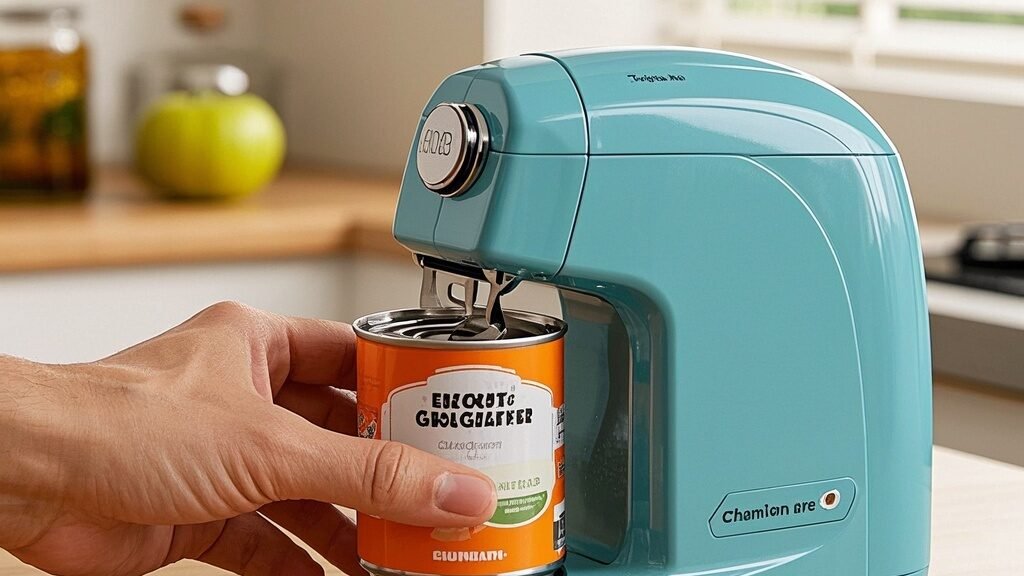
Fortunately, the market has responded with thoughtful engineering focused on universal design. These innovations move beyond mere gadgetry to become genuine enablers of independence. They generally fall into a few key categories, each tackling the physical challenges differently. Electric can openers are the most significant game-changer for many, as they remove the need for hand-cranking entirely. With the press of a button, a motor does all the work, requiring only that the user align and clamp the opener onto the can. Smooth and Effortless Operation is the hallmark here. Many feature large, easy-to-press buttons, magnetic lids that automatically lift and hold the cut lid (eliminating sharp edges), and hands-free operation that stabilizes the can during the process. For those with very limited hand strength or use of only one hand, this technology can be transformative.
Another category focuses on reimagining the manual process with superior ergonomics. These designs prioritize Leverage and Comfort Over Grip Strength. Openers with large, contoured, soft-grip handles that fit the whole palm distribute pressure and reduce strain. Side-mounted or upright lever-style openers allow users to push down with their palm or body weight instead of twisting with their fingers and wrist. Some innovative models even use a rocking motion or a simple pull-cord mechanism, drastically reducing the force and dexterity needed. The common thread is that they adapt to the user’s remaining abilities, rather than demanding a specific, difficult motion.
Key Features to Seek in an Accessible Can Opener
When evaluating options, whether electric or manual, certain features stand out as particularly beneficial for users with limited mobility. First, look for Stability and Safety. A hands-free design that anchors the can opener to the countertop and grips the can itself is crucial. It prevents slipping and allows the user to focus on alignment, not wrestling with the device. Automatic magnet lid removal is a major safety and convenience feature, as handling a sharp, detached lid is a common hazard. Second, consider Ease of Use and Maintenance. Controls should be large, intuitive, and require minimal pressure. The device should be easy to clean—dishwasher-safe parts are a plus—and simple to store. Battery-powered electric openers offer portability, while plug-in models ensure you never lose power mid-task. Finally, Comfort and Adaptability are personal. Test (or read detailed reviews about) the handle size and texture. Would it work with a built-up handle grip aid? Is the clamping mechanism easy to engage? The right tool feels like an extension of the user, not a puzzle to solve.
The journey to easily opening a can with limited mobility is less about finding sheer strength and more about finding the right mechanical ally. It’s a shift from struggle to strategy. From high-tech electric appliances that do the work at the touch of a button to brilliantly simple manual tools that maximize leverage, solutions exist that can restore a sense of capability and control in the kitchen. These tools do more than open cans; they open doors to greater self-sufficiency and the dignity of choice at mealtime.
Who Should Consider an Accessible Can Opener?
Anyone for whom a standard can opener causes pain, frustration, or poses a safety risk should explore these adapted tools. This includes seniors experiencing natural declines in grip strength or dexterity, individuals living with arthritis, Parkinson’s, stroke recovery, or hand injuries, and anyone with temporary or permanent limited mobility in one or both hands. The investment is not in a mere kitchen appliance, but in sustained independence and nutritional well-being.
Find the perfect can opener for your needs below!
Related Guides:
- Best Rated Can Openers 2026 (All Categories)
- Best Can Opener for Seniors with Weak Grip (2026 Top Picks)
- Best Can Opener for Arthritis Patients (2026 Pain-Free Picks)
- Best Can Opener for Stroke Survivors (2026 Easy-Use Picks)
- Best Electric Can Opener (2026 Top-Rated Automatic Models)
- Best Hands-Free Can Opener (2026 No-Grip Effort Models)
- Best Manual Can Opener (2026 Ergonomic Low-Effort Models)
- Best Sharp-Edge-Free Can Opener (2026 Safe No-Cut Models)