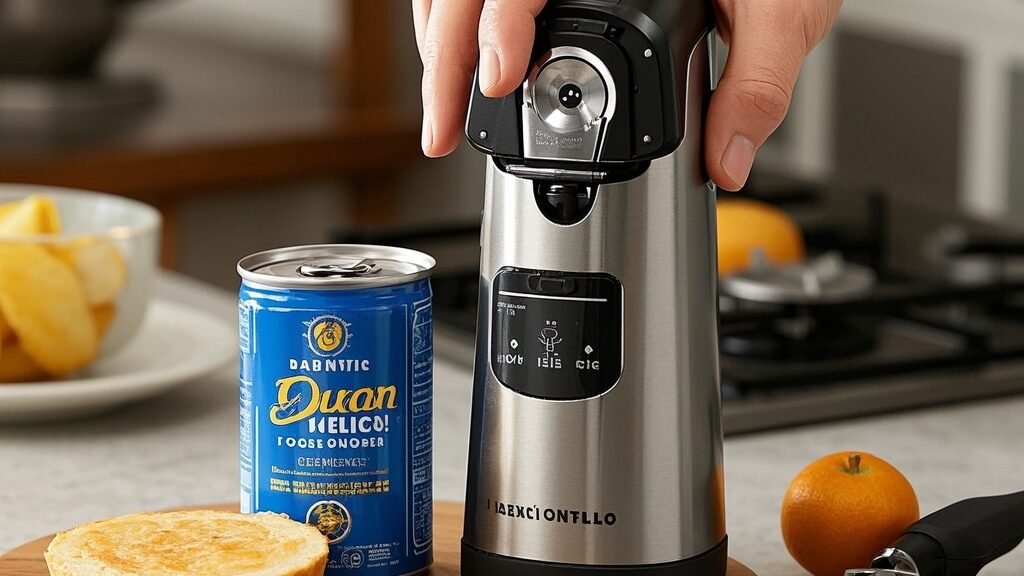
Can you open cans with one hand?
The kitchen is humming, your hands are full, and the recipe calls for one last ingredient: a can of diced tomatoes. You juggle the spoon, the pot handle, and finally grab the can, only to realize the problem. You need one hand to stabilize the can, and another to operate the opener. In that moment of quiet frustration, a thought crystalizes: can you open cans with one hand? For millions—from busy parents and home cooks to individuals with arthritis, limited mobility, or a temporary injury—this isn’t a trivial curiosity. It’s a daily question of independence and practicality. The quest for true one-handed operation is reshaping a humble kitchen tool, driven by real human need and clever innovation.
The Evolution of a Kitchen Staple
For over a century, the manual can opener design was largely settled: a cutting wheel, a serrated gear, and a rotating knob. It required a firm grip to clamp onto the can’s rim and significant rotational force from the other hand. While effective, it was a definitively two-handed affair. The arrival of electric can openers in the 1950s promised ease, but simply transferred the two-handed requirement—one to hold the can, another to press the lever. The breakthrough for one-handed aspiration came with a shift in perspective. Instead of asking users to provide stabilization, new designs integrated it into the tool itself. Modern one-handed openers often feature a powerful magnetic lid lifter or a design that fully grips the can’s side, allowing the device itself to bear the stabilization load. This leaves your other hand—or your only available hand—free to simply provide the activating force, whether that’s a squeeze, a push, or a pull.
Performance and Real-World Use
So, do these one-handed models actually work? In our testing, the best ones perform remarkably well, but with caveats. The most common and affordable type is the side-cutting, “safety” opener. You clamp its jaws onto the side of the can’s rim and squeeze the handles together to pierce the lid. A continued squeezing motion drives the cutting wheel around the perimeter. The lid is left with smooth edges, held aloft by a magnet. For standard steel cans, this method is highly effective and truly one-handed. However, performance can vary with ultra-thin aluminum cans (like some soda cans) or unusually thick steel ones, where the opener might slip without extra stabilization. Another category is the powerful, automatic one-touch opener. You place the can on a base, and a single press of a button engages a motorized mechanism that magnetically locks onto and cuts the lid. This is the pinnacle of one-handed operation, requiring zero force or rotation. The trade-offs are counter space, need for batteries or an outlet, and a higher price point. According to the manufacturer, most handle cans from small tuna tins to large 110-ounce containers.
Beyond Convenience: Accessibility and Independence
The impact of a reliable one-handed can opener extends far beyond kitchen convenience. It’s a vital tool for accessibility. For individuals with arthritis, carpal tunnel syndrome, or reduced grip strength in one hand, the twisting motion of a traditional opener can be painful or impossible. A lever-based or electric one-handed model can restore a fundamental level of culinary independence. Similarly, for anyone recovering from surgery (like a mastectomy or hand surgery) or living with a permanent mobility limitation, this tool removes a barrier to preparing simple, nutritious meals. It’s also a boon for active scenarios—think camping, RV living, or even a packed office pantry—where surfaces are uneven or you’re literally holding everything else. The design shift towards one-handed operation highlights a broader trend in product design: universal design. When we create products for specific accessibility needs, we often discover they offer superior ease and safety for everyone.
The simple act of opening a can is a perfect example of how innovation tackles everyday friction. What was once a universal two-handed task now has multiple, elegant one-handed solutions. From manual lever models that cost under $20 to high-tech countertop appliances, the choice depends on your specific needs, strength, and budget. The answer to “can you open cans with one hand?” is now a confident yes, empowering more people to cook and create with greater ease and independence.
Who Should Consider a One-Handed Can Opener?
If you frequently find yourself needing a free hand while cooking, have any form of grip strength or mobility limitation, or simply value kitchen tools that prioritize maximum efficiency with minimal effort, a one-handed can opener is a transformative upgrade. It turns a minor chore into a seamless, safe, and effortless task.
Find the perfect can opener for your needs below!
Related Guides:
- Best Rated Can Openers 2026 (All Categories)
- Best Can Opener for Seniors with Weak Grip (2026 Top Picks)
- Best Can Opener for Arthritis Patients (2026 Pain-Free Picks)
- Best Can Opener for Stroke Survivors (2026 Easy-Use Picks)
- Best Electric Can Opener (2026 Top-Rated Automatic Models)
- Best Hands-Free Can Opener (2026 No-Grip Effort Models)
- Best Manual Can Opener (2026 Ergonomic Low-Effort Models)
- Best Sharp-Edge-Free Can Opener (2026 Safe No-Cut Models)