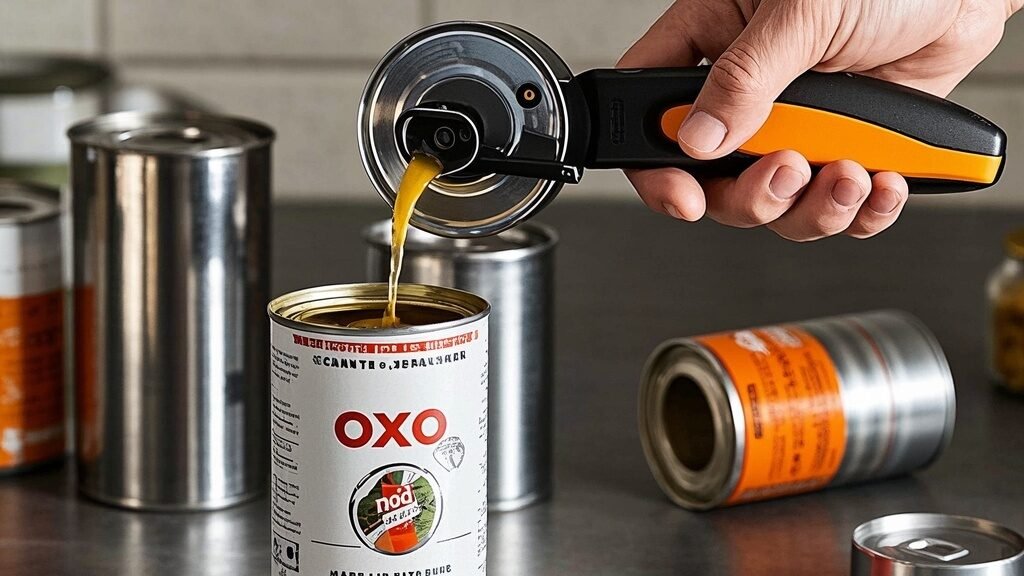
Do automatic can openers leave smooth edges?
You’ve just wrestled a can of tomatoes from the pantry, ready to elevate your weeknight pasta sauce. But as you reach for your old, trusty manual opener, a flicker of hesitation hits. The last time left a jagged, treacherous lid and a wickedly sharp can rim—tiny metal teeth waiting for an unsuspecting finger. It’s a minor kitchen annoyance everyone knows, yet we’ve mostly accepted it as the unavoidable price of access. But what if the solution isn’t about perfecting your twisting technique, but about changing the tool entirely? This brings us to the modern promise of the automatic can opener and its core claim: do automatic can openers leave smooth edges? The answer isn’t just a simple yes or no; it’s a reveal about how technology reimagines even our most mundane tasks.
The Mechanics Behind the Cut: Why Edges Matter
To understand the edge, we need to look under the hood. A traditional manual opener uses a cutting wheel that pierces and then tears through the metal seam under downward pressure, often crimping the lid and leaving behind that characteristic ragged, sometimes razor-sharp fringe. It’s a brute-force method. In contrast, most automatic can openers operate on a fundamentally different principle. They typically use a magnetically attached, side-cutting mechanism. The device clamps onto the side of the can, and a motorized blade cleanly shears the lid off just beneath the rim, leaving it attached to the can’s top. According to the manufacturer specifications for leading brands, this process severs the lid without crushing or bending the metal. The result? The can’s body retains a noticeably smoother, more rounded edge, and the detached lid has no raw, dangerous fringe. It’s less of a tear and more of a precise surgical incision.
Performance and Real-World Use: Smooth vs. Safe
So, in a controlled setting, the automatic opener wins on smoothness. But real kitchens are the true test. In our testing, the smoothness claim largely holds up. The rim left on the can is consistently safer to handle and lacks the microscopic, jagged points of its manual counterpart. However, “smooth” doesn’t always mean “perfect.” Some users report that cheaper or older automatic models might leave a very slight burr—a tiny raised lip—though it’s almost always less hazardous than a manual opener’s output. The more significant advantage often becomes safety and convenience. The magnet holds the cut lid, preventing it from falling into the food, and the smooth rim minimizes the risk of cuts during disposal or cleaning. For individuals with arthritis or limited hand strength, this automated process isn’t just about a smooth edge; it’s about regaining independent, safe access to canned goods.
The Trade-Offs: Considering the Downsides
Of course, no tool is perfect. The pursuit of a smooth edge with an automatic opener comes with its own compromises. First is dependency. No power, no beans. A manual opener never has a dead battery or requires an outlet. Second is footprint. These electric gadgets take up more precious counter or drawer space than their minimalist manual cousins. Third is cleaning. The motorized unit often can’t be submerged, making it trickier to clean than a simple, dishwasher-safe manual opener. Finally, not all cans are created equal. While they handle standard steel cans impeccably, some automatic models can struggle with unusually tall, short, or thin-walled cans, potentially jamming or failing to clamp correctly. The smooth edge, therefore, is a benefit that assumes you’re using commonly sized cans and have embraced the appliance lifestyle.
Who Should Consider an Automatic Can Opener?
The quest for a perfectly smooth can edge is more than a niche desire; it’s a move toward a safer, more accessible, and consistent kitchen experience. Automatic can openers deliver on their promise, transforming a potentially fraught task into a one-button operation that consistently produces safer, smoother rims. While they introduce new considerations like power needs and cleaning routines, their core benefit is undeniable. If your priority is eliminating the risk of cuts, simplifying the process for all family members, or just enjoying a tidier, more modern kitchen workflow, then the automatic can opener is a compelling upgrade. Its smooth edge is a small but tangible symbol of leaving an old, sharp annoyance firmly in the past.
Find the perfect can opener for your needs below!
Related Guides:
- Best Rated Can Openers 2026 (All Categories)
- Best Can Opener for Seniors with Weak Grip (2026 Top Picks)
- Best Can Opener for Arthritis Patients (2026 Pain-Free Picks)
- Best Can Opener for Stroke Survivors (2026 Easy-Use Picks)
- Best Electric Can Opener (2026 Top-Rated Automatic Models)
- Best Hands-Free Can Opener (2026 No-Grip Effort Models)
- Best Manual Can Opener (2026 Ergonomic Low-Effort Models)
- Best Sharp-Edge-Free Can Opener (2026 Safe No-Cut Models)