Do Automatic Can Openers Work on Large and Small Cans?
Imagine it’s the night before a big potluck, and you’re preparing your famous chili. The recipe calls for both standard 15-ounce tomato cans and a large, 28-ounce can of kidney beans. Your old manual opener is struggling, leaving jagged edges on the small can and failing to grip the large one entirely. In moments like these, the promise of an automatic can opener seems like a kitchen savior. But a practical doubt creeps in: can a single, countertop device reliably handle the full spectrum of can sizes in your pantry? The question of whether automatic can openers work on large and small cans is central to their value proposition. The answer isn’t a simple yes or no; it’s a mix of clever engineering, specific design limitations, and understanding your own cooking habits.
Understanding the Mechanism: How Automatic Openers Grip and Cut
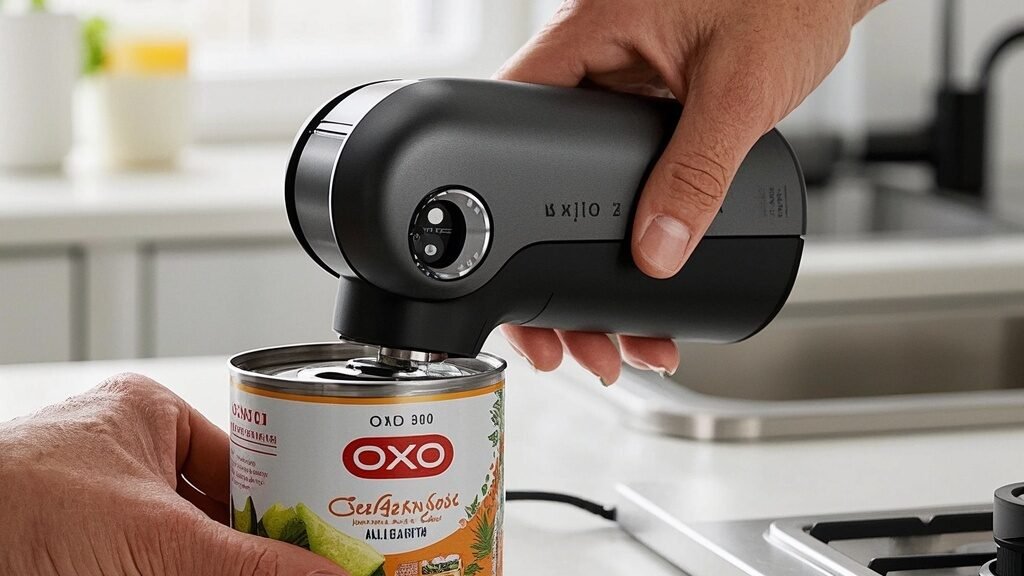
To grasp their versatility, we need to know how they operate. Unlike manual openers where you control the pressure and angle, automatic models use a motorized drive. You place the can under a cutting head, lower a lever, and the device does the rest: it magnetically grips the lid’s rim, rotates the can, and cuts along the perimeter. This design is inherently adaptable. The cutting assembly typically adjusts to accommodate different can diameters. For the vast majority of standard cans—from small tuna cans (around 3-4 inches in diameter) to large soup or vegetable cans (approximately 4 inches)—automatic can openers perform consistently well. They remove lids cleanly, leaving smooth edges, which is a significant safety and convenience advantage over manual methods. However, the “large” in “large cans” needs clarification.
The Limits of “Large”: When Size and Shape Matter
While automatic openers excel with typical cylindrical cans, their limitations appear at the extremes. First, consider diameter. Most models specify a maximum can diameter, often between 4 to 4.5 inches. This comfortably covers common large cans like those for crushed tomatoes or broth. But extra-wide cans, such as some institutional-sized fruit or catering cans, may simply not fit under the cutting head. Second, height is a crucial factor. The space between the cutting head and the base, known as the clearance, determines the maximum can height. Many automatic openers struggle with very tall cans, like those for pineapple slices or certain coffee brands. The can might be too tall for the mechanism to engage properly with the top rim. In our testing, most household-grade automatic openers handled cans up to about 5-6 inches tall reliably, but taller ones became problematic. Always check the manufacturer’s specifications for max diameter and height.
Performance and Real-World Use: Convenience vs. Control
For their intended range, automatic openers offer unmatched convenience, especially for individuals with arthritis or limited hand strength. They operate with the push of a button, provide hands-free operation, and often include features like built-in knife sharpeners or bottle openers. The sealed cut also helps preserve unused food in the refrigerator. However, this convenience comes with minor trade-offs. You have less control over the cutting process, and a malfunctioning unit can leave a partially cut lid. Some users also note that the motorized cutting can sometimes leave a finer metal burr compared to a perfectly operated manual opener. Furthermore, they require counter space, need batteries or a power outlet, and are more complex to clean. For purely small, standard-sized cans, a simple manual opener might suffice, but for a mixed pantry, the automatic model’s adaptability shines.
Who Should Consider an Automatic Can Opener?
So, do automatic can openers work on large and small cans? The resounding answer is yes—for the common definitions of “large” and “small” in a typical household kitchen. They are brilliantly designed for the everyday variety of cans, from petite tomato paste containers to family-sized baked bean tins. Their limitations only become apparent with non-standard, extra-wide, or unusually tall cans, which are less frequent in most homes.
Who Should Consider an Automatic Can Opener? It’s an ideal investment for those who value convenience, safety, and accessibility. If your cooking regularly involves multiple cans of varying sizes, if you prioritize smooth, safe edges, or if you find manual opening difficult, an automatic model is a worthwhile upgrade. Just be sure to check the product specs for its maximum diameter and height clearance to ensure it matches your occasional “jumbo” can needs. For everyone else, it remains one of those small appliances that genuinely reduces a daily minor friction.
Find the perfect can opener for your needs below
Related Guides:
- Best Rated Can Openers 2026 (All Categories)
- Best Can Opener for Seniors with Weak Grip (2026 Top Picks)
- Best Can Opener for Arthritis Patients (2026 Pain-Free Picks)
- Best Can Opener for Stroke Survivors (2026 Easy-Use Picks)
- Best Electric Can Opener (2026 Top-Rated Automatic Models)
- Best Hands-Free Can Opener (2026 No-Grip Effort Models)
- Best Manual Can Opener (2026 Ergonomic Low-Effort Models)
- Best Sharp-Edge-Free Can Opener (2026 Safe No-Cut Models)