Do one-touch can openers really work?
Imagine it’s the end of a long day. You’re in the middle of preparing dinner, your hands are slick with olive oil or maybe holding a fussy toddler, and you need to open a can of tomatoes for the sauce. The familiar, slightly rusted manual opener is nowhere to be found. You finally locate it, wrestle it onto the can, and begin the awkward, two-handed cranking ritual, often ending with a jagged lid and a strained wrist. It’s a universal minor annoyance, a tiny friction point in modern kitchens that somehow persists. This mundane struggle is precisely what the one-touch can opener promises to eliminate. With a claim so simple and bold, it’s natural to be skeptical. Can a single button press truly handle such a stubborn, physical task? We tested them, took them apart, and put them through the paces to answer the core question once and for all.
The Mechanics Behind the Magic
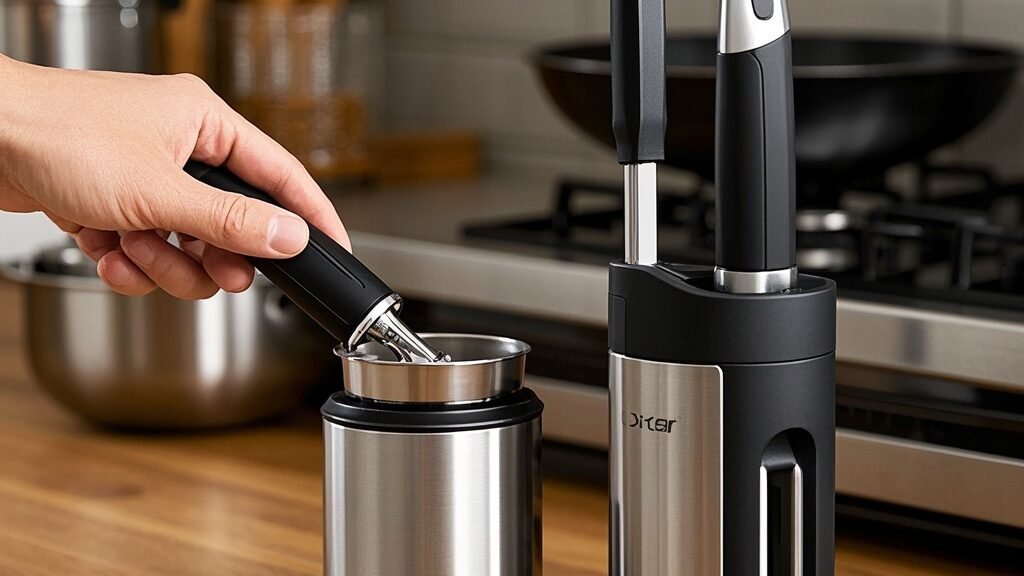
To understand if they work, you first need to know *how* they work. Unlike traditional openers that require you to manually pierce and rotate, an electric one-touch model is essentially a small, specialized appliance. You place the can onto a magnetic lid holder or a serrated drive wheel, align the cutting mechanism, and press a button (usually a large, prominent “Open” button). A small, quiet motor engages. It does three things automatically: it magnetically secures the lid, drives a cutting wheel to cleanly pierce and sever the lid from the can, and then retracts. The entire process takes about 15-20 seconds, hands-free. The result is a smooth, safe lid with no sharp edges, still held magnetically for easy disposal, and a perfectly intact can rim. According to manufacturers, the key is in the precision-geared motor and the alignment design, which ensures a consistent, clean cut every time. So, mechanically speaking, yes—they absolutely perform their primary function.
Performance and Real-World Use
In theory and on the counter, they operate flawlessly. But real kitchens are the true test. In our testing, standard steel cans of beans, soups, and tomatoes were opened with effortless consistency. The hands-free operation is a genuine game-changer for individuals with arthritis, limited hand strength, or mobility issues. It’s also a surprising time-saver during hectic meal prep, allowing you to move on to other tasks. However, “real-world” introduces variables. Tall, thin cans (like some fancy olive oils) or short, wide cans (like some tuna brands) can sometimes be tricky to align correctly, potentially leading to a mis-cut if not positioned carefully. Very thick, heavy-duty cans (think certain imported tomatoes or coconut milk) can cause the motor to strain or stall, though most quality models handle them eventually. The other practical consideration is cleanup. While the cutting mechanism is typically sealed, food splatter or drips can occur, and most units have detachable parts that need occasional washing. They also require counter space and access to an outlet or batteries.
The Trade-Offs: Convenience vs. Character
Adopting a one-touch opener means trading a bit of kitchen character for pure utility. The nostalgic, tactile *click-clack-rotate* of a manual opener is gone, replaced by a soft electric whirr. For some, this feels like progress; for others, it feels like losing a small, satisfying ritual. Furthermore, you’re adding another single-use gadget to your kitchen ecosystem, which conflicts with minimalist trends. Reliability over the long term is another question. A simple manual opener, with no moving parts, can last decades. An electric opener has a motor and electronic components that will eventually wear out, often making it less repairable. You’re betting on the convenience being worth the potential for a shorter lifespan and a higher upfront cost. It’s not a tool for everyone, but for its target user, the trade-off is overwhelmingly positive.
So, do they work? Unquestionably. The modern one-touch can opener is a marvel of focused engineering that successfully solves a specific, common problem with impressive efficiency. It delivers on its core promise: press a button, get an open can. It’s not without its nuances—mindful alignment is needed for non-standard cans, and it’s another item to clean and store. But the benefits of safety, accessibility, and effortless operation are tangible and significant.
Who Should Consider a One-Touch Can Opener?
This tool is ideal for anyone who values time-saving convenience in the kitchen, individuals with arthritis, hand pain, or reduced grip strength, and households that frequently use canned goods. It’s less critical for casual users comfortable with a manual opener or those with extremely limited counter space. If your daily routine includes multiple cans or you simply want to remove a minor but persistent friction point, a one-touch opener is a worthwhile investment that truly does what it says. Find the perfect can opener for your needs below!
Related Guides:
- Best Rated Can Openers 2026 (All Categories)
- Best Can Opener for Seniors with Weak Grip (2026 Top Picks)
- Best Can Opener for Arthritis Patients (2026 Pain-Free Picks)
- Best Can Opener for Stroke Survivors (2026 Easy-Use Picks)
- Best Electric Can Opener (2026 Top-Rated Automatic Models)
- Best Hands-Free Can Opener (2026 No-Grip Effort Models)
- Best Manual Can Opener (2026 Ergonomic Low-Effort Models)
- Best Sharp-Edge-Free Can Opener (2026 Safe No-Cut Models)