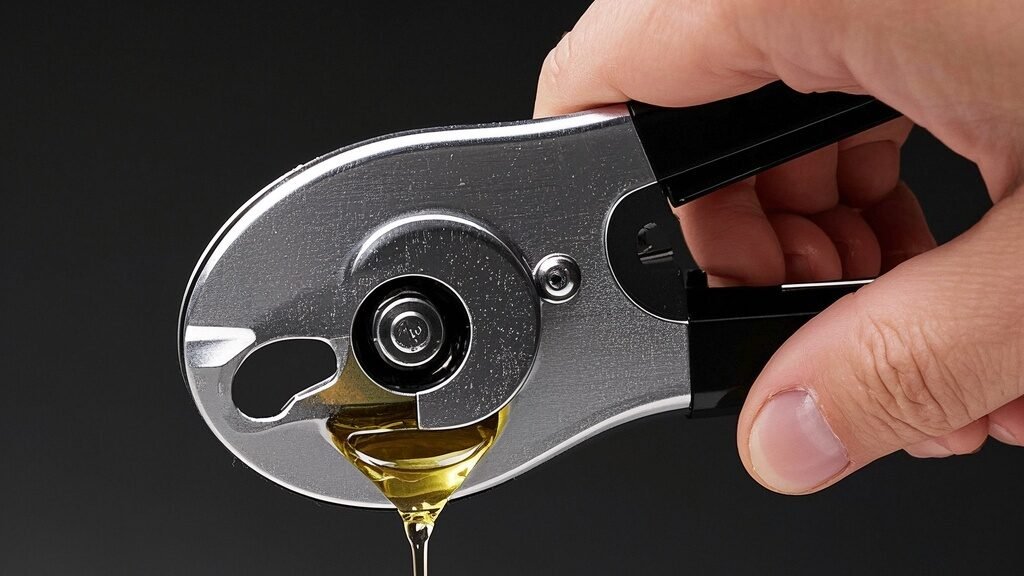
How does a one-touch can opener work?
You’re in the middle of preparing a quick chili, hands already smudged with spices. The recipe calls for two cans of tomatoes, but your trusty manual opener feels like a relic—the awkward hooking, the strenuous twisting, the occasional jagged lid edge that makes you wince. For a tool used for such a simple, frequent task, it demands surprising effort. This universal kitchen friction is precisely what the one-touch can opener aims to eliminate. By transforming a physical chore into a seamless automated process, this device doesn’t just open cans; it redefines the interaction entirely. But the magic isn’t in sorcery—it’s in clever, practical engineering. So, how does a one-touch can opener work? The answer lies in a smart marriage of basic mechanics and simple electronics, all designed for ultimate user convenience.
The Core Mechanism: More Than Just a Blade
At its heart, every can opener must perform two critical functions: puncture the lid and cleanly separate it from the can. Traditional openers require you to provide the rotational force and downward pressure. A one-touch opener automates both. When you place a can onto its platform (often with a magnetic holder to keep it steady) and press down on the lever or button, you activate a small electric motor. This motor drives two primary components: a rotating serrated wheel (the cutter) and a geared wheel that grips the can’s rim. Once engaged, the motor turns these wheels in unison. The cutter wheel bites into the lid’s edge while the geared wheel turns the *can itself*, not the opener. This means the device stays stationary while it spins the can against the cutting blade, tracing a perfect circle just under the lid’s rim. The cutting path is precisely calibrated to sever the lid without leaving sharp edges on the can, resulting in the famously smooth, safe cut. According to the manufacturer, this process typically completes in about 15-30 seconds, hands-free.
Power and Design: What’s Inside the Shell
The convenience factor is powered by a simple electrical system. Most models are corded, plugging into a standard kitchen outlet, though some offer battery-operated or rechargeable options for portability. The key user interface is usually a single lever or a large button. Pressing it completes the circuit, sending power from the source to the motor. A series of internal gears then reduces the motor’s high speed to the optimal, slower torque needed to rotate a full can steadily. Safety and mess-control are integral to the design. The magnetic holder does double duty: it secures the can during operation and often lifts the severed lid cleanly away, keeping your hands off the potentially sharp metal. Many units also feature a design that leaves the cut lid resting on top of the can, contained and easy to dispose of, while the now-open can sits ready on the base. This thoughtful containment is a major upgrade from the wobbly, juice-splattering process of manual opening.
Practical Benefits and Trade-offs
The real-world appeal of this gadget is immense, particularly for individuals with arthritis, limited hand strength, or mobility issues. It delivers consistent, effortless operation with minimal physical demand. The automated, standardized cutting action also enhances safety by virtually eliminating the risk of jagged edges. For busy home cooks, it’s a time-and-effort saver that streamlines meal prep. However, the design comes with trade-offs. It requires counter space, an electrical outlet, and is more complex to clean than a simple manual opener—dishwasher-safe parts are a crucial feature to seek. In our testing, while excellent on standard steel cans, some models can struggle with unusually tall, short, or thin-walled cans. The motorized mechanism also means it’s louder than a manual tool and represents a higher upfront cost. It’s a tool of specialization: brilliantly convenient for its core task but not the versatile, go-anywhere tool its manual counterpart is.
In essence, a one-touch can opener works by intelligently automating the age-old principles of cutting and leverage. It replaces human elbow grease with a small electric motor and precise gearing, turning a mundane task into a single-button affair. The genius is not in complexity, but in applying just enough technology to solve a very specific, common problem completely.
Who Should Consider a One-Touch Can Opener?
This appliance is ideal for anyone who values kitchen convenience, prioritizes safety, or faces physical challenges with traditional openers. It’s perfect for avid home cooks who open multiple cans regularly, seniors, and individuals seeking to make their kitchen more accessible. If you have the counter space and are frustrated by the fiddly nature of manual openers, the investment can significantly smooth your cooking workflow. For those who only rarely open cans or have minimal storage, a simple manual opener might remain the more practical choice. Find the perfect can opener for your needs below
Related Guides:
- Best Rated Can Openers 2026 (All Categories)
- Best Can Opener for Seniors with Weak Grip (2026 Top Picks)
- Best Can Opener for Arthritis Patients (2026 Pain-Free Picks)
- Best Can Opener for Stroke Survivors (2026 Easy-Use Picks)
- Best Electric Can Opener (2026 Top-Rated Automatic Models)
- Best Hands-Free Can Opener (2026 No-Grip Effort Models)
- Best Manual Can Opener (2026 Ergonomic Low-Effort Models)
- Best Sharp-Edge-Free Can Opener (2026 Safe No-Cut Models)