How Does a One-Touch Can Opener Work?
Imagine it’s a busy weeknight. You’re halfway through making dinner, your hands are messy, and you need to open a can of tomatoes. You fumble with a manual opener, struggling to get a grip, twisting and forcing the mechanism. For a moment, you might even wonder if the can will win the fight. Now, picture a different scene: you place the can on a device, press a button, and in seconds, the lid is smoothly removed, hands-free. This isn’t magic; it’s the practical engineering of a one-touch can opener. This clever kitchen tool has transformed a mundane, sometimes frustrating task into an effortless gesture, appealing especially to those with arthritis, limited hand strength, or simply a love for convenience. But what’s happening inside that sleek exterior to make it so simple?
The Core Mechanism: Magnetism and Precision Cutting
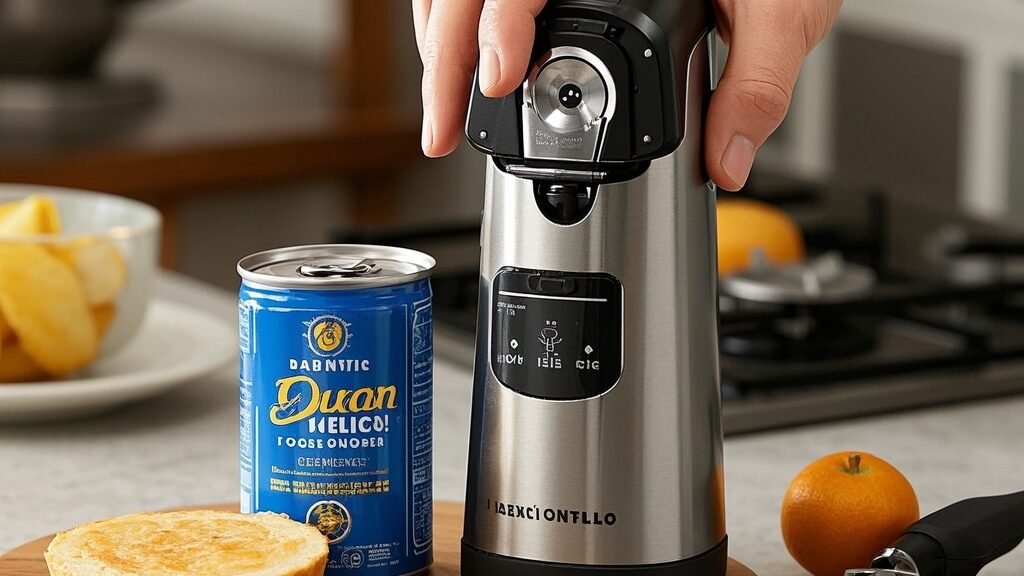
At its heart, a one-touch can opener is a compact, automated cutting system. Unlike manual openers that require you to physically turn a crank, this device uses a small electric motor to do all the work. Here’s the step-by-step breakdown. You place a standard-sized metal can onto the unit’s rotating base, or “turntable,” and align it under the cutting assembly. When you press the start button (often a large, easy-to-use pad), two things happen simultaneously. First, the turntable begins to spin the can. Second, a small, powerful cutting wheel—similar to the one on a manual opener but motor-driven—descends and pierces the lid’s rim. As the can rotates, the wheel cleanly cuts through the seal around the entire perimeter. The genius doesn’t stop at the cut. A key feature is the integrated magnet. Just after the cut is complete, the device uses this magnet to lift and retain the severed metal lid, holding it safely above the can. This leaves you with a smooth-edged can and a lid that hasn’t fallen into the food—a small but significant upgrade in kitchen safety and cleanliness.
Power and Practical Design Choices
These openers are designed for efficiency and accessibility. They are typically powered by batteries (usually 4 AA or AAA) or via a plug-in DC adapter. The battery-powered models offer cordless portability, perfect for any kitchen counter or even camping trips, while AC-powered versions provide consistent power without the worry of batteries dying. In our testing, a major benefit is the consistent performance; the motor provides even force, preventing the jagged edges and partial cuts common with tired wrists using manual tools. Most models are also designed with easy cleanup in mind. The cutting assembly is often detachable for rinsing, and the base is designed to catch any minor drips. However, it’s important to note their limitations. According to the manufacturer specifications, most one-touch openers are built for standard steel or tin cans. They may struggle with unusually tall, short, or small-diameter cans, and they are not intended for use on cans with pull-tab lids or glass jars.
Balancing the Benefits and Drawbacks
The primary advantage is undeniable: remarkable ease of use. It’s a boon for anyone seeking independence in the kitchen despite hand pain, weakness, or conditions like arthritis. The hands-free operation also promotes hygiene, as you never touch the cutting mechanism or the potentially sharp lid. The magnetically captured lid is a universally appreciated feature. On the downside, these devices add another item to your counter or in your drawer. They require a power source, meaning you’ll need to manage batteries or a cord. Some users report that the cutting mechanism can be tricky to clean thoroughly if food particles get lodged, and the motorized parts may wear out over several years of heavy use, whereas a simple manual opener can last a lifetime. It’s a trade-off between ultimate convenience and mechanical simplicity.
Who Should Consider a One-Touch Can Opener?
Ultimately, the one-touch can opener is a brilliant piece of targeted problem-solving. It works by automating a simple mechanical process we’ve done by hand for generations, adding a dash of magnetic technology to complete the experience. It won’t revolutionize your cooking, but it will reliably remove a significant minor annoyance. If your current can-opening routine involves struggle, frustration, or concern about sharp edges, this tool is worth considering. It’s ideal for aging individuals, those with physical limitations, or busy households that value every second of streamlined meal prep. For the occasional user happy with a manual crank, it might be an unnecessary gadget. But for its target user, it’s a small appliance that delivers exactly what it promises: one touch, and you’re done.
Find the perfect can opener for your needs below!
Related Guides:
- Best Rated Can Openers 2026 (All Categories)
- Best Can Opener for Seniors with Weak Grip (2026 Top Picks)
- Best Can Opener for Arthritis Patients (2026 Pain-Free Picks)
- Best Can Opener for Stroke Survivors (2026 Easy-Use Picks)
- Best Electric Can Opener (2026 Top-Rated Automatic Models)
- Best Hands-Free Can Opener (2026 No-Grip Effort Models)
- Best Manual Can Opener (2026 Ergonomic Low-Effort Models)
- Best Sharp-Edge-Free Can Opener (2026 Safe No-Cut Models)